
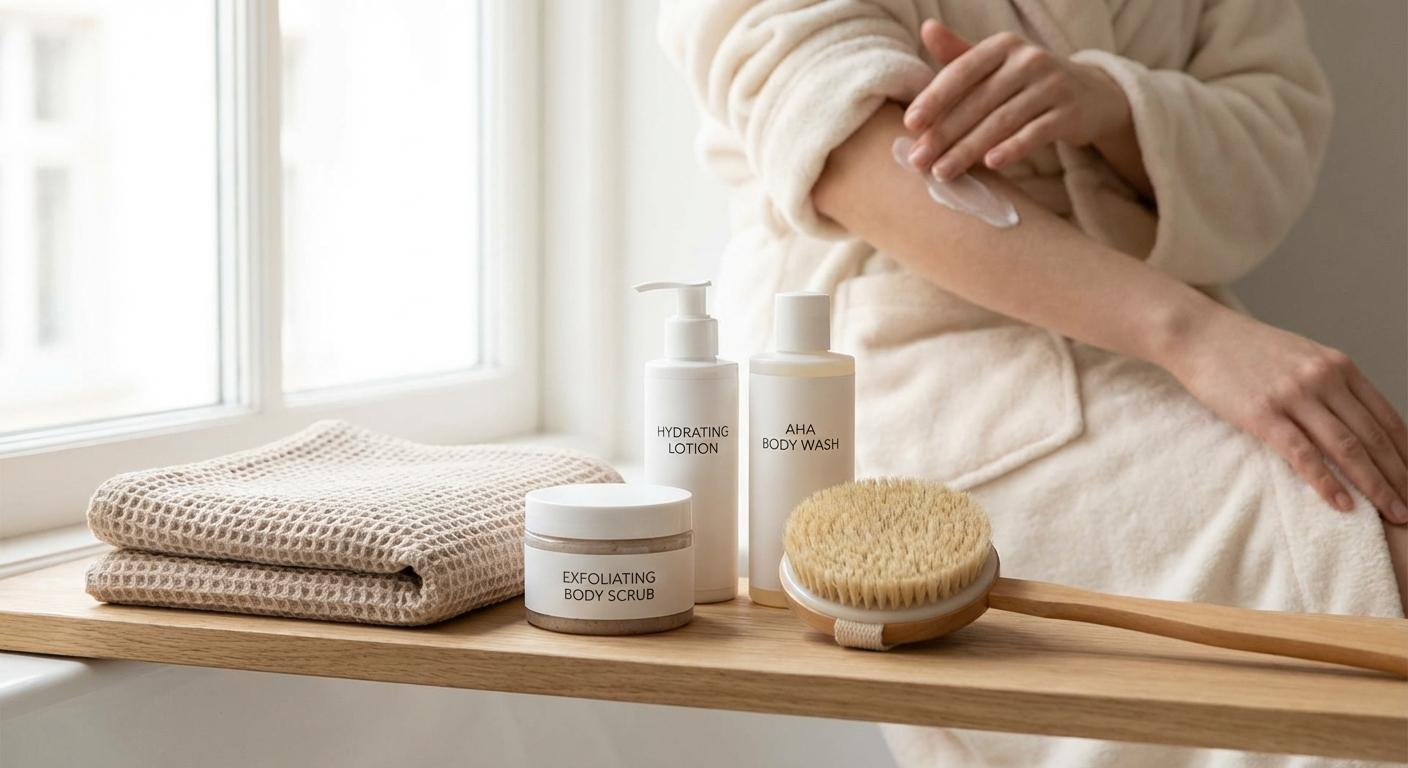
Those tiny bumps on the back of your upper arms? The ones that feel like permanent goosebumps and never seem to go away no matter what you do? That is keratosis pilaris, commonly called KP, and if you have it, you are far from alone. Roughly 40% of adults deal with this condition, and while it is completely harmless, I understand the frustration of wanting smoother skin.
As someone who has spent years researching skin biology, I want to break down exactly what is happening with KP and what you can realistically do about it. Spoiler alert: there is no cure, but there are genuinely effective ways to manage it.
What Keratosis Pilaris Actually Is
KP occurs when keratin, a protein that protects your skin, builds up and plugs hair follicles. This creates those characteristic rough, bumpy patches that often appear on the upper arms, thighs, cheeks, and buttocks. The bumps can be skin-colored, red, or slightly inflamed.
According to the American Academy of Dermatology, KP is a genetic condition. If your parents had it, you are more likely to develop it too. It often appears during childhood or adolescence and can improve with age, though many adults continue to experience it throughout their lives.
The good news? KP is not caused by anything you are doing wrong. It is not about hygiene, diet, or skincare mistakes. Your skin simply produces excess keratin, and that keratin has nowhere to go except into those little plugs.
Why Exfoliation Matters for KP
Since KP involves keratin buildup, exfoliation is your most effective tool. But here is where people often go wrong: they reach for harsh physical scrubs and scrub aggressively, thinking more friction equals better results. This approach usually backfires, causing irritation without addressing the underlying issue.
Chemical exfoliants work better for KP because they dissolve the keratin plugs rather than just pushing them around. Two types are particularly effective:
- Alpha hydroxy acids (AHAs) like glycolic and lactic acid work on the skin surface to loosen dead cells and smooth texture
- Beta hydroxy acids (BHAs) like salicylic acid are oil-soluble, meaning they can penetrate into clogged follicles
Research published in the Journal of Dermatological Treatment has shown that products containing 10-15% lactic acid can significantly improve KP when used consistently over several weeks.
Building Your KP Routine
Start with a gentle approach, especially if you have sensitive skin that reacts to stronger acids. Your skin needs time to adjust to chemical exfoliants, and going too aggressive too fast will only cause irritation and potentially worsen the appearance of KP.
Step 1: Gentle cleansing
Use a mild, fragrance-free body wash. Harsh soaps strip natural oils and can exacerbate the dry, rough texture of KP-prone skin. Look for cleansers with ceramides or hydrating ingredients.
Step 2: Chemical exfoliation
Apply a lotion or treatment containing AHAs or BHAs to affected areas. Start with every other day and work up to daily use as your skin tolerates it. CeraVe SA Cream and AmLactin are popular options that combine exfoliating acids with hydrating ingredients.
Step 3: Hydration
Follow with a rich, non-comedogenic moisturizer. KP-prone skin tends to be dry, and well-hydrated skin shows less visible bumps. Look for ingredients like urea, which has both hydrating and mild keratolytic properties.
The Hydration Connection
Many people focus entirely on exfoliation and neglect hydration, but keeping KP skin moisturized is equally important. Dry skin makes the bumps more prominent and can increase the rough texture that makes KP so frustrating.
Urea deserves special mention here. At concentrations of 10-20%, urea acts as both a humectant (drawing water into the skin) and a keratolytic (breaking down excess keratin). This dual action makes it particularly well-suited for KP management. Products like Eucerin Roughness Relief contain urea and can be very effective.
Apply moisturizer immediately after showering, while your skin is still slightly damp. This helps lock in hydration and improves the effectiveness of any treatment products you use.
What to Avoid
Certain habits can make KP worse or slow your progress:
- Hot showers: They feel great but strip natural oils from your skin. Opt for lukewarm water instead.
- Harsh scrubs: Physical exfoliation with rough scrubs can cause micro-tears and inflammation. If you want some physical exfoliation, use a gentle washcloth or soft body brush.
- Tight clothing: Friction from tight sleeves can irritate KP and worsen inflammation.
- Skipping sunscreen: If your KP is on exposed areas and you are using AHAs, sun protection is essential to prevent hyperpigmentation.
Managing Expectations
Here is the part nobody wants to hear: KP cannot be cured. The goal is management, not elimination. Even with a perfect routine, you may still have some bumps, and that is completely normal.
What you can expect from consistent treatment:
- Smoother texture within 4-6 weeks
- Reduced redness if your KP tends to be inflamed
- Less noticeable bumps, though they may not disappear entirely
- Improvement that requires ongoing maintenance
KP often improves naturally in summer when humidity is higher and skin tends to stay more hydrated. It frequently worsens in winter when dry air and indoor heating take their toll. Adjusting your routine seasonally, using lighter products in summer and richer formulas in winter, can help maintain results year-round.
When to See a Dermatologist
Most KP responds well to over-the-counter treatments, but if you are not seeing improvement after 2-3 months of consistent treatment, a dermatologist can help. They may prescribe stronger retinoids or recommend in-office treatments like microdermabrasion.
Also see a dermatologist if your KP becomes very inflamed, infected, or is causing significant distress. While KP itself is benign, persistent skin changes should always be evaluated by a professional.
A Note on Body Acceptance
KP affects nearly half of all adults at some point. It is incredibly common, completely harmless, and says nothing about your hygiene or skincare habits. While it is perfectly valid to want smoother skin, it is also okay to simply accept KP as part of your skin’s texture.
If managing KP feels like too much effort for too little payoff, that is a valid choice too. Your skin does not need to be perfectly smooth to be healthy or beautiful. Do what feels right for you, whether that is following a dedicated routine or simply keeping your skin hydrated and calling it a day.