
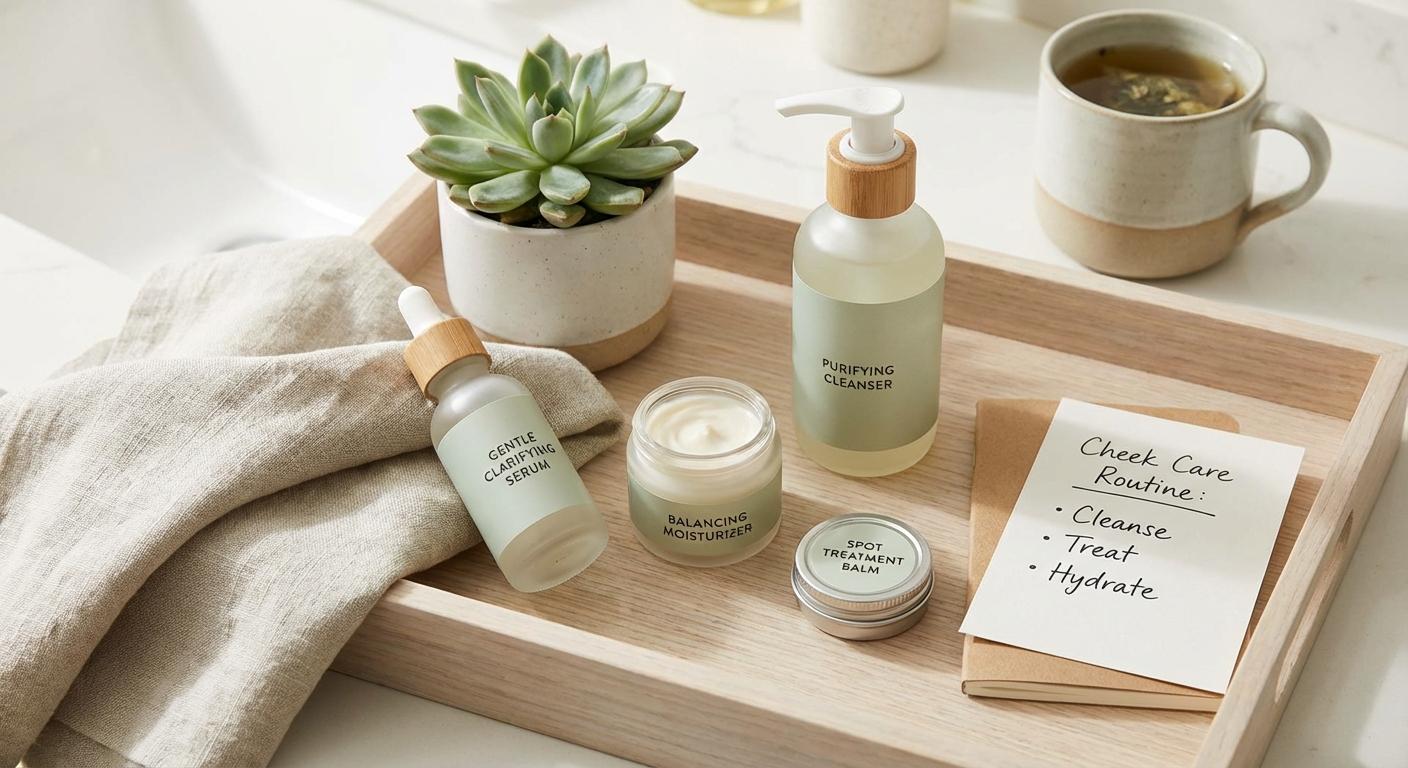
You probably think cheek acne is just regular acne that happens to show up on your cheeks. That assumption is costing you clear skin.
Cheek acne has its own triggers, its own patterns, and requires its own approach. The routine that clears your forehead will do nothing for your cheeks because the causes are completely different.
I spent years treating my cheek breakouts like regular acne before finally figuring out what was actually going on. Spoiler: it had nothing to do with my cleanser.
Why Your Cheeks Break Out Differently
Cheeks are prone to inflammatory acne like papules, pustules, and cysts rather than the blackheads and whiteheads you see in your T-zone. The skin here is thinner and more reactive to external irritants.
The biggest culprits for cheek acne are external factors you probably never considered:
- Your phone pressing against your face
- Your pillowcase collecting bacteria night after night
- Your hands touching your cheeks throughout the day
- Hair products transferring to your face while you sleep
Hormones can play a role too, but cheek acne that appears on one side more than the other is almost always environmental.
The Phone Problem Nobody Talks About
Your phone carries more bacteria than a toilet seat. Research published during the COVID-19 pandemic found that increased phone-to-face contact time directly correlated with more acne on the side of the face that touched the phone.
Think about what your phone touches throughout the day. Counters, tables, your bag, your hands after touching everything else. Then you press that bacteria-covered surface directly against your cheek for 20 minutes while talking to your mom.
Dr. Gizem Seymenoglu puts it bluntly: phones accumulate oils, makeup residue, and bacteria that transfer directly to your skin during calls.
Quick fixes that actually work:
- Use speakerphone or earbuds whenever possible
- Wipe your phone screen with a slightly damp microfiber cloth daily
- Stop holding your phone against your face during calls
- Notice which side you hold your phone on and check if that cheek breaks out more
Your Pillowcase Is Working Against You
Every night, your face marinates in a mix of oil, dead skin cells, bacteria, and whatever product residue is left on your hair and skin. Your pillowcase absorbs all of it and transfers it right back onto your cheeks.
According to dermatologist recommendations from Curology, people with acne-prone skin should change their pillowcase every two to three days. Not weekly. Every two to three days.
If that sounds excessive, consider this alternative: buy a pack of cheap cotton pillowcases and rotate through them. Or flip your pillowcase to the clean side every other night.
Silk pillowcases can go longer between washes because they do not absorb as much oil and bacteria. They are also gentler on skin and hair, which is a nice bonus.
Other pillow hygiene rules:
- Wash pillowcases on hot to kill bacteria
- Remove all makeup before bed without exception
- Tie hair back if you use styling products
- Notice which side you sleep on and whether that cheek is worse
Finding Your Personal Triggers
Cheek acne triggers are personal. What destroys your friend’s skin might be totally fine for you. The only way to know is to pay attention.
Start tracking:
- Which cheek breaks out more often
- When breakouts happen (time of month, after certain activities)
- What touched your face in the days before a breakout
- Any new products in your routine or environment
Common triggers people miss:
- New laundry detergent or fabric softener
- Touching face while working at a computer
- Resting chin or cheek on hands
- Scarves, masks, or anything else that rubs against cheeks
- Dirty makeup brushes (especially blush and bronzer brushes)
Once you identify your triggers, you can actually fix the problem instead of just treating symptoms.
A Cheek-Specific Treatment Routine
Now for the actual routine. Keep it simple. Dermatologist Dr. Margarita Lolis warns that using too many active ingredients at once will irritate your skin and make breakouts worse.
Morning:
- Gentle, fragrance-free cleanser
- Lightweight niacinamide serum to calm inflammation and control oil
- Oil-free, non-comedogenic moisturizer
- SPF 30+ sunscreen (non-negotiable, especially if using any actives)
Evening:
- Same gentle cleanser to remove the day
- Benzoyl peroxide spot treatment on active breakouts OR
- Retinoid on non-irritated skin (not both on the same night)
- Moisturizer
The American Academy of Dermatology guidelines strongly recommend benzoyl peroxide for reducing acne-causing bacteria and topical retinoids for preventing new breakouts.
Start with benzoyl peroxide at 2.5% concentration. Higher percentages are not more effective but are more irritating. Apply only to your cheeks if that is where your acne appears.
Retinoids take 8 to 12 weeks to show results. Do not give up after two weeks and assume they do not work.
What to Avoid on Your Cheeks
Your cheeks do not need everything your T-zone needs. Over-treating makes things worse.
Skip these on your cheeks:
- Harsh physical scrubs that create micro-tears
- Multiple acids layered in one routine
- Heavy occlusives if you are prone to clogged pores
- Fragrance and essential oils
If your current routine is irritating your cheeks, the irritation itself can trigger more breakouts. Damaged skin barrier plus bacteria equals more acne.
When Basic Changes Are Not Enough
If you have been religious about pillow hygiene, stopped pressing your phone to your face, and followed a simple routine for 8 to 12 weeks without improvement, see a dermatologist.
Persistent cheek acne might need prescription-strength treatment. Options include topical or oral antibiotics, higher-strength retinoids, or for hormonal acne, medications like spironolactone.
Do not suffer through years of trial and error when a professional can identify the problem faster. Your skin is worth the investment.
Making It Work
Cheek acne is not random. It responds to specific triggers that are usually within your control. Clean your phone. Change your pillowcase. Stop touching your face. Use targeted treatments without going overboard.
The routine matters, but addressing the source matters more. Figure out what is touching your cheeks and eliminate those variables before blaming your skincare.