
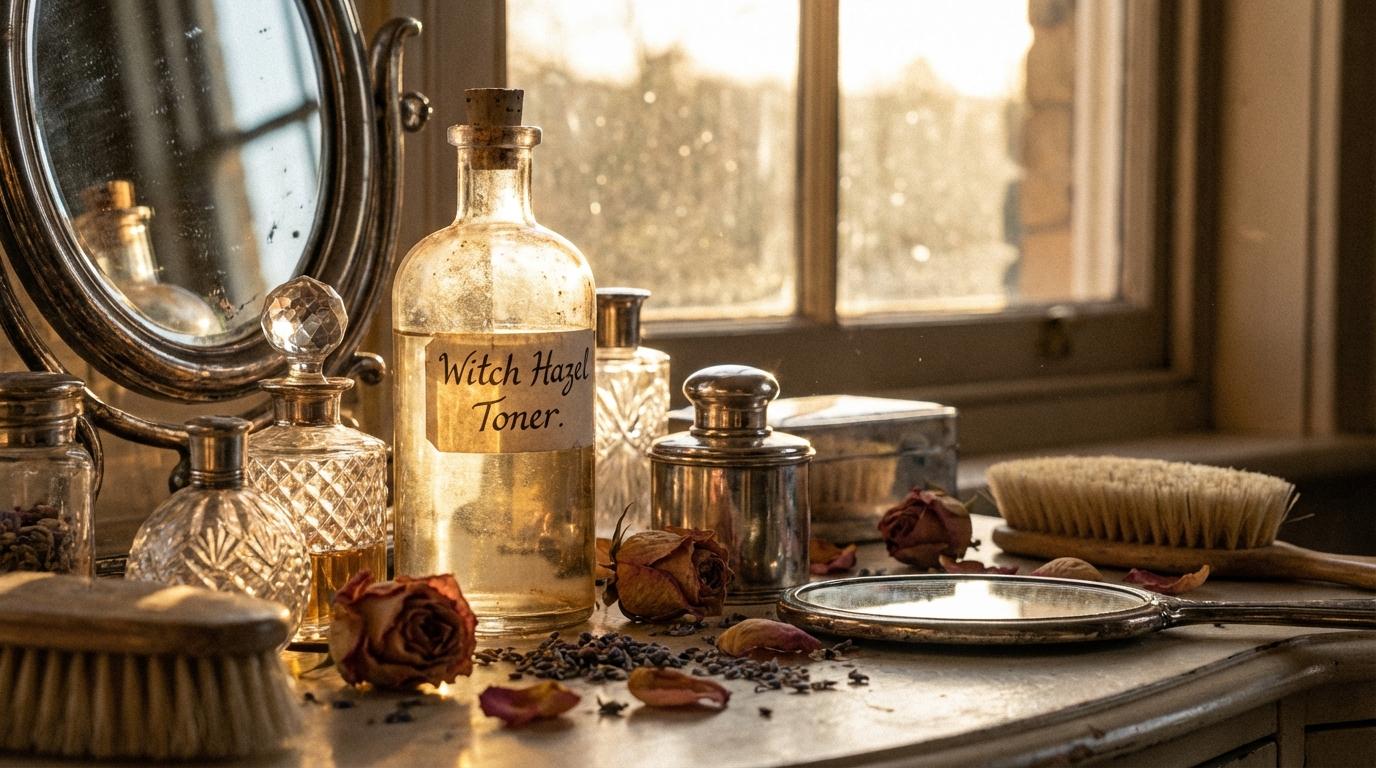
Roughly 67% of toners on drugstore shelves list witch hazel as a main ingredient, making it one of the most common astringent components you’ll encounter while shopping. But here’s the thing: that popularity doesn’t necessarily mean it’s the right choice for your skin. As someone who spent years in biochemistry labs studying plant extracts, I’ve developed a complicated relationship with this ingredient. Witch hazel can be genuinely useful for specific skin types, yet it causes real problems for others, often without people realizing the connection.
What Exactly Is Witch Hazel?
Witch hazel (Hamamelis virginiana) is a shrub native to North America, and its bark and leaves have been used medicinally for centuries. The extract contains tannins, which are polyphenolic compounds that give it astringent properties. When applied to skin, tannins cause proteins to coagulate slightly, leading to that familiar tightening sensation many people associate with “clean” skin.
The important distinction most brands don’t emphasize: there are fundamentally different types of witch hazel preparations available. Steam-distilled witch hazel water contains very few tannins (the beneficial part) but often has 14-15% alcohol added as a preservative. Meanwhile, witch hazel extract retains more tannins but may also contain alcohol depending on the extraction process. A study published in the Journal of Inflammation confirmed that the tannin-rich forms demonstrate anti-inflammatory activity, while the alcohol-diluted versions primarily just dry out skin.
The Alcohol Problem Nobody Talks About
When you grab that affordable witch hazel toner from the pharmacy, you’re almost certainly getting the steam-distilled version with alcohol. This formulation became standard because it’s cheaper to produce and has a longer shelf life. The catch? Alcohol systematically damages your skin barrier with repeated use.
Your skin barrier is essentially a wall of lipids (fats) that keeps moisture in and irritants out. Alcohol dissolves lipids. Every time you swipe on alcohol-based witch hazel, you’re stripping away some of that protective layer. Short term, your skin might feel less oily. Long term, you’re setting yourself up for increased sensitivity, dehydration, and paradoxically, more oil production as your skin tries to compensate.
Research from dermatologists at the American Academy of Dermatology consistently shows that alcohol-based products compromise barrier function, especially with daily use. If you’ve been using witch hazel religiously and wondering why your skin seems more reactive lately, this could be your culprit.
Alcohol-Free Versions: Are They Actually Better?
Alcohol-free witch hazel products do exist, and they retain more of the actual beneficial compounds. Brands like Thayers popularized this approach, using vegetable glycerin instead of alcohol as a humectant base. These formulations are genuinely gentler and preserve more of the tannin content that provides anti-inflammatory benefits.
The science supports some benefits of tannin-rich witch hazel:
- Mild astringent effects that can temporarily minimize pore appearance
- Anti-inflammatory properties helpful for minor skin irritation
- Antioxidant activity from the polyphenols
- Potential antimicrobial effects against certain bacteria
However, even alcohol-free witch hazel has limitations. The astringent effect that makes pores look smaller is temporary and purely cosmetic. The tannins don’t actually change pore size or reduce oil production at the source. For people with dry or sensitive skin, even the gentler versions can cause tightness and irritation over time. And if you’re prone to conditions like eczema or rosacea, the astringent action may trigger flares.
How Different Skin Types React
Understanding your skin type matters enormously when deciding whether witch hazel makes sense for you.
Oily skin: This is where witch hazel finds its most appropriate audience. If you produce excess sebum and have resilient skin that doesn’t react easily, alcohol-free witch hazel can work as a lightweight toner. The temporary oil-absorbing effect feels refreshing, and the anti-inflammatory properties may help with occasional breakouts. Just don’t expect miracles with actual oil control, since the effect is surface-level.
Combination skin: Proceed with caution. Using witch hazel all over when you have both oily and dry zones means the drier areas suffer for the benefit of the oily ones. If you want to try it, consider applying only to your T-zone and using a hydrating toner on cheeks.
Dry skin: Skip it entirely. Even alcohol-free versions have an astringent quality that pulls moisture from already-dehydrated skin. You need toners that add hydration, not ones that temporarily tighten and then leave you parched.
Sensitive skin: The risk-benefit ratio doesn’t work out. Astringents are inherently a bit harsh, and sensitive skin needs soothing, not constricting. The anti-inflammatory benefits don’t outweigh the potential for irritation when your skin is already reactive.
Better Toner Alternatives Worth Considering
If witch hazel isn’t serving you well, plenty of toner ingredients offer comparable or superior benefits without the drawbacks.
Niacinamide toners: Niacinamide actually regulates sebum production at a cellular level, unlike witch hazel’s surface-level oil absorption. Studies show concentrations of 2-5% can reduce oil production, minimize pore appearance (genuinely, not just temporarily), and strengthen the skin barrier. It’s suitable for nearly all skin types.
Hyaluronic acid toners: For anyone dealing with dehydration, hyaluronic acid attracts and holds water in the skin. Korean and Japanese beauty brands have perfected these lightweight, layerable formulas that add moisture rather than stripping it. Even oily skin benefits because hydrated skin produces less compensatory oil.
BHA (salicylic acid) toners: If you’re using witch hazel for breakout control, salicylic acid is more effective. It’s oil-soluble, so it can actually penetrate pores and dissolve the sebum and dead skin cells causing congestion. Look for 0.5-2% concentrations depending on your tolerance. Dr. Shereene Idriss frequently recommends BHA toners on her Instagram for acne-prone skin.
Centella asiatica toners: For anti-inflammatory benefits without astringency, centella (cica) delivers. The active compounds, including madecassoside and asiaticoside, reduce inflammation and support barrier repair. This makes it ideal for sensitive or reactive skin that needs calming.
Making an Informed Decision
I’m not going to tell you witch hazel is universally bad, because that’s not accurate. For the right person using the right formulation, it can be a perfectly reasonable toner ingredient. The problems arise when people with dry, sensitive, or compromised skin use it because it’s inexpensive and widely available, without understanding what it actually does.
If you want to test witch hazel, start with an alcohol-free version and use it only every other day for two weeks. Pay attention to how your skin feels a few hours after application, not immediately. If you notice increased tightness, flakiness, or sensitivity, your skin is telling you something important. That “squeaky clean” feeling isn’t healthy skin talking, it’s your barrier waving a white flag.
For those already experiencing issues from witch hazel overuse, the fix involves stepping back to basics. A gentle, hydrating routine focused on barrier repair will help. Look for products containing ceramides, fatty acids, and humectants. Give your skin a few weeks without any astringent products, and you’ll likely notice significant improvement in texture and comfort.
What Actually Matters in a Toner
The toner step exists to prep skin for subsequent products and add a layer of treatment benefits. What you need from that step depends entirely on your skin’s current condition.
If you’re oily: look for oil-regulating ingredients like niacinamide or zinc, or pore-clearing acids like salicylic acid. If you’re dry: hydrating toners with hyaluronic acid, glycerin, or aloe work better than anything astringent. If you’re sensitive: calming ingredients like centella, allantoin, or oat extract protect rather than challenge your skin.
Witch hazel fills a narrow niche, and that’s okay. Not every ingredient needs to work for everyone. The real win is understanding which ingredients serve your specific skin, then building a routine around those instead of following generic advice about what “everyone” should use.
Your skin’s needs will change with seasons, age, and life circumstances. What worked at 18 might irritate you at 25. The ability to evaluate ingredients based on how they actually function, rather than marketing claims, gives you flexibility to adapt. And sometimes adapting means letting go of a product that served you once but doesn’t anymore.