
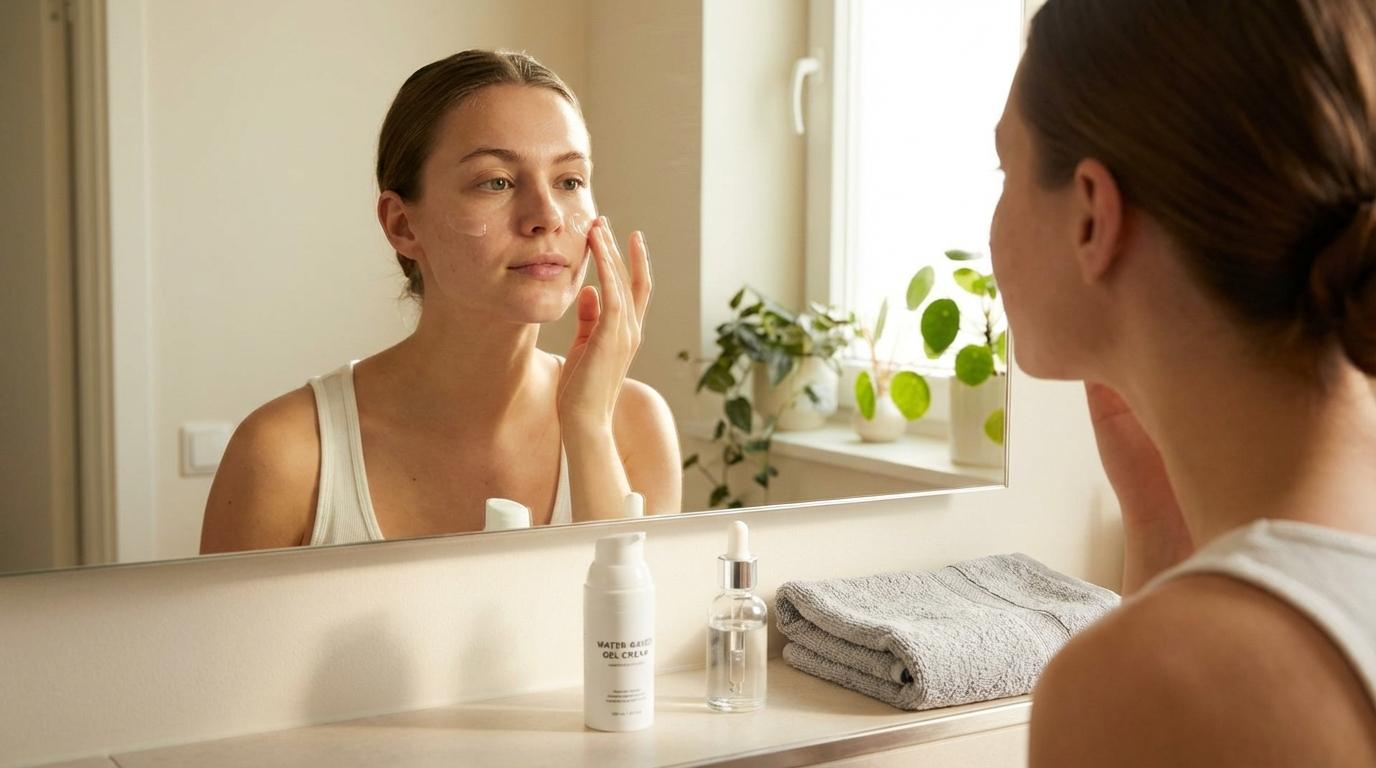
Here’s something that trips up a lot of people: oily skin and dehydrated skin are not opposites. They’re not even on the same spectrum. One is about oil, the other is about water. And yes, your shiny, pore-clogging, foundation-sliding-off-by-noon skin can absolutely be thirsty for moisture at the same time. Let me explain why this matters and what to actually do about it.
Oil and Water: Two Different Problems
Your skin type (oily, dry, combination, normal) is largely genetic. It’s determined by how much sebum your sebaceous glands pump out. Oily skin means those glands are working overtime, giving you that characteristic shine, especially across your forehead, nose, and chin.
Dehydration, though? That’s a skin condition, not a type. It means your skin lacks water in its outer layers. Anyone can experience it, whether your skin normally produces a lot of oil or barely any. Think of it this way: oil is about lubrication, water is about cellular plumpness. Your skin needs both to function properly.
According to Dermalogica’s skincare experts, dehydrated oily skin is surprisingly common, especially in people with combination or acne-prone skin. The confusion happens because we assume shine equals moisture. It doesn’t.
Signs Your Oily Skin Is Actually Dehydrated
So how do you know if your greasy-looking skin is secretly parched? Look for these clues:
- Dullness: Despite all that oil, your complexion looks flat and tired, missing that healthy radiance
- Tightness: Your skin feels tight after cleansing, even though it gets oily again within an hour
- Fine lines: Not deep wrinkles, but small surface lines that seem to appear and disappear depending on the day
- Flaky patches: Yes, you can have flakes AND oil at the same time. Usually around the nose or forehead
- Increased breakouts: When skin is dehydrated, it often overcompensates by producing even more oil, which leads to clogged pores
That last point is crucial. When your skin senses it’s low on moisture, it can respond by ramping up oil production. It’s trying to protect itself, but the result is a frustrating cycle: more oil, more clogged pores, more breakouts, and skin that still feels uncomfortable underneath all that shine.
What’s Stripping Your Skin’s Moisture
If you have oily skin, you’ve probably done at least a few things that contribute to dehydration without realizing it:
Over-cleansing: Washing your face three times a day because it feels greasy. Using scrubs every night. Double cleansing when you didn’t even wear makeup. I get it, but every time you strip away oil, you’re also disrupting the barrier that holds water in.
Harsh products: Foaming cleansers with sulfates, alcohol-based toners, and strong acne treatments can all compromise your moisture barrier. According to the London Dermatology Centre, over-washing with harsh cleansers is one of the most common causes of dehydrated oily skin.
Skipping moisturizer entirely: This is the big one. So many people with oily skin avoid moisturizer because they think it will make them greasier. But without a moisturizer to seal in water, your skin loses hydration throughout the day.
Environmental factors: Air conditioning, indoor heating, cold weather, wind. All of these pull water from your skin’s surface. If you work in an office with aggressive AC, your skin is dealing with that for eight hours straight.
The Routine That Actually Works
Here’s where we fix things. The goal is simple: add water to your skin and keep it there, without adding more oil or clogging pores.
Step 1: Gentle Cleanser
Switch to a cleanser that removes excess oil without stripping everything. Look for gel or cream formulas without sulfates. If your skin feels tight and squeaky after washing, your cleanser is too harsh. Your skin should feel clean but comfortable.
Cleanse twice a day maximum. Morning and night. That’s it. If you feel oily midday, blotting papers are your friend.
Step 2: Hydrating Toner or Essence
Skip the astringent toners marketed for oily skin. The ones that make your face tingle? They’re often loaded with alcohol and will make dehydration worse. Instead, look for hydrating toners with ingredients like:
- Hyaluronic acid: This molecule can hold up to 1000 times its weight in water. It draws moisture into your skin and helps it stay there
- Glycerin: A humectant that attracts water from the environment and deeper skin layers
- Niacinamide: Helps restore your skin barrier while also controlling oil production
Apply to damp skin. This is important. Hyaluronic acid works best when there’s water available to pull into the skin.
Step 3: Lightweight Serum
A hydrating serum adds another layer of water-based moisture without heaviness. Look for serums with hyaluronic acid, peptides, or centella asiatica. Apply while your toner is still slightly tacky.
Step 4: Oil-Free Moisturizer
Yes, you need moisturizer. But you need the right kind. Celebrity dermatologist Dr. Dennis Gross explains that water-based moisturizers provide internal hydration that plumps and hydrates without sitting on top of your skin like oils do.
Look for gel or gel-cream formulas labeled oil-free and noncomedogenic. Board-certified dermatologist Dr. Michele Green notes that noncomedogenic products won’t clog pores, making them ideal for oily, acne-prone skin.
Some options dermatologists frequently recommend:
- Lightweight gel moisturizers with hyaluronic acid
- Water-gel formulas that absorb quickly
- Mattifying moisturizers that hydrate while controlling shine
Step 5: Sunscreen (Non-Negotiable)
UV damage compromises your moisture barrier. Every single day, rain or shine, office day or beach day. Look for lightweight, matte-finish sunscreens designed for oily skin. Many Korean and Japanese sunscreens have elegant formulas that won’t leave you looking greasy.
Ingredients to Embrace vs. Avoid
Let me break this down simply:
Seek out:
- Hyaluronic acid (hydration without oil)
- Niacinamide (barrier repair + oil control)
- Ceramides (water retention)
- Glycerin (humectant)
- Centella asiatica (soothing)
- Squalane (technically an oil, but lightweight and mimics skin’s natural sebum)
Approach with caution:
- Heavy oils like coconut oil or mineral oil
- Alcohol denat (drying)
- Fragranced products (can irritate compromised barriers)
- Harsh sulfates in cleansers
How Long Until You See Results
Be patient. According to dermatologists, most people notice improvements in 2-4 weeks of consistent care. However, significant changes in skin texture and hydration levels can take 6-8 weeks.
During the first week or two, you might actually notice your skin producing less oil as it adjusts to being properly hydrated. This is a good sign. Your skin is calming down because it no longer feels the need to overcompensate.
Common Mistakes to Avoid
A few things I see people mess up when trying to hydrate oily skin:
Using heavy creams: You don’t need thick, rich moisturizers. They’ll feel suffocating and may cause breakouts. Stick to gels and lightweight lotions.
Layering too many products: More layers doesn’t always mean more hydration. If products are pilling or your skin feels congested, scale back.
Forgetting consistency: Hydration isn’t a one-time fix. Your skin needs consistent, daily care. Doing a hydrating mask once a month while skipping moisturizer daily won’t solve the problem.
Giving up too soon: Your skin needs time to repair its barrier. If you switch products every few days, you’ll never know what’s actually working.
Making Peace With Your Skin
Here’s what I want you to take away from all this: oily skin is not bad skin. It’s just skin that produces more sebum. With proper hydration, that oil can actually work in your favor, keeping your skin plump and helping you age more gracefully than those of us with dry skin.
The key is balance. Give your skin the water it needs, protect its barrier, stop trying to scrub the oil away, and you’ll likely find that the excess shine calms down on its own. Your skin isn’t working against you. It’s just asking for what it needs.
Start with one change at a time. Maybe swap your harsh cleanser first, or add a hydrating toner. Small adjustments, consistently applied, will get you further than a complete routine overhaul that you abandon after a week. Your oily, thirsty skin can absolutely find its happy place. The science says so, and honestly? I’ve seen it happen over and over again.