
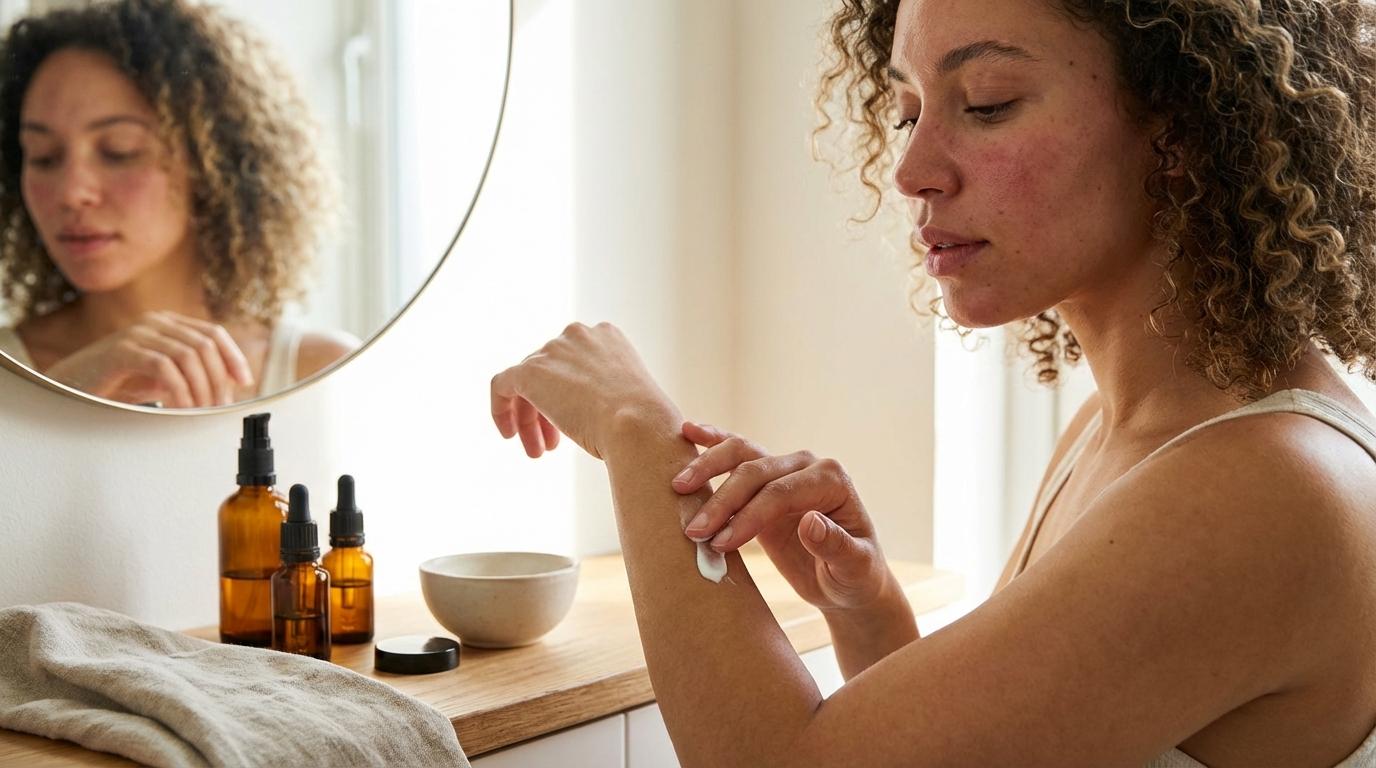
If your skin stings, burns, or flares up every time you try a new product, you already know the frustration. While everyone else seems to layer serums and acids without a second thought, your face has other plans. The good news? Burning, reactive skin is not a life sentence. With the right approach, you can build a routine that actually works for you.
Why Does Your Skin Burn So Easily?
Before fixing anything, you need to understand what is happening. When your skin burns from products, the most common culprit is a compromised skin barrier. Think of your skin barrier as a brick wall. The “bricks” are your skin cells, and the “mortar” is made up of lipids, ceramides, and fatty acids that hold everything together. When that mortar breaks down, your skin becomes porous and vulnerable.
With a damaged barrier, even gentle products can penetrate too quickly and irritate the nerve endings underneath. That burning sensation is literally your nerves telling you something is wrong.
Common reasons your barrier might be compromised include:
- Over-exfoliation or using too many active ingredients
- Harsh cleansers that strip natural oils
- Cold, dry weather or indoor heating
- Medical conditions like eczema, rosacea, or contact dermatitis
- Using products with alcohol, fragrance, or strong preservatives
Recognizing Your Sensitivity Triggers
The first step to building a routine for reactive skin is figuring out what sets you off. Not all sensitive skin is the same. Some people react to fragrance but tolerate acids just fine. Others can use retinol but not vitamin C. Knowing your specific triggers saves you money, time, and a lot of discomfort.
Start keeping a simple skin diary. When you try something new and your skin reacts, write down:
- The product name and brand
- The full ingredient list (take a photo of the packaging)
- When you applied it and how long before symptoms appeared
- What the reaction looked like (redness, stinging, bumps, peeling)
After a few reactions, you will likely spot patterns. Maybe it is always products with essential oils. Maybe anything with niacinamide above 5% makes you flush. This information is gold when shopping for new products.
According to dermatologists at the American Academy of Dermatology, keeping your routine minimal with fragrance-free, alcohol-free products significantly reduces the chance of irritation.
Patch Testing: Your New Best Friend
If your skin burns easily, patch testing is not optional. It is essential. Yes, it takes patience. Yes, it is annoying when you just want to try your new purchase immediately. But a small patch test beats a full-face reaction every single time.
Here is how to patch test properly:
- Choose a small area, ideally behind your ear or on your inner forearm first, then a small spot on your jawline
- Apply a tiny amount of the product
- Wait 24 to 48 hours for cleansers and moisturizers, up to a week for actives
- Watch for redness, itching, burning, or bumps
- If nothing happens, try it on a slightly larger area before going full-face
One important note: some products cause delayed reactions. A retinol might feel fine the first two days and then cause peeling on day four. Give new products at least a week of observation before declaring them safe for your skin.
Building Your Calming Routine
When your skin burns easily, the goal is barrier repair and protection. Forget the 10-step routines. You want as few products as possible, and every single one should earn its place.
Step 1: Gentle Cleanser
Your cleanser should never leave your skin feeling tight or squeaky clean. That tightness is your skin screaming that it just lost its protective oils. Look for cream or milk cleansers with a pH between 4.5 and 6.5. Avoid anything that foams aggressively.
Ingredients to look for: glycerin, ceramides, gentle surfactants like coco-glucoside. Ingredients to avoid: sulfates (especially SLS and SLES), alcohol denat, and anything with “fragrance” or “parfum” on the label.
Step 2: Hydrating Toner or Essence (Optional)
If you use a toner, make it a hydrating one. Skip anything with alcohol, witch hazel, or strong acids. A simple hydrating toner with hyaluronic acid or aloe can add moisture without causing problems. But if your skin is very reactive right now, you can skip this step entirely until things calm down.
Step 3: Treatment (Go Slow)
This is where most people with sensitive skin get into trouble. When your barrier is compromised, adding actives like retinol, vitamin C, or exfoliating acids is like pouring lemon juice on a paper cut.
If you want to use treatments, wait until your skin feels stable. No burning from your basic cleanser and moisturizer for at least two weeks. Then introduce ONE treatment at a time, at the lowest concentration available, once or twice a week. The London Dermatology Centre recommends starting with a small amount once a week and gradually working up to avoid overwhelming sensitive skin.
Gentle alternatives worth considering:
- Instead of retinol, try bakuchiol. It offers similar anti-aging benefits without the irritation
- Instead of glycolic acid, try PHA (polyhydroxy acids) which are larger molecules that work more slowly and gently
- Keep niacinamide under 5% concentration to avoid flushing
Step 4: Moisturizer
Your moisturizer is doing the heavy lifting in a sensitive skin routine. This is where you want barrier-repairing ingredients that strengthen and protect.
Key ingredients to look for:
- Ceramides: These are the “mortar” that holds your skin barrier together
- Centella Asiatica (cica): Anti-inflammatory and promotes healing
- Panthenol (vitamin B5): Soothes and hydrates
- Allantoin: Calms irritation and supports skin repair
- Squalane or fatty acids: Restore moisture without clogging pores
Apply to slightly damp skin to lock in extra hydration. If your skin is extremely reactive, you can even “buffer” treatments by applying moisturizer first, then your active on top. This slows absorption and reduces irritation.
Step 5: Sunscreen (Non-Negotiable)
Reactive skin is often more susceptible to sun damage, and UV exposure can make sensitivity worse over time. But finding a sunscreen that does not sting is its own challenge.
Mineral (physical) sunscreens with zinc oxide or titanium dioxide are generally better tolerated than chemical filters. Look for formulas marketed for sensitive skin or babies. Yes, they might leave a slight white cast, but newer formulations have improved significantly.
Apply generously every morning, even if you are staying indoors. UV rays come through windows, and blue light from screens may also contribute to skin stress.
Building Tolerance Slowly
Once your skin is calm and stable, you might want to reintroduce some of the products or actives that previously caused problems. This is possible, but you have to be strategic.
The technique is called “short contact therapy.” You apply the product for a limited time, then wash it off. Start with just 5 minutes, then gradually increase to 10, 15, 20 minutes over several weeks. Eventually, your skin may tolerate leaving the product on overnight.
Another approach is to mix a small amount of the active into your moisturizer to dilute it. This reduces concentration and gives your skin time to adjust.
If you want to introduce retinol, the Dr. Derme Skin Clinics recommends starting with the lowest available strength, using it just once a week, and slowly building to every other night over several months. Patience is not glamorous, but it works.
What To Do When Your Skin Is Already Burning
Sometimes despite your best efforts, your skin reacts badly. When that happens:
- Stop using the product immediately. Do not try to push through it
- Rinse with cool water. Avoid hot water which can increase inflammation
- Apply a simple, fragrance-free moisturizer to create a protective layer
- Skip all actives until your skin recovers. This might take several days to a week
- If symptoms are severe, include blistering or swelling, or do not improve within a few days, see a dermatologist
A damaged barrier can take anywhere from 2 weeks to 3 months to fully repair, depending on severity. During this time, keep your routine as boring as possible. Cleanser, moisturizer, sunscreen. That is it.
Products That Usually Work for Reactive Skin
While everyone’s triggers are different, certain product categories tend to be well-tolerated by sensitive skin. Look for products marketed specifically for sensitive, eczema-prone, or rosacea-prone skin. Brands that specialize in this area often skip common irritants entirely.
When reading ingredient lists, shorter is usually better. The L’abu Skin dermatology guide notes that products with fewer ingredients have less chance of containing something your skin might react to.
The Bottom Line
Building a routine for easily reactive skin takes time and patience. Start with the basics: a gentle cleanser, a barrier-repairing moisturizer, and mineral sunscreen. Track your reactions so you learn your specific triggers. Patch test everything, no exceptions. And when you are ready to add actives, go slower than you think you need to.
Your skin is not broken. It is just asking for a different approach. Give it what it needs, and it will cooperate. It just might take a little longer than the TikTok influencers make it seem.