
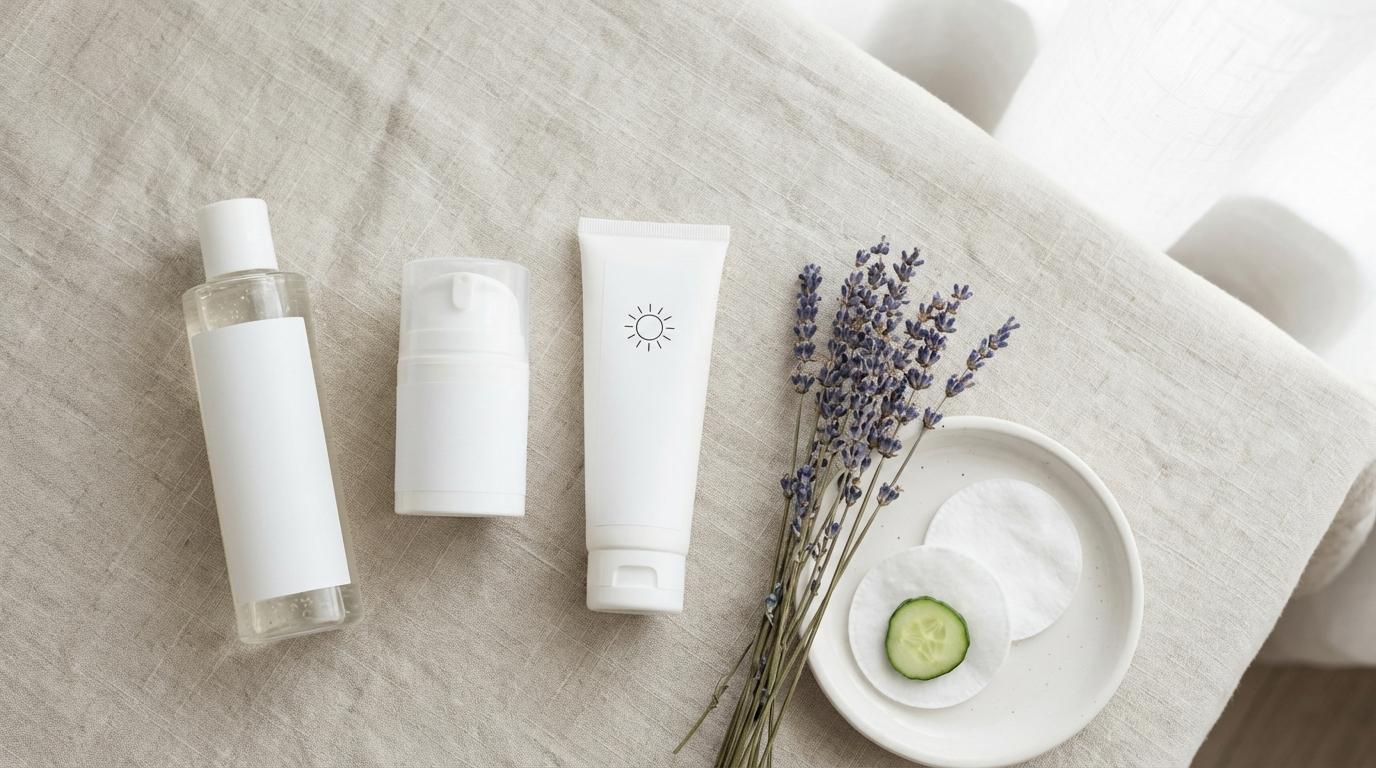
I spent years as a beauty editor watching brands convince people that more products meant better skin. Spoiler: they were wrong. The skincare industry profits when you feel confused and incomplete. But your skin? It needs three things to function well. Just three.
Not ten. Not seven. Three.
I watched countless readers and friends burn through hundreds of dollars chasing elaborate routines. Some ended up with irritated skin. Others just felt overwhelmed and gave up entirely. Meanwhile, the people with the clearest skin I know use almost nothing.
The Cleanser: Your Foundation
Every routine starts here. A cleanser removes dirt, oil, makeup, and environmental grime that accumulates throughout the day. Without proper cleansing, nothing else matters because your other products sit on top of debris instead of reaching your skin.
What makes a good cleanser? It should clean without stripping. If your face feels tight after washing, your cleanser is too harsh. Period. That “squeaky clean” feeling is actually your skin crying for help.
Look for:
- Gentle surfactants (avoid sodium lauryl sulfate if you have sensitive skin)
- A pH between 4.5 and 6.5 (close to your skin’s natural pH)
- No fragrance if irritation is a concern
The research on facial cleansers consistently shows that gentle formulations outperform harsh ones for maintaining skin barrier function. You don’t need a 0 cleanser. A basic, well-formulated one from the drugstore works perfectly.
The Moisturizer: Lock It In
Moisturizers do two jobs: they add hydration and they prevent water loss. Even oily skin needs this step. Skipping moisturizer because you’re oily often makes oil production worse. Your skin overcompensates when it feels dehydrated.
What to look for depends on your skin type:
- Oily skin: lightweight, gel-based formulas with hyaluronic acid
- Dry skin: richer creams with ceramides and fatty acids
- Combination: start light, add more where needed
The key ingredients that actually work include ceramides (which studies show help repair the skin barrier), glycerin, hyaluronic acid, and squalane. Everything else is bonus.
Apply to damp skin. This traps more water and boosts effectiveness. It takes two seconds and makes a real difference.
The Sunscreen: Non-Negotiable Protection
I’m going to be blunt. If you skip sunscreen, you’re undoing everything else you do for your skin. UV damage causes up to 80% of visible skin aging. That includes wrinkles, dark spots, and texture changes. All the serums in the world cannot compete with consistent sun protection.
Use SPF 30 or higher. Apply enough (about a quarter teaspoon for your face). Reapply every two hours when outdoors. These aren’t suggestions. They’re the bare minimum for effectiveness.
Chemical or mineral? Both work. Chemical filters absorb UV rays and convert them to heat. Mineral filters (zinc oxide, titanium dioxide) sit on top and reflect rays. Pick whichever formula you’ll actually wear daily. The best sunscreen is the one you use consistently.
The American Academy of Dermatology recommends broad-spectrum protection, meaning it blocks both UVA and UVB rays. Check the label.
Everything Else Is Optional
Serums, toners, essences, masks, exfoliants. These can be helpful additions. They are not requirements. You can absolutely add a vitamin C serum if you want extra antioxidant protection. Retinol is great for anti-aging concerns. Niacinamide helps with texture and pores.
But here’s what matters: these extras only work when your basics are solid. A 00 serum applied over damaged, dehydrated skin sitting under no sunscreen does approximately nothing useful.
When should you add more? Only when:
- Your basic routine is consistent (at least 4 weeks)
- You have a specific concern to address
- You’re willing to introduce products slowly, one at a time
If you want to know more about building a practical routine without breaking the bank, we have resources here that cut through the noise.
The Real Talk
Skincare brands want you to feel like you need their entire line. You don’t. Dermatologists don’t use 10 products. Estheticians with gorgeous skin often stick to basics. The elaborate routines you see online are often sponsored content or just one person’s preference, not requirements.
Start with cleanser, moisturizer, and sunscreen. Do that for a month. See how your skin responds. Most people find their skin improves with this simplicity because they stop overwhelming it with too many active ingredients.
Your skin is not a project to fix. It’s an organ that functions best when you support it, not when you bombard it with fifteen different products fighting for dominance.
Three steps. That’s it. Everything else is just marketing.