
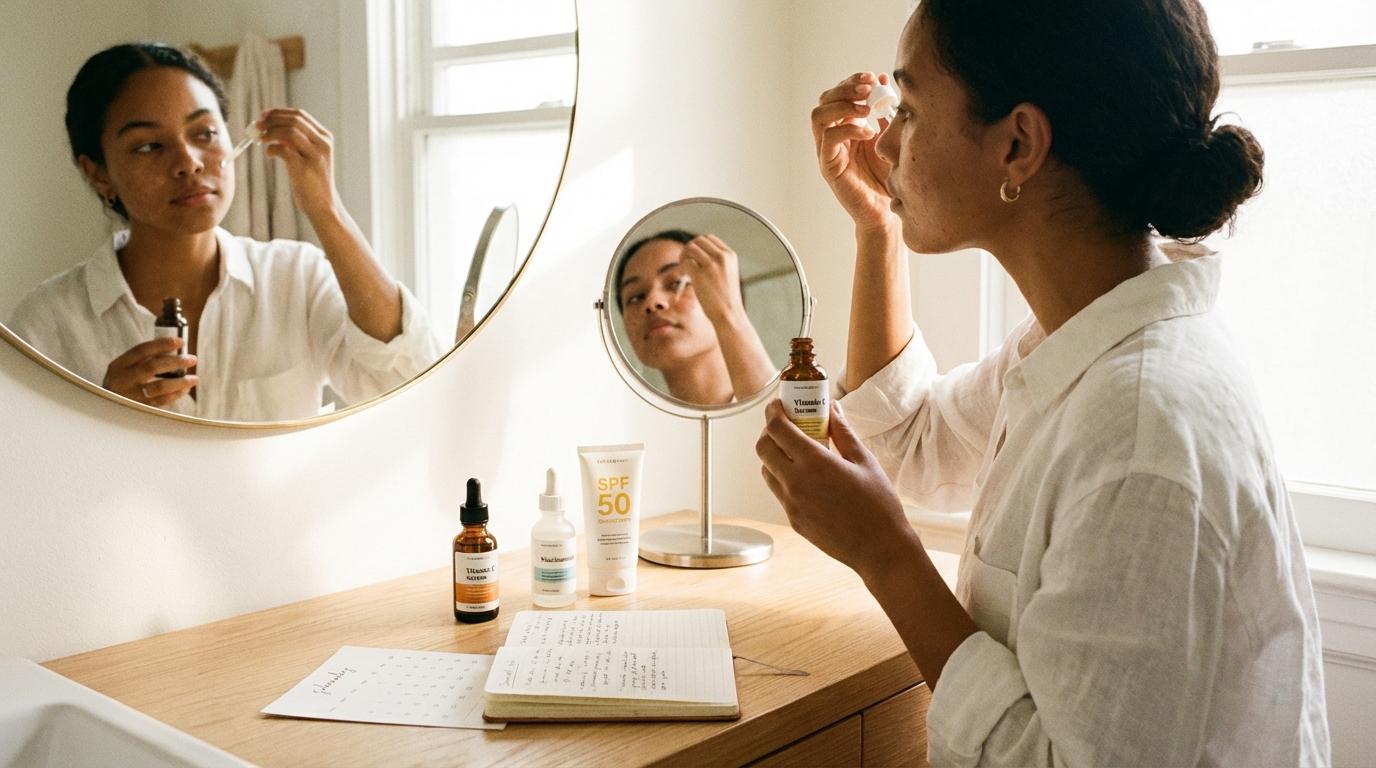
If you have ever looked in the mirror and noticed that some parts of your face seem darker or more mottled than others, you are dealing with uneven skin tone. It is incredibly common, and the good news is that it is something you can actually address with the right routine. The not-so-good news? It takes time and consistency. Let me walk you through what is happening in your skin and how to build a routine that works.
What is Actually Causing Your Uneven Skin Tone?
Most cases of uneven skin tone come down to one thing: melanin distribution. Melanin is the pigment that gives your skin its color, and when it gets deposited unevenly, you end up with darker patches, spots, or an overall mottled appearance.
This can happen for several reasons. Sun exposure is the biggest culprit because UV rays trigger your melanocytes (the cells that produce melanin) to go into overdrive. Post-inflammatory hyperpigmentation, or PIH, is another major cause. This is when dark marks linger after acne, cuts, or any kind of skin inflammation. Hormonal changes can also play a role, which is why conditions like melasma often appear during pregnancy or while taking birth control.
Understanding the cause matters because different types of hyperpigmentation respond differently to treatment. A dark spot from a healed pimple will fade faster than melasma, which tends to be more stubborn. This is why managing expectations is so important.
The Brightening Ingredients Worth Knowing
When it comes to evening out your skin tone, certain ingredients have solid evidence behind them.
Vitamin C is an antioxidant that inhibits tyrosinase, the enzyme responsible for melanin production. It also helps neutralize free radicals from sun exposure, which can trigger pigmentation. Look for L-ascorbic acid at concentrations between 10-20 percent for the most research-backed results.
Niacinamide works differently. Instead of blocking melanin production, it prevents melanin from being transferred to your skin cells. It is gentler than vitamin C and plays well with most other ingredients. Concentrations of 4-5 percent are effective for most people.
Alpha arbutin is another tyrosinase inhibitor, derived from the bearberry plant. It is gentler than hydroquinone but still effective for fading dark spots over time.
Azelaic acid does double duty. It inhibits tyrosinase and has anti-inflammatory properties, making it particularly useful for PIH from acne. It is available in both prescription and over-the-counter strengths.
Retinoids speed up cell turnover, which helps fade existing pigmentation faster. They also help your brightening serums penetrate more effectively. Start with a lower strength like retinol before considering prescription options.
How to Layer Your Brightening Routine
You cannot just throw all these ingredients on your face at once and expect results. The order matters, and so does the timing.
Morning routine:
- Gentle cleanser
- Vitamin C serum (let it absorb for a minute or two)
- Niacinamide moisturizer or serum
- Sunscreen (this is non-negotiable)
Evening routine:
- Oil cleanser or micellar water (if wearing sunscreen or makeup)
- Gentle cleanser
- Azelaic acid or alpha arbutin serum
- Retinoid (start 2-3 times per week, gradually increase)
- Moisturizer
A note on layering: do not use vitamin C and retinoids at the same time. Vitamin C works best at a low pH, while retinoids need a higher pH to be effective. Using them together can make both less effective and more irritating. Keep vitamin C in the morning and retinoids at night.
Also, you do not need to use every single brightening ingredient. Pick one or two and use them consistently. Adding more products does not mean faster results. It usually just means more irritation.
Sunscreen: The Step You Cannot Skip
I need to be very direct about this: if you are not wearing sunscreen daily, nothing else in your routine will work properly. UV exposure is constantly triggering new melanin production, so while your brightening serums are trying to fade existing pigmentation, the sun is creating new spots.
SPF 30 is the minimum. SPF 50 is better if you are actively treating hyperpigmentation. Reapply every two hours if you are outside, or at least once midday if you are mostly indoors near windows.
Yes, this applies even on cloudy days. Yes, this applies even in winter. UV rays do not take days off, and neither should your sunscreen.
Setting Realistic Expectations
Evening out your skin tone takes months, not weeks. The average skin cell turnover cycle is about 28 days, which means the bare minimum to see any change is one month. More realistically, you are looking at 3-6 months of consistent use to see noticeable improvement.
Some things fade faster than others. Fresh PIH (those dark marks left after a pimple heals) can fade within a few months. Sun spots that have been there for years will take longer. Melasma is the most stubborn and may never fully disappear, though it can be significantly lightened with the right approach.
Progress often happens so gradually that you do not notice it day to day. Take photos once a month in the same lighting to track your results. It is much easier to see the difference when you can compare side by side.
When to See a Dermatologist
Over-the-counter products can do a lot, but they have their limits. If you have been consistent with a good routine for 3-4 months and are not seeing improvement, it might be time to see a dermatologist. They can prescribe stronger options like tretinoin or hydroquinone, or recommend procedures like chemical peels or laser treatments that can accelerate results.
If your hyperpigmentation appeared suddenly without an obvious cause, or if it is accompanied by other symptoms, definitely get it checked out. Sometimes skin changes can indicate underlying health issues that need attention.
The Bottom Line
Evening out your skin tone is absolutely achievable, but it requires patience and consistency. Focus on sun protection first, add in proven brightening ingredients one at a time, and give your routine at least three months before judging whether it is working.
The routine I have outlined here is a solid starting point for most people dealing with hyperpigmentation. Adjust based on how your skin responds, and remember that gentleness and consistency beat aggressive treatment every time.