
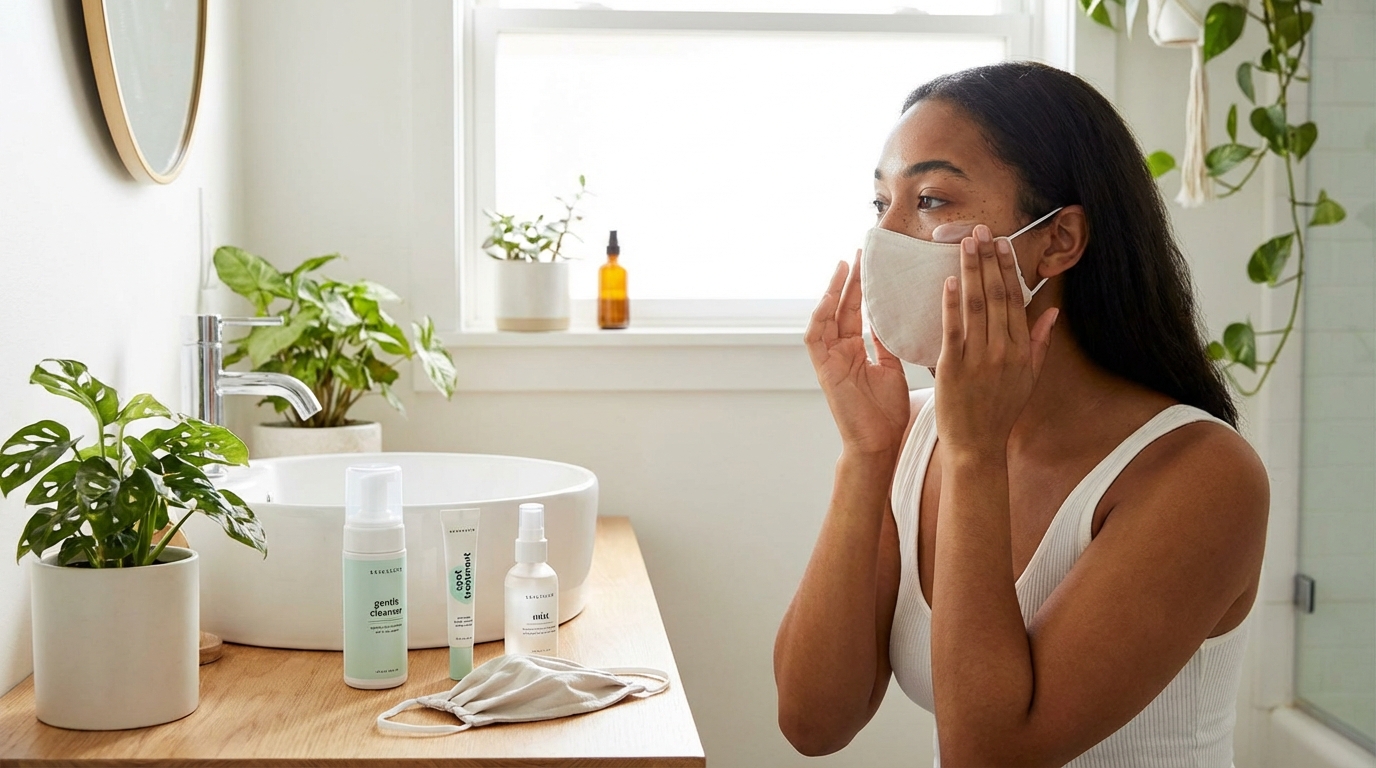
Mask-related acne, often called “maskne,” is a real thing with a real scientific explanation. When you wear a mask for extended periods, you create a humid microenvironment against your skin. This leads to clogged pores, bacterial overgrowth, and friction irritation.
The good news? Understanding why it happens makes it much easier to prevent and treat. Let me break down the science and build a routine that actually works.
Why Masks Cause Breakouts
Three main factors contribute to mask-related breakouts:
Humidity and occlusion. Your breath creates moisture that gets trapped between the mask and your skin. This humid environment softens your skin’s outer layer (the stratum corneum), making it easier for bacteria and debris to clog pores.
Friction and mechanical irritation. The constant rubbing of mask fabric against your skin, especially along the nose, cheeks, and chin, disrupts the skin barrier. This type of irritation is technically called “acne mechanica.”
Bacterial buildup. Warm, moist conditions are ideal for bacteria to multiply. The bacteria that naturally live on your skin, particularly Cutibacterium acnes, can overgrow and trigger inflammatory breakouts.
Fabric Choice Actually Matters
The material of your mask plays a significant role in how much your skin suffers.
Cotton masks are generally the most skin-friendly option. Cotton is breathable and absorbs some moisture, reducing the humidity trapped against your skin. If you’re wearing reusable masks, opt for 100% cotton.
Silk masks are even gentler because silk creates less friction. The smooth surface slides rather than rubs. If you have sensitive skin or are prone to irritation, a silk-lined mask is worth considering.
Synthetic fabrics like polyester don’t breathe as well and can trap more heat and moisture. If you must wear a surgical or synthetic mask, change it frequently.
Whatever material you choose, wash reusable masks after every use. Dirty masks reintroduce bacteria, oil, and makeup residue directly onto your face.
Pre-Mask Skin Prep
What you put on your skin before wearing a mask matters more than you might think.
Keep Your Base Simple
Heavy makeup under a mask is asking for trouble. The combination of occlusion and product creates the perfect conditions for clogged pores. If you must wear makeup, keep it minimal on the areas covered by your mask.
A lightweight, non-comedogenic moisturizer is fine. Look for formulas labeled “oil-free” or “won’t clog pores.”
Create a Protective Barrier
Applying a thin layer of a barrier-supporting product can help reduce friction damage. Look for ingredients like:
- Ceramides to strengthen your skin barrier
- Niacinamide to reduce inflammation and support barrier function
- Zinc oxide in a mineral sunscreen, which also creates a physical barrier
Some people find that a very thin layer of petroleum jelly on friction-prone areas (nose bridge, behind ears) prevents rubbing. Use this sparingly if you try it.
Skip Heavy Actives in the Morning
Strong exfoliants and retinoids make your skin more sensitive. If you’re wearing a mask all day, save these for your nighttime routine when your skin can recover without additional stress.
Post-Mask Cleansing Is Non-Negotiable
What you do immediately after removing your mask determines whether a breakout develops.
Cleanse as Soon as Possible
When you take off your mask, your skin has been sitting in a humid, bacteria-friendly environment for hours. Don’t wait until bedtime to wash your face if you can avoid it.
Use a gentle, pH-balanced cleanser. Avoid anything too stripping, as your skin barrier has already been stressed by the mask. A simple gel or cream cleanser works well.
Let Your Skin Breathe
After cleansing, give your skin some time without products if you can. This is especially important if you’ll be putting another mask on soon. Let the skin’s natural moisture balance reset for a few minutes before reapplying skincare.
Treating Existing Mask Breakouts
If the damage is already done, here’s how to address it.
For Mild Breakouts
Salicylic acid (BHA) is your friend. It’s oil-soluble, meaning it can penetrate into clogged pores and break down the debris inside. A 2% salicylic acid treatment applied at night can help clear minor congestion.
Benzoyl peroxide also works well because it kills acne-causing bacteria. Start with a lower concentration (2.5% to 5%) to avoid drying out skin that’s already stressed.
For Inflammatory Acne
Red, painful pimples need anti-inflammatory support. Niacinamide at 5 to 10% can calm inflammation while also helping to regulate oil production.
Sulfur-based treatments are another option. Sulfur has both antibacterial and keratolytic properties, meaning it kills bacteria and helps shed dead skin cells.
For Irritation and Barrier Damage
Sometimes maskne is not really acne at all. It’s irritant contact dermatitis from friction. If your skin is red, raw, or peeling along mask lines, focus on barrier repair over acne treatment.
Look for products with:
- Centella asiatica (cica) for wound healing
- Panthenol for soothing and hydration
- Ceramides to rebuild the barrier
Skip active ingredients entirely until the irritation calms down. Sometimes the best treatment is giving your skin a break.
Prevention vs. Cure: The Smart Approach
Preventing maskne is significantly easier than treating it. Here is the quick version:
- Choose breathable cotton or silk masks
- Wash masks after every use
- Keep pre-mask skincare minimal and non-comedogenic
- Cleanse as soon as you remove your mask
- Save strong actives for nighttime
- Take mask breaks when safely possible
If you’re already dealing with breakouts, be patient. Stressed skin takes time to recover. Focus on gentle cleansing, barrier support, and targeted treatments rather than throwing every product you own at the problem.
When to See a Professional
If your breakouts are severe, painful, or not responding to over-the-counter treatments after 6 to 8 weeks, it’s time to see a dermatologist. Prescription-strength treatments like topical antibiotics or adapalene may be necessary for stubborn cases.
Don’t suffer through persistent breakouts when professional help is available. Your skin doesn’t have to be a casualty of wearing a mask.