
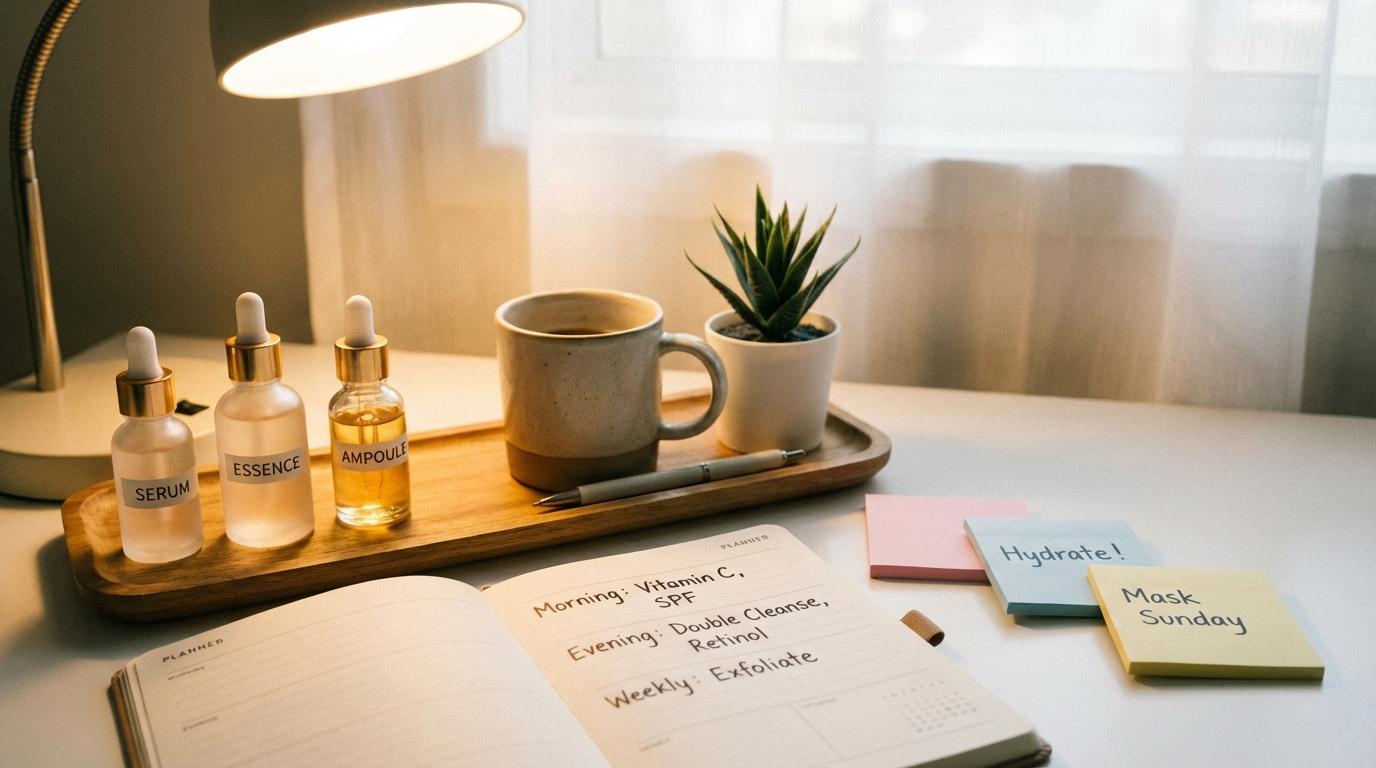
Skincare aisles have become increasingly crowded with products that sound almost identical. Serums, essences, and ampoules sit side by side, their elegant bottles promising similar results with slightly different names. If you have ever stood in a store wondering whether these three products are actually different or just marketing variations of the same thing, you are certainly not alone in that confusion.
The truth is that these products do serve distinct purposes, though the lines between them can feel blurry at first glance. Understanding what sets them apart helps you make intentional choices about what your skin actually needs, rather than buying into the idea that more products automatically equal better results. Sometimes the most powerful thing you can do for your routine is simplify it.
What Makes an Essence an Essence
Essences originated in Korean skincare, where they became a cornerstone of the famous multi-step routines that gained global popularity. At their core, essences are lightweight, watery formulas designed primarily for hydration and preparation. Think of them as the bridge between your cleansing steps and your treatment products.
The texture of an essence feels almost like water between your fingers. It absorbs quickly, leaving virtually no residue on the skin. This featherlight consistency makes essences particularly appealing if you prefer minimal, breathable products that do not leave your face feeling heavy or coated.
Essences typically contain lower concentrations of active ingredients compared to serums or ampoules. Their job is not to treat specific concerns aggressively but rather to hydrate and prime your skin so that subsequent products can penetrate more effectively. When your skin is properly hydrated, it becomes more receptive to the actives you apply afterward.
Common ingredients in essences include hyaluronic acid for moisture retention, fermented extracts that support the skin barrier, and gentle botanical ingredients. If your skin barrier feels compromised or your complexion looks dull and dehydrated, an essence can help restore that underlying moisture foundation.
Understanding Serums and Their Purpose
Serums represent the workhorse of targeted skincare treatments. These products contain higher concentrations of active ingredients than essences, packed into formulas specifically designed to address particular concerns. Whether you are focused on brightening, anti-aging, hydration, or acne control, there is likely a serum formulated for exactly that purpose.
The texture of serums varies more widely than essences. Some feel gel-like and lightweight, while others have a slightly thicker, more viscous consistency. What unifies them is their concentration, as serums deliver potent doses of active ingredients directly into your skin through small molecule sizes designed for deeper penetration.
Popular serum ingredients include vitamin C for brightening and antioxidant protection, retinol for cell turnover and anti-aging benefits, niacinamide for pore refinement and barrier support, and various peptides for firmness. The beauty of serums lies in their specificity. You choose based on what your skin needs most, rather than relying on one product to do everything at once.
Serums work well as daily products, though some formulations with stronger actives like retinol may require a gentler introduction to your routine. Building tolerance gradually helps your skin adjust without irritation, allowing you to experience the benefits without overwhelming your complexion.
The Concentrated Power of Ampoules
Ampoules take the concept of concentrated skincare to its most potent level. These products contain the highest concentration of active ingredients among the three categories, delivering intensive treatment in small, often single-use doses. The packaging itself reflects this concentrated nature, as ampoules frequently come in small glass vials or dropper bottles designed for precise application.
Because of their potency, ampoules are generally not intended for everyday use in the way that serums or essences might be. Instead, they serve as intensive treatments for specific periods when your skin needs an extra boost. Before an important event, after a particularly stressful week, during seasonal transitions when your skin feels compromised, or as a targeted treatment course for a few weeks to address a specific concern.
The texture of ampoules tends toward the viscous side, though this varies by formulation. They absorb well despite their concentration, and a little goes a long way. Using too much of an ampoule is not only wasteful but can potentially overwhelm your skin with more actives than it can process effectively.
Common ampoule ingredients mirror those found in serums but at higher concentrations. Vitamin C ampoules might contain significantly more ascorbic acid than a daily serum. Peptide ampoules pack multiple anti-aging compounds into each dose. The intensity makes ampoules feel almost like a salon treatment you can do at home.
The Texture Spectrum from Lightest to Richest
One of the simplest ways to distinguish these three products is by their texture. Essences fall at the lightest end of the spectrum, with their watery, almost toner-like consistency. They spread easily and absorb in seconds, making them ideal for those who dislike heavy products or live in humid climates where lightweight formulas feel most comfortable.
Serums occupy the middle ground, with textures ranging from fluid gels to slightly thicker concentrates. They take a bit longer to absorb than essences but still feel relatively light on the skin once they settle. The variation in serum textures reflects the diverse range of active ingredients and delivery systems different brands employ.
Ampoules often present as the most concentrated in texture, though this is not always the case. Some ampoules maintain a lighter consistency despite their potency, while others feel notably richer. The key differentiator remains the concentration of active ingredients rather than the texture itself, though the two often correlate.
When layering these products, the general principle of thin to thick applies. Essences go on first while your skin is still slightly damp from cleansing, followed by serums, then ampoules if you are using one. This layering order ensures each product can absorb properly without being blocked by heavier formulas applied beforehand.
Choosing Based on Your Actual Needs
Not everyone needs all three of these products in their routine, and adding more steps does not inherently make your skincare more effective. The question worth asking is not which products you should own but which products will genuinely serve your skin’s current state and concerns.
If your primary concern is dehydration and you want to boost moisture without adding heavy products, an essence alone might be sufficient. Combined with a good moisturizer, it provides that hydration boost without unnecessary complexity. For those who already have a streamlined minimal routine and feel satisfied with their results, there may be no need to add anything else.
If you have specific concerns like hyperpigmentation, fine lines, or persistent breakouts, a well-chosen serum becomes more valuable than an essence. The higher concentration of targeted actives gives you more power to address those issues directly. One good serum chosen intentionally will serve you better than three random products purchased because they seemed interesting.
Ampoules make the most sense as occasional boosters rather than permanent additions to your daily routine. The cost of quality ampoules and their concentrated formulations make them better suited for targeted treatment periods. Using them continuously diminishes their special efficacy and adds expense without proportional benefit.
When Layering Makes Sense and When It Does Not
The rise of Korean skincare popularized extensive multi-step routines that layer essence, serum, and ampoule together in one session. While this approach can work beautifully for some skin types, particularly those that tolerate products well and enjoy the ritual aspect of skincare, it is far from universally necessary or even advisable.
Layering multiple products increases the risk of overwhelming your skin with too many actives at once. If your essence contains niacinamide, your serum contains vitamin C, and your ampoule contains retinol, you are asking your skin to process a significant chemical load. This can lead to irritation, sensitization, and compromised barrier function even when each individual product would be gentle on its own.
A more balanced approach considers what your skin actually tolerates and benefits from. You might use an essence in the morning for lightweight hydration under sunscreen, then switch to a serum at night for targeted treatment. Ampoules could be reserved for weekly intensive treatments or special occasions rather than daily application.
Paying attention to how your skin responds matters more than following any prescribed routine. If your complexion looks calm, balanced, and healthy with just two products, adding a third simply because it exists in this category does not improve anything. Trust what you see in the mirror over what marketing suggests you need.
Making Peace with Not Needing Everything
The skincare industry benefits financially when consumers believe they need an ever-expanding collection of products. The distinction between essence, serum, and ampoule can feel like pressure to own all three, or even multiples of each to address different concerns. Stepping back from that pressure serves both your skin and your wallet.
Start by identifying what your skin genuinely needs right now. Is it hydration? Treatment for a specific concern? An occasional intensive boost? Match your purchases to those actual needs rather than collecting products theoretically. A simple routine you use consistently will always outperform an elaborate one you find too complicated to maintain.
If you want to experiment, try one category at a time. Use an essence for a month and notice whether it makes a meaningful difference. If it does, keep it. If your skin looked the same without it, perhaps that product slot can remain empty. The same testing approach applies to serums and ampoules.
Your skin thrives on consistency and gentleness more than it thrives on complexity. A thoughtfully chosen serum that you use every night will typically deliver better results than an elaborate routine you abandon after two weeks because it felt like too much work. Simplicity is not laziness. It is a sustainable strategy for long-term skin health.
Whatever you choose, let your skin guide the decision. Products should solve problems you actually have, not create new concerns by overloading your routine. The difference between essence, serum, and ampoule matters less than understanding what your specific skin needs and providing exactly that, nothing more and nothing less.