
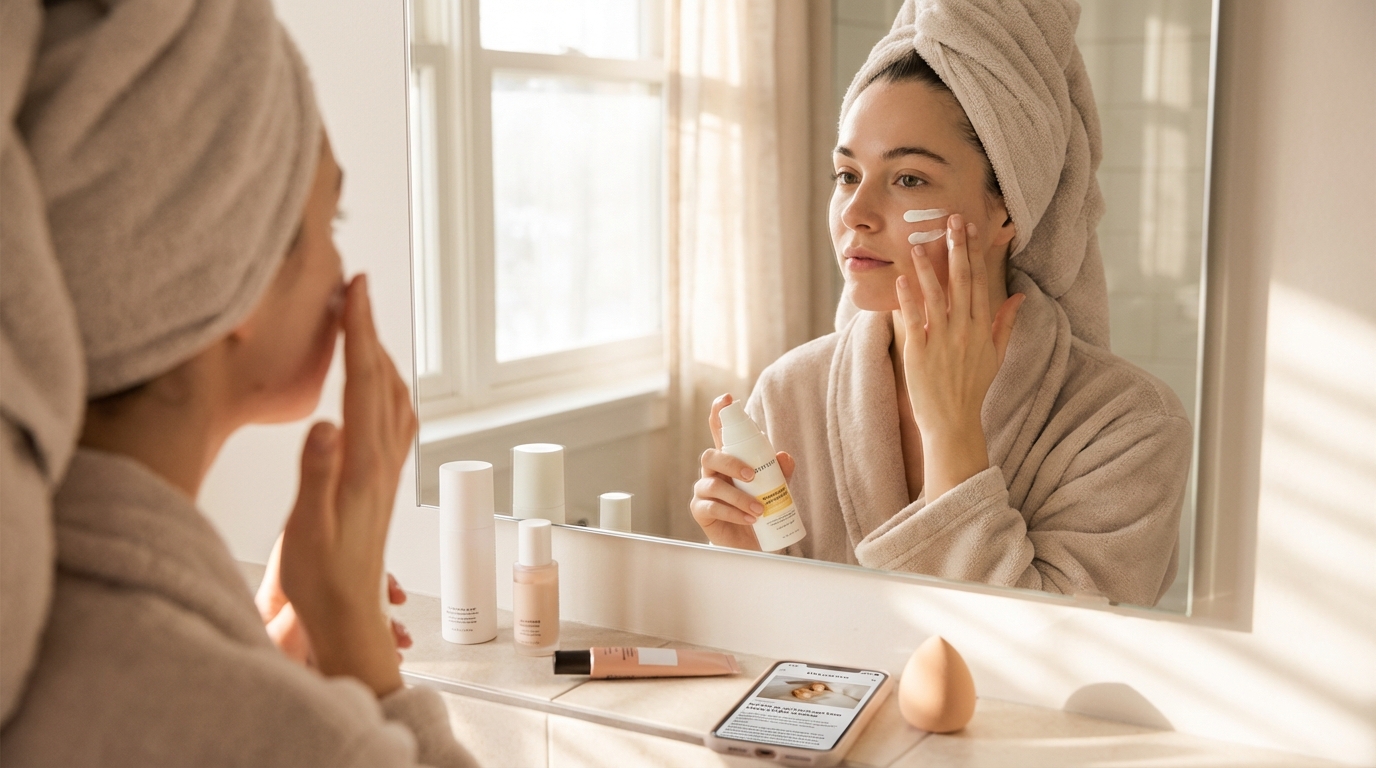
Let me tell you something that might sting a little: most people apply about 25% of the sunscreen they actually need. And I say this with love, because I was once in that exact camp. I thought a quick dab of SPF 30 meant I was protected. Reader, I was not.
The thing is, SPF ratings you see on bottles are tested under very specific laboratory conditions. The researchers apply a standardized amount, which is 2 milligrams of sunscreen per square centimeter of skin. When you translate that to a real human face, you need way more product than most people use. This is where the science gets interesting, and why your current routine might be leaving you vulnerable.
The Two Finger Rule Actually Works
You might have seen the “two finger rule” floating around online and wondered if it was legit. I can confirm: it is. The concept comes from translating that 2mg per square centimeter lab standard into a practical, visual measurement that anyone can use at home without pulling out a kitchen scale.
Here is how it works. Squeeze a line of sunscreen from the tip of your index finger to the tip of your middle finger, covering both fingers completely. That amount is roughly what you need for your face and neck combined. For most sunscreen formulations, this gives you approximately 1/4 to 1/3 teaspoon, which hits that clinical protection threshold.
The first time you try this, you will probably think it looks like way too much product. That reaction is normal. We have been conditioned by years of skincare ads showing models with a tiny pearl-sized drop of product, looking dewy and perfect. Those visuals trained us wrong. Real sun protection requires a visible layer of product, and there is no getting around it.
According to the Skin Cancer Foundation, most adults need about one ounce of sunscreen to cover their entire body. Your face alone requires a significant portion of that total. Skimping defeats the purpose of applying in the first place.
Why Waiting Before Makeup Matters
If you are someone who applies sunscreen and then immediately starts layering on primer and foundation, I have news that might require a schedule adjustment. Chemical sunscreens need time to absorb into your skin and form a proper protective film. That process takes roughly 15 to 20 minutes.
Here is the biochemistry. Chemical filters like avobenzone and oxybenzone work by absorbing UV radiation and converting it into heat energy that dissipates harmlessly. But they can only do this job once they have properly distributed across your skin’s surface. If you slap on foundation over still-wet sunscreen, you are potentially disrupting that distribution and diluting your protection.
Mineral sunscreens containing zinc oxide or titanium dioxide work a bit differently. They sit on top of your skin and physically deflect UV rays like tiny mirrors. These technically do not require the same absorption wait time. However, even with mineral formulas, letting the product set before adding more layers helps prevent pilling and gives you a smoother base for makeup.
My morning routine accounts for this wait time by design. I apply sunscreen right after my moisturizer has absorbed, then I do everything else: brush my teeth, pick out clothes, make coffee. By the time I am ready for makeup, my sunscreen has had a good 15 minutes to settle in.
Those Spots You Keep Missing
Research from the British Journal of Dermatology has identified the areas people most commonly skip or under-apply. The findings are eye-opening. Eyelids, the area around the nose, and the boundary between face and hairline consistently receive less protection than the rest of the face.
Your eyelids might seem like a small surface area, but the skin there is thinner than almost anywhere else on your body. UV damage to this delicate region contributes significantly to premature aging around the eyes, including those fine lines everyone tries to address with expensive eye creams later. Prevention costs less than correction, both financially and biologically.
The nose gets partial coverage for many people because they apply sunscreen in broad strokes across the cheeks and forehead, treating the nose as an afterthought. The sides of the nose, the crease where your nostrils meet your cheeks, and the tip all need deliberate attention. Skin cancers appear on noses frequently, partly because this prominent feature gets intense UV exposure and partly because it gets inconsistent protection.
Around your hairline is another common blind spot. The edges of your forehead, the temples, and the area in front of your ears often get skipped because people are afraid of getting product in their hair. A gentle patting motion rather than rubbing can help you cover these zones without creating a greasy hairline situation.
Your ears deserve attention too. Many people completely forget that ears are exposed skin. The tops of ears and the lobes can burn easily and are another common location for skin cancer development. If you pull your hair back or have short hair, your ears need the same protection as your face.
About That SPF in Your Makeup
I understand the appeal of the all-in-one approach. Foundation with SPF 15 sounds efficient. Powder with sun protection seems like a nice bonus. The problem is math, and math does not care about convenience.
To get the SPF rating listed on your makeup product, you would need to apply the same 2mg per square centimeter standard that lab testing uses. Nobody applies foundation that thickly. If you did, you would look like you were wearing stage makeup for a theater production visible from the back row. The actual SPF benefit you get from a normal foundation application is a fraction of what the label promises.
Think about it this way. If your foundation says SPF 15 and you apply it at a quarter of the tested thickness, your real protection drops dramatically. You might be getting SPF 3 or 4 worth of benefit. That is not nothing, but it is not adequate protection for a day in the sun.
The American Academy of Dermatology recommends SPF 30 or higher for daily use. Relying on makeup SPF alone puts you well below that threshold. Treat any sun protection in your makeup as a nice bonus layer on top of your actual sunscreen, not as a replacement for it.
Some makeup products are specifically formulated as hybrid products with serious sun protection. These typically contain higher concentrations of UV filters and are designed to be applied more generously than traditional cosmetics. Read the labels carefully and understand what you are actually getting. A tinted sunscreen marketed as a cosmetic product is different from a foundation that happens to include some UV filters.
Making This Practical
I know adding steps and wait times to your morning sounds annoying. Believe me, I did not want to wake up earlier to accommodate sunscreen absorption time. But here is my pitch for why it matters: UV damage is cumulative. Every day of inadequate protection adds to the total. And unlike many skincare concerns, UV damage often stays hidden for years before showing up as hyperpigmentation, wrinkles, or more serious problems.
The adjustments are actually pretty manageable once they become habit. Using the two finger rule feels normal after a week or two. Building in wait time just means restructuring when you do other morning tasks. Paying attention to commonly missed spots takes an extra 30 seconds of deliberate application.
If you find yourself resisting because sunscreen formulas feel heavy or leave a white cast, the good news is that formulations have improved dramatically. Asian beauty brands in particular have developed lightweight, cosmetically elegant sunscreens that disappear into skin without the thick feeling. European pharmacy brands offer high UVA protection in textures that work well under makeup. Finding a formula you actually enjoy using makes consistent application much easier.
One practical tip: keep your sunscreen visible. If it is buried in a drawer, you are more likely to skip it when you are running late. Mine lives right next to my toothbrush. Impossible to miss, impossible to forget.
Reapplication during the day matters too, especially if you are outdoors. But getting that first morning application right sets you up with a proper foundation of protection. Start with enough product, let it absorb, cover all the spots, and do not count your makeup as backup. Your future self will appreciate the extra two minutes.