
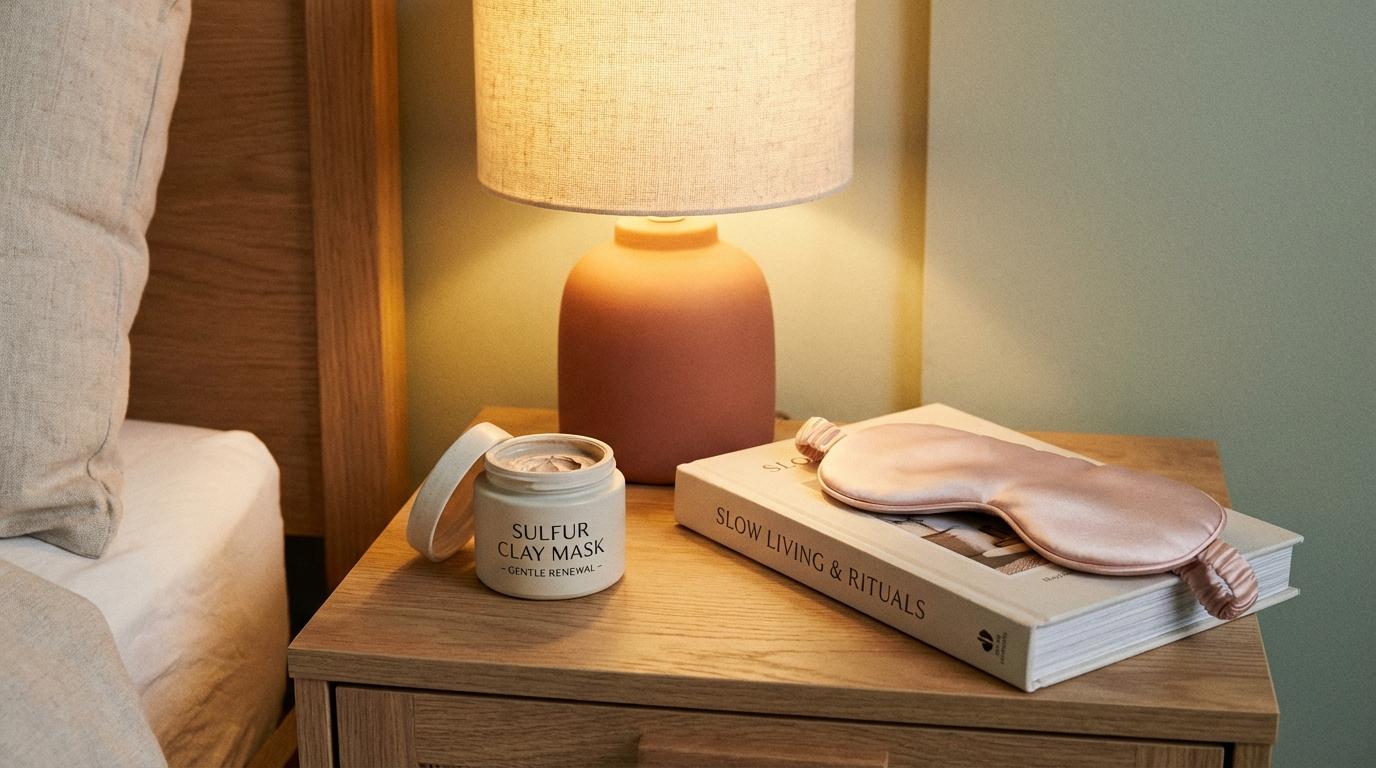
Last week I woke up with one of those massive underground pimples forming on my chin, the kind that doesn’t have a head but feels like it’s plotting world domination from beneath your skin. Instead of panicking (okay, I panicked for like five minutes), I slapped on a sulfur mask before bed and hoped for the best. By morning, the swelling had gone down significantly, and within two days the whole situation resolved without ever reaching full volcanic status. Sulfur isn’t the sexiest skincare ingredient out there, but it’s been quietly handling acne emergencies since before our grandmothers were born.
How Sulfur Actually Works While You Sleep
Sulfur has antibacterial and antifungal properties that help reduce the bacteria contributing to acne. It also has a gentle keratolytic effect, meaning it helps loosen and remove dead skin cells from the surface and inside your pores. This double action makes it particularly useful for those deep, inflamed spots that other products struggle to reach.
When you apply a sulfur mask overnight, you’re giving it extended contact time to work on your skin. Unlike regular wash-off masks that get maybe ten to fifteen minutes, overnight treatments have six to eight hours to do their thing. That’s enough time for sulfur to really penetrate and address what’s happening beneath the surface.
The way sulfur reduces inflammation is pretty cool too. It has natural drying properties that help draw out excess sebum and reduce the swollen, angry appearance of active breakouts. This is different from how benzoyl peroxide or salicylic acid work, which is why some people who don’t respond well to those ingredients find sulfur surprisingly effective.
Fair warning though: sulfur has a smell. It’s not overwhelming in most modern formulations, but you might catch a slight whiff of something eggy or mineral-like. Your partner or roommate may notice. The smell fades quickly once you wash it off in the morning, and honestly, clear skin is worth a temporarily aromatic pillowcase.
Application Technique That Actually Works
Not all sulfur masks are meant for overnight use, so check the instructions on whatever product you’re using. Some are designed as ten-minute treatments, and leaving those on all night could lead to excessive drying or irritation. Products specifically labeled as overnight treatments or spot treatments are formulated for extended wear.
De La Cruz Sulfur Ointment is probably the most famous budget option. It’s like eight dollars and has been around forever. You can use it as an overnight mask on the entire face or as a targeted spot treatment. For full-face application, spread a thin layer everywhere after your regular nighttime routine. For spot treatment, dab it directly onto problem areas with clean fingers or a cotton swab.
Kate Somerville EradiKate is the fancy version, but it works on the same principle. You dip a cotton swab past the pink suspension into the sulfur at the bottom and apply that to individual spots. It’s more expensive but more elegant if you’re only dealing with occasional breakouts rather than widespread acne.
The key with overnight application is going thin enough that the product can actually dry down. A thick glob won’t absorb properly and will just end up on your pillowcase (probably staining it, by the way, so use a towel over your pillow or don’t sleep on your favorite sheets). Thin layers work better and cause less irritation.
How Often Should You Actually Use This
Start with once or twice a week for full-face application. Sulfur can be drying, and using it every single night right from the start is a recipe for flaky, irritated skin. Your moisture barrier doesn’t need that drama. Give your skin time to adjust and see how it responds before increasing frequency.
If your skin tolerates it well after a couple of weeks, you can gradually increase to every other night or even nightly for short periods during particularly bad breakout phases. But honestly, most people find two to three times weekly is enough to see results without tipping into overdrying territory.
Spot treatment is different. You can use sulfur directly on emerging pimples as needed, even nightly if a specific spot requires attention. Since you’re only applying to affected areas rather than your whole face, the drying effect is more localized and less likely to cause overall skin issues.
Listen to your skin. If you’re noticing excessive tightness, flaking, or increased sensitivity, scale back. Effective acne treatment shouldn’t mean destroying your moisture barrier in the process. If your skin feels tight and uncomfortable, spot treatment might be a better approach than full-face masks.
Who Benefits Most From Sulfur
Sulfur tends to work especially well for certain acne presentations. If you deal with lots of small bumps (comedonal acne), sulfur’s keratolytic properties help clear those out. If your breakouts are primarily inflammatory, red, and angry-looking, the anti-inflammatory drying action can calm things down significantly.
People who haven’t responded well to benzoyl peroxide or find it too harsh often have better luck with sulfur. It’s generally gentler while still being effective, which makes it a solid alternative for sensitive skin types who need acne treatment but can’t handle the heavy hitters.
Fungal acne (technically not acne at all, but that’s a whole other conversation) sometimes responds to sulfur because of its antifungal properties. If your breakouts look more like uniform small bumps and don’t respond to typical acne treatments, sulfur might be worth trying. Though honestly, if you suspect fungal acne, seeing a dermatologist for proper diagnosis makes more sense than experimenting randomly.
Oily skin types generally tolerate sulfur well because the drying properties help balance excess sebum production. Dry or dehydrated skin needs to be more careful, using sulfur sparingly and making sure to follow with adequate moisturizer.
Combining Sulfur With Other Treatments
Sulfur plays relatively well with other acne ingredients, but timing matters. Using sulfur the same night as strong retinoids or acids is asking for irritation. Your skin can only handle so much at once, and combining multiple drying or exfoliating treatments in one evening is counterproductive.
A reasonable approach is to alternate nights. Sulfur mask on Monday, retinoid on Tuesday, sulfur on Wednesday, and so on. This gives you the benefits of multiple treatments without overwhelming your skin on any single night.
If you’re using prescription acne treatments like tretinoin or clindamycin/benzoyl peroxide combinations, talk to your dermatologist before adding sulfur into the mix. They can advise on whether it makes sense for your specific situation and how to layer treatments safely.
In the morning after using sulfur, wash it off thoroughly and apply your regular routine. A hydrating serum and good moisturizer help counteract any drying effects from the overnight treatment. Sunscreen as always, because even though sulfur itself doesn’t increase photosensitivity, taking care of your skin means protecting it from UV damage regardless.
Setting Realistic Expectations
Sulfur works, but it’s not magic. An overnight mask won’t clear severe acne instantly or prevent every breakout from ever happening again. What it can do is reduce the intensity and duration of individual breakouts, help prevent small bumps from becoming bigger problems, and give you another effective tool in your acne-fighting arsenal.
Results accumulate over time with consistent use. After a few weeks of regular sulfur mask applications, you’ll likely notice fewer active breakouts and faster healing when they do occur. The overnight treatment catches problems early, often before they become visible disasters.
For stubborn or severe acne, sulfur works best as part of a comprehensive approach that might include other topical treatments, lifestyle factors, and potentially prescription options. It’s one piece of the puzzle, not the whole solution. But it’s a really useful piece, especially for those middle-of-the-night emergencies when you feel something brewing and want to stop it in its tracks.
The best part about sulfur is how accessible it is. You don’t need a prescription, you don’t need to spend a fortune, and it’s been used safely for acne treatment for over a century. Sometimes the old school remedies stick around because they actually work. Sulfur is definitely one of those.