
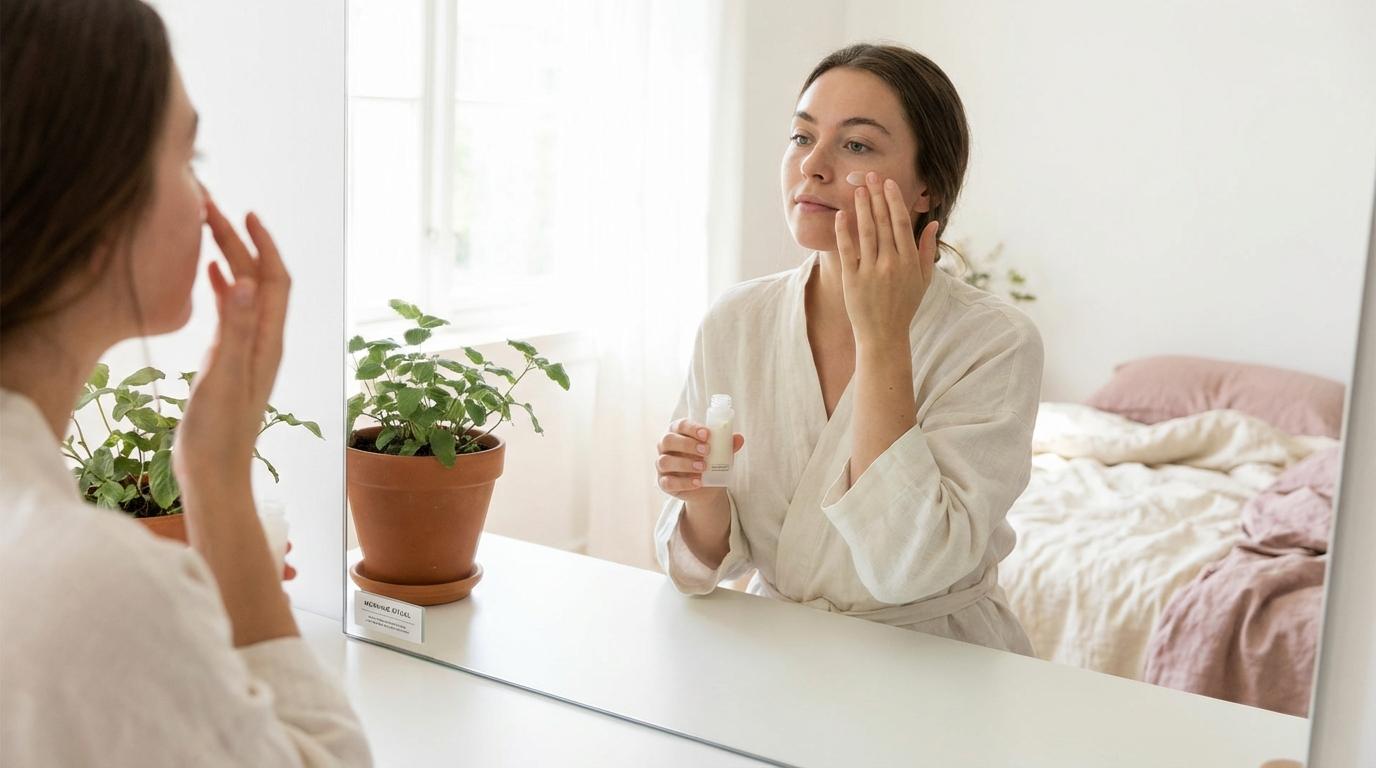
Applying spot treatment sounds simple enough, and yet the timing of when you dab it on can shape how well it actually works. If you’ve ever wondered why that pimple patch or benzoyl peroxide gel doesn’t seem to be pulling its weight, there’s a good chance the order of your routine or the time of day might be playing a role. Let’s talk through what works and why, so your spot treatments can finally do what they’re supposed to do.
Where Spot Treatment Fits in Your Routine
The placement of spot treatment in your skincare steps matters more than most people realize. Think of your routine as a layered system where each product builds on the one before it. Cleansing comes first, removing the day’s buildup so your skin is fresh. Then toner or essence if you use one. Serums follow, targeting your broader skin concerns like hydration, brightness, or texture. And here is where your spot treatment enters the picture.
Spot treatments work best after serums but before moisturizer. The reasoning is straightforward. Serums are typically lightweight and absorb quickly, leaving a clean canvas for targeted treatment. When you apply spot treatment at this stage, the active ingredients can reach the skin directly without having to push through a barrier of thicker creams. If you slather on moisturizer first, you’re essentially diluting the spot treatment’s contact with your skin, and that can reduce its effectiveness.
Some people ask whether they should apply spot treatment to completely bare skin, skipping serums entirely. While that can work in certain situations, most serums are formulated to hydrate and prep the skin. Skipping them might leave your skin too dry, which can actually make blemishes worse over time. The sweet spot is finding that balance where your skin is prepped but not yet sealed with heavier products.
The Art of Letting It Dry
Patience isn’t always easy when you’re staring at a stubborn pimple, but letting your spot treatment dry properly is one of the most overlooked steps. When you rush and layer moisturizer over a still-wet treatment, you risk moving the product around, diluting it, or preventing it from absorbing where it needs to go.
Give your spot treatment at least one to two minutes to settle into the skin. You’ll know it’s ready when the area no longer feels tacky or wet to the touch. Some formulas, especially those with benzoyl peroxide or salicylic acid, leave a slight matte finish when fully absorbed. That’s your cue to move on to moisturizer. This small pause in your routine can make a noticeable difference in how quickly your blemish calms down.
If you’re using a thicker spot treatment, like a sulfur-based paste, you might need even more drying time. These heavier formulas are designed to sit on the skin longer and draw out impurities, so rushing through defeats the purpose. Consider applying these types earlier in your evening routine so they have ample time to work before you layer anything else on top.
Morning Application vs. Night Application
The question of morning versus night comes up often, and the honest answer is that both can work depending on what you’re using and how your skin responds. Nighttime is generally considered the prime time for spot treatments because your skin goes into repair mode while you sleep. Cellular turnover increases, and there’s no sun exposure to contend with, which means active ingredients can work uninterrupted.
Many spot treatments contain ingredients that can make skin more sensitive to sunlight. Benzoyl peroxide and certain acids fall into this category. Using them at night reduces the risk of sun damage and irritation. Plus, you’re not layering sunscreen and makeup on top of your treatment, which keeps things simple and lets the product do its job without interference.
That said, morning application isn’t off the table. If you’re dealing with a particularly stubborn blemish and want to treat it twice daily, you can apply a gentle spot treatment in the morning as well. Just be mindful of sun protection. A broad-spectrum sunscreen becomes even more important when you’re using active ingredients during the day. The American Academy of Dermatology recommends SPF 30 or higher for daily protection, and this is especially true when actives are involved.
For those who prefer keeping their morning routine minimal, nighttime-only application is perfectly fine. Your skin will thank you for the consistency, and you’ll avoid the potential complication of product interactions with your daytime products.
Layering Considerations and Common Mistakes
One thing that trips people up is layering spot treatments with other active ingredients. If you’re already using a retinol serum, adding a benzoyl peroxide spot treatment on the same area can lead to irritation, dryness, and even peeling. These ingredients don’t always play well together, and using them simultaneously can overwhelm your skin. If you haven’t read about which acne treatments that don’t mix, it’s worth understanding before you build your routine.
A safer approach is to alternate. Use your retinol on nights when you’re not applying spot treatment, or apply them to different areas of your face. Some people find success using spot treatment on active breakouts while keeping retinol for the rest of their face. This way, you’re addressing blemishes without doubling up on potentially irritating ingredients in one spot.
Another common misstep is applying too much product. More is not better when it comes to spot treatments. A tiny amount, just enough to cover the blemish, is all you need. Overloading the area can lead to excessive dryness, flaking, and even more visible irritation. Your skin can only absorb so much at once, so the extra product just sits on the surface causing problems.
If you’re new to a spot treatment and notice your skin reacting strongly, you might be experiencing what’s known as a skin purge. This is different from irritation and typically resolves within a few weeks as your skin adjusts. Understanding the difference can save you from abandoning a product that’s actually working.
Choosing the Right Formula for Your Timing
Not all spot treatments are created equal, and the formula you choose can influence when you should apply it. Lightweight gels and serums absorb quickly and layer well under moisturizer, making them ideal for any time of day. Thicker pastes and drying treatments are better suited for nighttime when you can let them sit without worrying about how they’ll look under makeup.
Hydrocolloid patches, those small adhesive dots that pull gunk from pimples, work differently from traditional spot treatments. You can wear them during the day under makeup or overnight while you sleep. According to research on wound healing, hydrocolloid technology creates a moist environment that helps blemishes heal faster while protecting them from bacteria and picking. The timing with patches is more flexible because they create a physical barrier rather than relying on absorption.
For those with sensitive skin, starting with a gentler formula and applying it only at night gives your skin time to adjust. You can gradually increase usage to twice daily if your skin tolerates it well. Listening to your skin and adjusting your approach is always wiser than following a rigid schedule that doesn’t suit your needs.
Building a Routine That Works
Putting this all together, a typical evening routine for someone using spot treatment might look like this: cleanse, apply toner if you use one, follow with a hydrating or treatment serum, let it absorb, then apply spot treatment only where needed. Wait a minute or two for the spot treatment to dry completely. Finish with moisturizer over your entire face, gently patting around any spot-treated areas rather than rubbing through them.
In the morning, if you choose to use spot treatment again, the process is similar but with an added step at the end: sunscreen. Your final layer should always be SPF during the day, applied generously and reapplied throughout the day if you’re spending time outdoors.
Consistency is what makes any skincare routine effective. Using your spot treatment at the right time, in the right order, and with the patience to let it dry properly will yield better results than sporadically applying it whenever you remember. Your skin responds to habits, and building this one into your daily rhythm will serve you well as blemishes come and go.
Treating a pimple doesn’t have to be complicated. With a bit of attention to timing and layering, your spot treatments can work the way they’re designed to, helping you move past breakouts with less frustration and clearer skin ahead.