
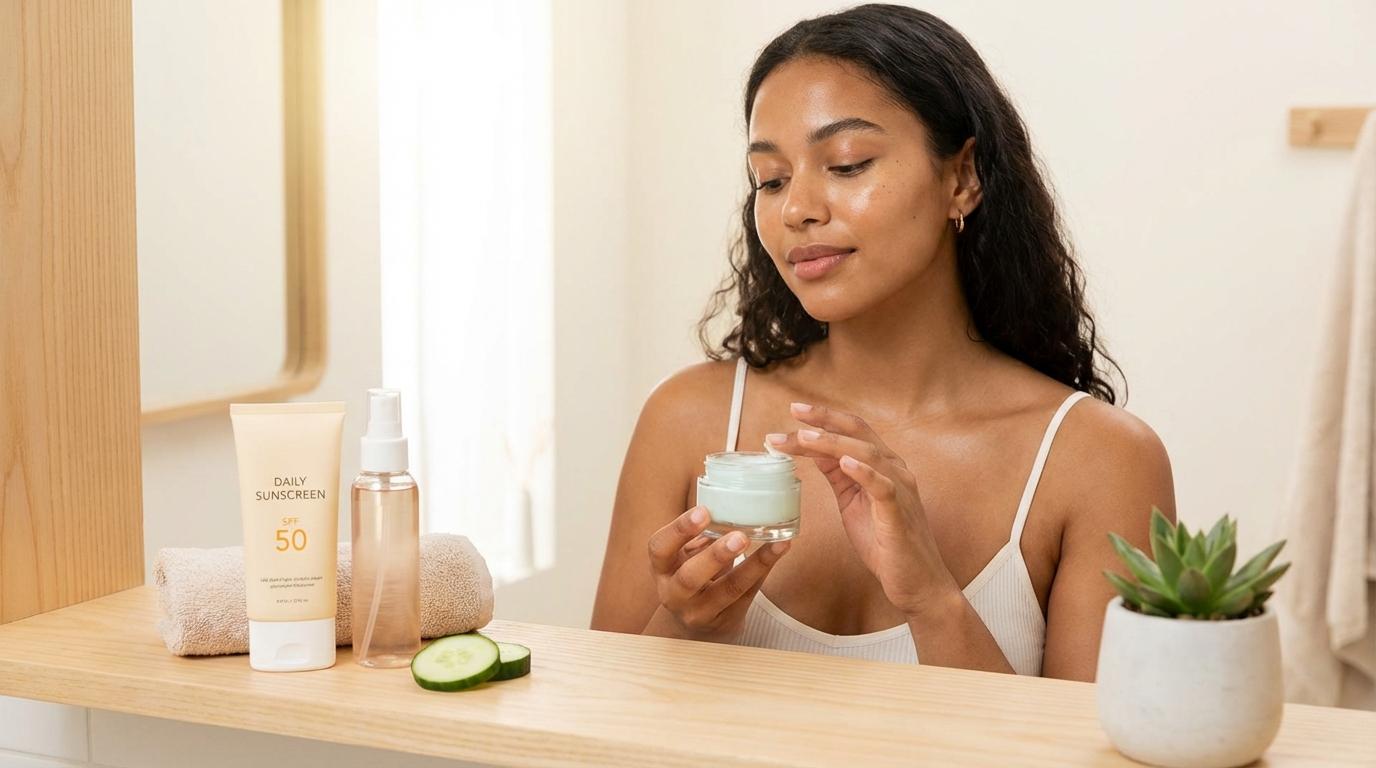
Your winter skincare routine has no business being on your face in July. The products that saved your skin from heating vents and freezing winds? They’re probably clogging your pores right now.
Summer skin needs different things. Here’s exactly what to swap and why.
Switch to Lighter Moisturizers
That rich cream you loved in February is too heavy for humid weather. Your skin produces more oil when it’s hot. Adding a thick moisturizer on top creates a greasy layer that traps sweat and bacteria.
Look for gel-cream or water-based moisturizers instead. They hydrate without sitting on your skin like a blanket. Ingredients like hyaluronic acid and glycerin work well year-round because they pull moisture from the air rather than coating your face in oils.
If you have oily skin, you might be able to skip moisturizer entirely during the day and use sunscreen alone. Most modern sunscreens have enough hydrating ingredients to keep your skin comfortable.
For those with dry skin: you don’t need to abandon moisture completely. Just switch from cream to lotion texture. Same hydration, less weight.
Fix Your Sunscreen Habits
Applying sunscreen in the morning and forgetting about it is not sun protection. It’s wishful thinking.
Sunscreen breaks down. It rubs off. It sweats off. According to the American Academy of Dermatology, you need to reapply every two hours when you’re outdoors, and immediately after swimming or sweating.
Here’s the reality check: most people use about a quarter of the sunscreen they actually need. For your face alone, you need about a nickel-sized amount. For your whole body, you’re looking at roughly an ounce, which is a shot glass worth.
If you wear makeup and can’t reapply liquid sunscreen, keep a powder SPF or spray in your bag. It’s not perfect, but it’s better than nothing. The Skin Cancer Foundation has solid guidelines on this.
Stop treating sunscreen as optional. It’s the single most effective anti-aging product you own.
Managing Sweat Breakouts
Sweat itself doesn’t cause acne. But sweat mixed with oil, bacteria, and friction? That’s a breakout waiting to happen.
The fix is simple: cleanse after you sweat. If you work out, wash your face after. If you’re outside all day, at minimum use a micellar water or cleansing wipe when you get home. Don’t let sweat dry on your skin and marinate there for hours.
Watch your hair products too. Pomades, gels, and heavy conditioners can drip down your forehead when you sweat. Those products weren’t designed for facial skin. They can trigger breakouts along your hairline and temples.
If you’re prone to body acne, change out of sweaty clothes immediately. Wear breathable fabrics when possible. Keep a clean shirt in your bag if you need to.
Summer breakouts aren’t inevitable. They’re usually preventable with better habits.
Scale Back Your Actives
This is the part most people don’t want to hear. Your retinol, your AHAs, your vitamin C serums: they might need to take a break.
Many active ingredients increase your skin’s sensitivity to the sun. Retinoids and chemical exfoliants in particular can make you more prone to sunburn and hyperpigmentation. Using them daily during summer while spending time outdoors is working against yourself.
You have options:
- Move retinol to nighttime only (if you weren’t already) and use it less frequently
- Swap AHAs for gentler PHAs, which don’t increase sun sensitivity as much
- Keep vitamin C, but make sure you’re applying sunscreen over it
- Skip the exfoliating toner on days you’ll be in direct sun
This doesn’t mean abandoning your routine. It means being strategic. Your skin will still benefit from these ingredients in the evening when sun exposure isn’t a factor.
If you’re on a prescription retinoid, talk to your dermatologist before making changes. They might adjust your dosage or frequency for summer.
The Bottom Line
Summer skincare isn’t about doing more. It’s about adapting to what your skin actually needs when the weather changes.
Lighter moisturizer. Consistent sunscreen reapplication. Cleansing after sweat. Pulling back on photosensitizing actives.
None of this is complicated. It just requires paying attention.
Your skin will tell you when something isn’t working. Listen to it. Adjust. The routine that serves you in December won’t serve you in August, and that’s fine. Good skincare is responsive, not rigid.