
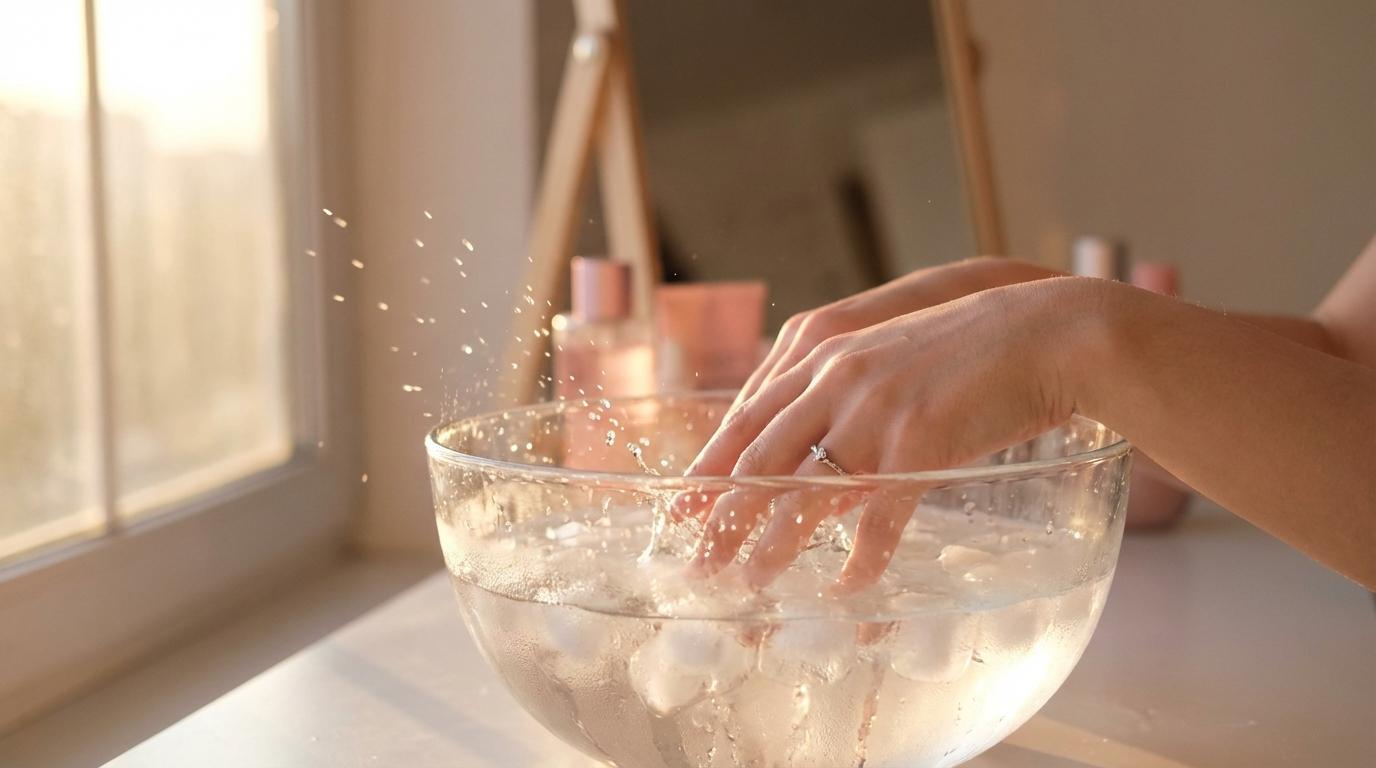
Dunking your face in ice water is supposed to shrink pores and wake up your skin. Except it doesn’t actually do either of those things in any meaningful way.
Every few months, this trend resurfaces. Someone on TikTok films themselves plunging their face into a bowl of ice water, emerging with red cheeks and promises of tighter skin. The videos rack up millions of views. People try it at home. And then dermatologists have to explain, again, why cold water can’t restructure your skin.
I get the appeal. It’s free, it’s dramatic, and it feels like you’re doing something. But feeling like you’re doing something and actually improving your skin are two different things. Let me break down what’s really happening when you ice dunk, why the results are temporary at best, and what actually works if you’re trying to minimize pore appearance.
What Actually Happens When You Ice Your Face
When cold water hits your skin, blood vessels constrict. This is called vasoconstriction, and it’s your body’s way of preserving heat. The result? Reduced blood flow to the surface, which can temporarily decrease redness and puffiness.
Key word: temporarily.
Within minutes of warming back up, your blood vessels dilate again. Any tightening effect you saw in the mirror? Gone. Your skin returns to its baseline state because nothing structural has changed.
Pores don’t have muscles. They can’t open and close on command. The American Academy of Dermatology has been saying this for years. Pore size is determined by genetics and collagen structure, not temperature. What cold water does is cause temporary swelling in the surrounding skin tissue, which can make pores appear smaller for a few minutes. That’s it.
The Circulation Myth
One argument ice dunk fans make is that the cold “boosts circulation.” This gets repeated so often it sounds true. But the logic falls apart when you think about it.
Cold causes vasoconstriction, which reduces blood flow. When you warm up, blood flow increases again. Proponents claim this back-and-forth is good for your skin, like a workout.
Your skin isn’t a muscle. It doesn’t benefit from being shocked into constricting and dilating repeatedly. If anything, extreme temperature changes can stress the skin barrier, especially if your skin is already sensitive or compromised. You’re not training your circulatory system. You’re just making your face cold and then warm again.
Research on cold exposure and skin health is limited, and what exists focuses on cryotherapy in clinical settings, not DIY ice dunking in your kitchen sink. There’s no peer-reviewed evidence showing that ice water face dunks improve skin quality, texture, or long-term pore appearance.
Why the Results Look Convincing on Camera
Here’s the thing about TikTok skincare content: the lighting is always good. The person filming has usually just splashed their face, so there’s that dewy, fresh look happening. The cold causes a temporary flush when blood returns to the surface, which can look healthy and glowy on camera.
But that flush isn’t your skin improving. It’s just your body responding to stress.
Also, when you’re filming yourself doing something dramatic for content, you’re paying more attention to your skin than usual. You’re hydrating, maybe doing your regular routine, looking at yourself under ring lights. The ice water gets credit for whatever your skin was going to look like anyway.
This isn’t unique to ice dunking. It happens with most viral skincare hacks. The ritual gets the credit, not the basics that actually matter.
When Cold Can Actually Help
I’m not saying cold has zero uses in skincare. There are specific situations where it makes sense.
If you have a fresh pimple that’s inflamed and angry, brief cold application can reduce swelling. We’ve covered this before in our article about using ice on pimples. The key is brief and targeted, not dunking your whole face repeatedly.
If you wake up puffy, a cold compress on your under-eyes for a few minutes can help reduce fluid retention. Again, temporary, but useful if you have somewhere to be.
If you’ve been out in the sun and your skin feels hot, cool water can soothe the surface. Not ice, just cool.
What doesn’t make sense is the idea that regular ice dunking will change your skin’s structure or permanently shrink your pores. That’s not how skin biology works.
What Actually Minimizes Pore Appearance
If you’re trying to make your pores look smaller, focus on what dermatologists actually recommend:
- Keep pores clean. Clogged pores look bigger. A gentle cleanser used consistently does more than any cold water dunk.
- Use retinoids. Retinol and prescription retinoids increase cell turnover and can genuinely improve skin texture over time. This is backed by decades of research.
- Try salicylic acid. BHAs penetrate into pores and help clear out sebum and debris. Regular use can make pores appear less noticeable.
- Wear sunscreen daily. UV damage breaks down collagen, which supports pore structure. Protecting your skin from the sun helps preserve that structure long-term.
- Consider niacinamide. Studies show it can help regulate sebum production and improve the appearance of pores with consistent use.
Notice what’s not on that list? Temperature tricks. Because temperature doesn’t change skin structure.
The Bigger Problem With Viral Skincare Hacks
Ice dunking is mostly harmless. You’re not going to damage your skin doing it occasionally, unless you have rosacea or extremely sensitive skin, in which case cold exposure can trigger flares.
The real issue is opportunity cost. Every minute you spend on a hack that doesn’t work is a minute you’re not spending on things that do. And every time you see temporary results from something ineffective, you might skip the boring, consistent stuff that actually makes a difference.
This is why drinking water won’t clear your acne and ice dunking won’t shrink your pores. Not because hydration and cold are bad, but because they’re being credited with results they can’t actually produce.
Your skin responds to chemistry, not theater. Ingredients that interact with your cells and sebaceous glands will always outperform rituals that just feel like they’re doing something.
What I’d Do Instead
If you’re tempted to try the ice dunk thing, ask yourself what you’re actually hoping to achieve.
Want to look more awake? Caffeine eye cream and a good night’s sleep will do more than cold water.
Want smaller-looking pores? A consistent routine with BHAs and retinoids will get you there over weeks and months.
Want to feel refreshed in the morning? Splash your face with cool, not freezing, water. You’ll get the sensory experience without the false promises.
Want content for social media? Okay, fair. Ice dunking does look dramatic on camera. But be honest with your audience about what it’s actually doing, which is not much.
The most effective skincare is usually the least exciting to watch. Applying SPF doesn’t go viral. Waiting six weeks to see retinol results isn’t content. But that’s where the real changes happen.
The Quick Reality Check
Cold water causes temporary vasoconstriction. This can briefly reduce puffiness and make pores appear slightly smaller. The effect lasts minutes. Nothing structural changes. Pores don’t have muscles and can’t close. The “circulation boost” claims aren’t supported by science. Regular ice dunking won’t improve your skin over time.
If you enjoy how it feels, go for it. Some people find cold water invigorating, and there’s nothing wrong with that. Just don’t expect it to replace actual skincare.
Your routine should be built on ingredients that work, not rituals that trend. The ice bowl might make for a good video, but your cleanser, SPF, and actives are doing the heavy lifting when the camera’s off.