
If your skin feels like it’s permanently angry at you, you’re not alone. That constant redness, stinging when you apply products, or that tight, uncomfortable feeling that just won’t quit? Yeah, I’ve been there. And here’s the thing: when your skin is chronically irritated, throwing more products at it usually makes everything worse.
The good news is that there’s a way out. It takes patience and a strategic approach, but you can absolutely calm your skin down and keep it that way. Let’s talk about how to actually do it.
First Things First: Find Out What’s Making Your Skin Mad
Before you can fix the problem, you need to figure out what’s causing it. Chronically irritated skin usually comes down to one of these culprits:
- Product overload: Using too many active ingredients, layering products incorrectly, or using formulas that don’t work for your skin type
- A damaged skin barrier: This is often the result of over-exfoliating, using harsh cleansers, or stripping your skin with alcohol-based products
- Environmental factors: Weather changes, pollution, hard water, or even your laundry detergent can trigger ongoing irritation
- Underlying conditions: Sometimes what looks like “sensitive skin” is actually eczema, rosacea, or contact dermatitis that needs professional treatment
The tricky part? It could be a combination of several factors. That’s why I recommend starting with an elimination approach.
The Elimination Method: Strip It Back to Basics
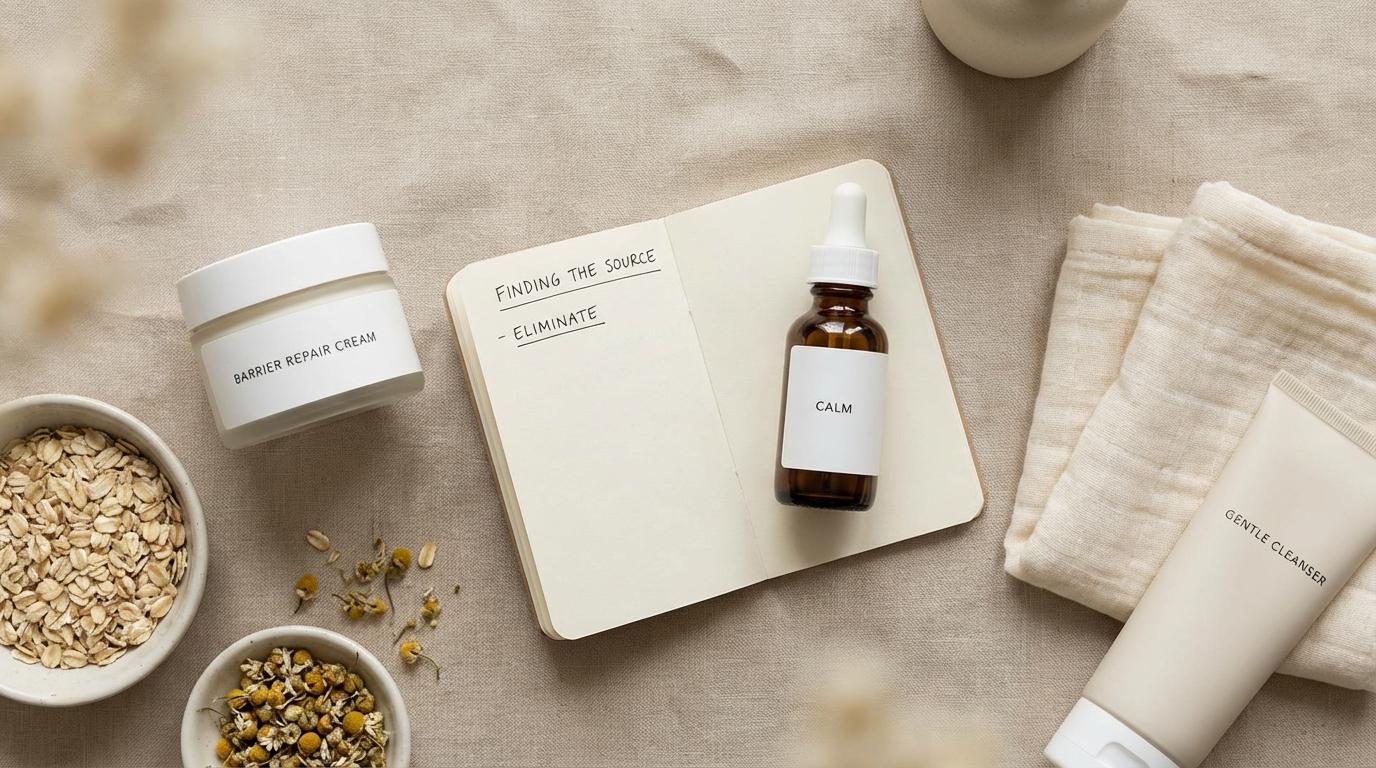
Think of this like an elimination diet, but for your face. The idea is simple: remove everything that could potentially be irritating your skin, let things calm down, and then slowly reintroduce products one at a time.
According to dermatologists, the best approach for chronically irritated skin is to limit the number of products you use and stick to bare-bone ingredients that serve a specific purpose.
Here’s how to do it:
Week 1-2: The Reset Phase
Cut your routine down to three products only: a gentle cleanser, a barrier-repair moisturizer, and sunscreen. That’s it. No serums, no actives, no treatments. I know it feels wrong when you’re used to a 10-step routine, but your skin needs this break.
Week 3-4: Observation Period
Keep your routine minimal and pay attention. Is your skin calming down? Less red? Less reactive? If yes, great. If not, one of your three core products might actually be part of the problem, and you may need to swap it out.
Week 5+: Careful Reintroduction
Once your skin has stabilized, you can start adding products back one at a time. Wait at least two weeks between introducing new products. This way, if something triggers a reaction, you’ll know exactly what caused it.
Building Your Barrier Repair Routine
Your skin barrier is basically your face’s bouncer. When it’s strong, it keeps the bad stuff out and the good stuff in. When it’s compromised, everything goes sideways. Repairing it should be your number one priority.
The key players for barrier repair are ceramides, cholesterol, and fatty acids. These three lipids make up your skin’s natural barrier, and research shows you need all three working together for proper repair. Products with just one or two won’t cut it.
Your Calming Morning Routine
Step 1: Gentle Cleanse (or skip it)
If your skin is really irritated, you might not even need to cleanse in the morning. A splash of lukewarm water can be enough. If you do cleanse, use a fragrance-free, pH-balanced formula. Creamy or gel textures are usually more hydrating than foaming options, which can be stripping.
Step 2: Barrier-Supporting Moisturizer
Look for a moisturizer with ceramides, hyaluronic acid, and glycerin. Apply it to slightly damp skin to lock in hydration. Avoid anything with fragrance, essential oils, or alcohol high up on the ingredient list.
Step 3: Mineral Sunscreen
UV exposure damages your barrier and triggers inflammation. A mineral sunscreen with zinc oxide is usually better tolerated than chemical formulas when your skin is acting up. Yes, you need this even if you’re staying indoors or it’s cloudy outside.
Your Calming Evening Routine
Step 1: Double Cleanse (gently)
If you wore sunscreen or makeup, start with a gentle oil cleanser or micellar water to break that down. Follow with your gentle water-based cleanser. Use lukewarm water only. Hot water strips your skin’s natural oils and makes irritation worse.
Step 2: Calming Treatment (optional)
Once your skin has settled a bit, you can add a serum with niacinamide, which helps reduce redness and strengthen your barrier. Centella asiatica (cica) is another ingredient that works well for chronic irritation. Apply to damp skin.
Step 3: Rich Moisturizer
Nighttime is when you can use a heavier, more occlusive moisturizer. Again, look for ceramides, cholesterol, and fatty acids. Squalane is another ingredient that’s usually well-tolerated and helps seal everything in.
Step 4: Seal It In (for extra dry or damaged areas)
If you have patches that are particularly angry, apply a thin layer of plain petroleum jelly over your moisturizer. This technique, sometimes called slugging, creates a protective seal that prevents water loss and lets your skin heal overnight.
Products That Actually Calm Chronically Irritated Skin
Not all “sensitive skin” products are created equal. Some are loaded with fragrance or irritating botanical extracts. Here’s what to look for:
Ingredients that help:
- Ceramides (especially ceramide NP, AP, and EOP)
- Niacinamide (at 2-5% concentration)
- Centella asiatica/madecassoside/asiaticoside
- Panthenol (vitamin B5)
- Allantoin
- Colloidal oatmeal
- Squalane
- Glycerin and hyaluronic acid
Ingredients to avoid:
- Fragrance (including “natural” fragrance and essential oils)
- Alcohol (denatured alcohol, SD alcohol)
- Sulfates (SLS, SLES)
- AHAs and BHAs (until your barrier has recovered)
- Retinoids (pause these while healing)
- Witch hazel
- Menthol and camphor
The most common triggers for sensitive skin include fragrance, dyes, and parabens in skincare products. When in doubt, fewer ingredients is usually better.
Beyond Products: Other Factors That Affect Your Skin
Your skincare routine is only part of the equation. These factors can keep your skin in a constant state of irritation even if you’re using all the right products:
Your pillowcase: Wash it weekly with a fragrance-free, dye-free laundry detergent. Silk or satin pillowcases are gentler on irritated skin than cotton.
Your shower habits: Keep showers short and lukewarm. Hot water is terrible for compromised skin. Apply moisturizer within a few minutes of getting out while your skin is still slightly damp.
Your environment: Dry indoor air can worsen irritation. A humidifier in your bedroom can make a noticeable difference, especially in winter.
Stress and sleep: Both directly affect your skin. Lack of sleep impairs your skin’s natural repair process, and stress triggers inflammatory responses that show up on your face. Aim for seven to eight hours of sleep and find stress management techniques that work for you.
How Long Until You See Results?
Here’s the honest truth: healing a damaged skin barrier takes time. Most people start seeing improvement within a few days of simplifying their routine, but complete recovery usually takes two to four weeks. If you’ve been dealing with chronic irritation for months or years, it might take longer.
The key is consistency. Stick with your simple, barrier-focused routine even when you’re tempted to add products back in too quickly. Your skin needs this time to rebuild its defenses.
When to See a Dermatologist
Sometimes what looks like “sensitive skin” or chronic irritation is actually a skin condition that needs professional treatment. According to dermatology experts, you should seek professional advice if:
- Your irritation doesn’t improve after 4-6 weeks of a simplified routine
- You have persistent redness that won’t go away
- Your skin frequently feels like it’s burning or stinging
- You’ve developed bumps, pustules, or visible broken capillaries
- Over-the-counter products aren’t helping at all
Conditions like rosacea, eczema, perioral dermatitis, and contact allergies can all cause chronic irritation, and they each need different treatments. A dermatologist can give you an accurate diagnosis and a treatment plan that actually addresses the root cause.
The Bottom Line
Dealing with constantly irritated skin is frustrating, but it’s fixable. The solution usually isn’t adding more products. It’s stripping back, giving your barrier time to heal, and being strategic about what you put on your face.
Start with the elimination approach. Focus on barrier repair. Be patient. And if things don’t improve, don’t hesitate to get professional help. Your skin can absolutely get to a calm, comfortable place. It just needs you to stop fighting it and start supporting it instead.