
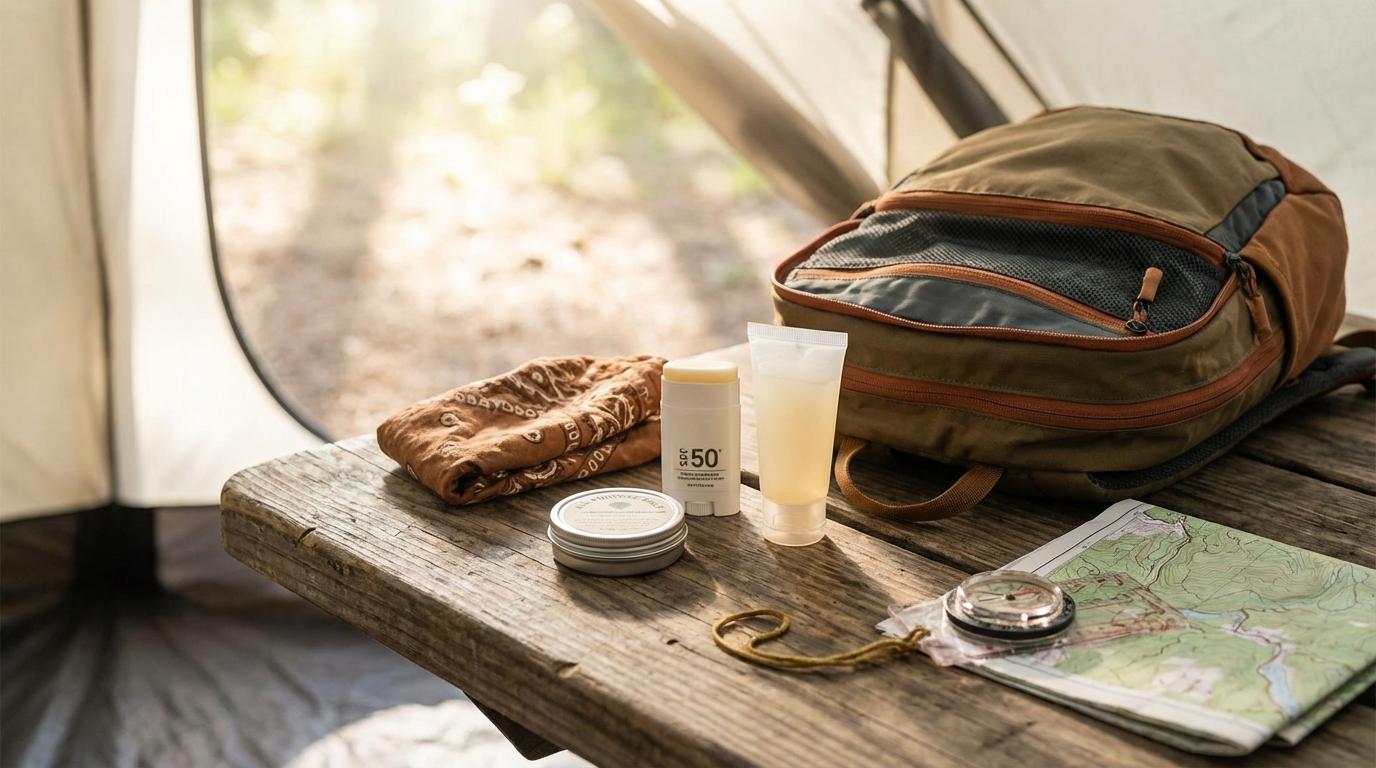
There’s something clarifying about strapping everything you need onto your back and heading into the wilderness. Your possessions shrink down to essentials. Your priorities crystallize. And your skincare routine? It has to earn its place in that pack, ounce by ounce.
I learned this the hard way on my first multi-day hike. I packed my full routine, determined to maintain my skin through a week on the Appalachian Trail. By day two, I was cursing every unnecessary gram. By day three, I’d mailed half of it home from a trail town. By the end, I realized that backpacking taught me more about what my skin actually needs than any product launch ever could.
Whether you’re planning a weekend wilderness escape or a thru-hike that spans months, your skin needs protection and care. But it doesn’t need everything. Here’s how to build a backpacking skincare routine that respects your weight limits while keeping your skin healthy on the trail.
Understanding Your Trail Priorities
Before we talk products, let’s talk about what your skin actually faces on the trail. Extended sun exposure is the biggest concern, often at higher elevations where UV rays hit harder. Wind and weather extremes can strip moisture from your skin faster than you’d expect. Dirt and sweat accumulate without regular showers. And your skin’s barrier gets stressed from environmental changes and physical exertion.
Your backpacking skincare routine needs to address these specific challenges, not your everyday concerns. That breakout you stress about at home? It matters less than preventing a severe sunburn at 10,000 feet. Your anti-aging serums? They’re staying home. The trail demands a different approach, one focused on protection and basic maintenance rather than optimization.
This mindset shift is actually freeing. Instead of wondering if you need another product, you’re asking whether each gram justifies its weight. Spoiler: most products don’t make the cut.
The Non-Negotiable: Sun Protection
If you carry nothing else, carry sunscreen. This isn’t negotiable. Trail conditions amplify UV exposure in ways that catch hikers off guard. Higher elevations mean less atmospheric protection. Snow and water reflect rays onto your face from below. You’re outside for 8 to 12 hours straight, not popping between buildings and cars.
Choose a mineral sunscreen with SPF 30 to 50 that’s water and sweat resistant. Mineral formulas based on zinc oxide or titanium dioxide are more environmentally responsible for trail use and tend to stay put better during heavy sweating. Look for reef-safe formulas even if you’re nowhere near the ocean. These formulas are generally gentler on ecosystems overall.
The American Academy of Dermatology recommends reapplying every two hours, but on the trail, you might need to reapply more frequently during heavy exertion. A small stick sunscreen for your face is easier to apply with dirty hands than a squeeze tube. Many hikers carry a separate stick just for convenience.
Don’t forget your lips. A lip balm with SPF 30 or higher prevents painful cracked, sunburned lips that can make eating and drinking miserable. This tiny addition weighs almost nothing but makes a significant difference in trail comfort.
Multi-Use Products Are Your Best Friends
The golden rule of backpacking skincare: every product should do at least two jobs. Single-purpose items rarely justify their weight. Here’s how to think about multi-tasking:
Balm or salve: A good healing balm handles chapped lips, dry cuticles, cracked heels, minor chafing, and wind-burned cheeks. Look for something based on shea butter, beeswax, or petroleum jelly. Some hikers swear by Aquaphor for its versatility. One small tin covers countless skin emergencies.
Oil-based cleanser: A small bottle of jojoba or squalane oil works as a gentle cleanser, moisturizer, and cuticle treatment. You can use it to remove sunscreen at the end of the day and leave a thin layer as nighttime moisture. It’s lightweight and won’t freeze in cold temperatures.
Zinc oxide stick: Beyond sun protection, zinc oxide calms irritation and can help with minor rashes. The thick white paste that makes it less cosmetically elegant for daily wear becomes a feature on the trail, providing physical protection from wind and visible indication of where you’ve applied.
Think creatively about what you’re already carrying. Hand sanitizer with moisturizing ingredients works in a pinch. Your camp towel can serve as a gentle exfoliating cloth. Even your sunhat provides skin protection that no product can match.
The Minimal Trail Kit
Here’s what actually goes in my pack for multi-day trips:
- Mineral sunscreen stick for face (1 oz)
- SPF lip balm (0.15 oz)
- Small tin of healing balm (0.5 oz)
- Tiny bottle of squalane oil (0.5 oz)
- A few micellar water wipes in a ziplock (optional, 1 oz)
Total weight: under 4 ounces. That’s it. This kit handles everything my skin needs for weeks on the trail. Anything more is luxury; anything less compromises protection.
The micellar wipes are optional but nice for removing the day’s grime when you’re not near water. They’re especially helpful if you wear mineral sunscreen, which can build up without proper cleansing. Biodegradable options exist, but remember that “biodegradable” doesn’t mean you can leave them on the ground. Pack them out like all your trash.
Your Morning Routine on Trail
Morning skincare on the trail should take about 60 seconds. Here’s the flow:
If your face feels grimy from the night, splash it with water or use a single micellar wipe. Most mornings, you can skip this entirely. Apply your healing balm to any dry or chapped areas: lips, around nostrils, windburned cheeks. Then apply sunscreen generously to all exposed skin. Don’t forget your ears, the back of your neck, and any bald spots. Finish with SPF lip balm.
That’s it. You’re ready to hike. The simplicity becomes addictive. There’s no waiting for products to absorb, no layering in the correct order, no decision fatigue about which serum to use. Just protection and go.
Your Evening Routine on Trail
Evening routines vary depending on your water situation and energy levels. On a good night in camp, this takes about two minutes:
Remove sunscreen and dirt using your oil cleanser or a micellar wipe. Work the oil gently over your face to dissolve the day’s buildup, then wipe away with your camp towel or a clean bandana. If you have water access, rinse briefly. Apply a thin layer of oil or balm to your face as nighttime moisture. Pay extra attention to areas that feel dry or irritated. Treat any chapping or windburn with your healing balm.
On exhausted nights when you barely have energy to eat dinner, do the minimum: wipe off sunscreen and apply lip balm. Your skin will survive. The trail teaches flexibility.
Dealing with Common Trail Skin Issues
Even with good prevention, trail skin challenges happen. Here’s how to handle them with your minimal kit:
Sunburn: This is the most important thing to avoid, but if it happens, keep the burned area covered and moisturized. Apply your healing balm or oil liberally. Stay extra vigilant about sun protection going forward. Severe burns can end trips early, so prevention matters more than treatment.
Windburn and chapping: Your healing balm is the answer. Apply thickly before bed and reapply whenever the affected area feels tight or uncomfortable. Wind-burned skin heals quickly with consistent moisture.
Breakouts: Yes, trail breakouts happen. Sweat, dirt, and sunscreen buildup can clog pores. The best approach is consistent gentle cleansing. Don’t stress too much about breakouts on trail. They typically clear up within a week of returning to normal routines. Your skin is adapting to unusual conditions.
Irritation and rashes: Zinc oxide from your sunscreen can calm minor irritation. For persistent rashes, especially in chafing zones, keep the area clean and dry when possible, and use your healing balm as a protective barrier.
Resupply and Long-Distance Considerations
For thru-hikers and long-distance backpackers, skincare becomes a resupply consideration. Plan ahead:
Calculate how much sunscreen you’ll use between resupply points. A 1-ounce face stick typically lasts me about two weeks with daily application. Adjust based on your sun exposure and reapplication habits. It’s better to carry slightly too much sunscreen than to run out miles from anywhere.
Your healing balm and oil will last longer since you use them in smaller amounts. One small tin of balm can easily last a month. But check levels at each resupply and top up if needed.
Consider mailing yourself resupply boxes with your preferred products if you’re hiking in remote areas. Trail towns don’t always stock quality sunscreen or the specific products you like. Having your system ready to go saves time and stress during resupply stops.
What to Leave Home
The hardest part of building a trail skincare kit is deciding what stays behind. Here’s what doesn’t make the cut:
Retinoids and strong actives increase sun sensitivity and require careful handling that’s impractical on trail. Leave them home. Your skin will be fine without them for a few weeks or even months.
Multiple cleansers, toners, essences, and serums add weight without proportional benefit in trail conditions. Your skin doesn’t need a ten-step routine when you’re sleeping outside. Simplify ruthlessly.
Heavy glass bottles have no place in a backpack. Decant any liquids you’re bringing into lightweight plastic containers. Many outdoor stores sell empty travel bottles that weigh almost nothing.
Sheet masks and single-use products create trash you have to carry out and add weight without versatility. Skip them entirely for backcountry trips.
Beyond Products: Behavioral Sun Protection
The most effective sun protection doesn’t add any weight to your pack. Smart behavior protects your skin better than any product alone.
Wear a wide-brimmed hat or cap with a neck flap. The Skin Cancer Foundation notes that clothing provides consistent protection without reapplication. A good sun hat is worth its weight many times over in reduced sunscreen use and improved protection.
Choose UPF-rated clothing when possible. A lightweight long-sleeve sun hoodie weighs about the same as a short-sleeve shirt but protects your arms completely. Many hikers find they’re actually more comfortable covered up, as the fabric protects from both sun and bugs.
Take breaks in shade when available. Even brief shade breaks give your skin a rest and reduce cumulative UV exposure. Plan lunch stops under trees rather than on exposed ridgelines when you have the choice.
Sunglasses protect the delicate skin around your eyes, an area where applying sunscreen can be tricky. They also prevent squinting, which causes fine lines over time.
Returning to Your Regular Routine
After weeks or months of minimal skincare, returning to your regular routine requires some adjustment. Don’t rush back to all your products at once.
Your skin has adapted to simplicity. Reintroduce products slowly over a week or two. Start with gentle cleansing and moisturizing, then gradually add back actives. Your skin might actually look great after a trail trip despite the minimal care. All that fresh air, reduced stress, and early bedtimes have their own benefits.
Pay attention to what your skin actually seems to need versus what you habitually used before. Many hikers return from long trails with a permanently simplified routine, having discovered that their skin thrived with less.
The Freedom of Less
Backpacking skincare isn’t about deprivation. It’s about discovering what actually matters. When every ounce counts, you learn to distinguish between needs and wants. You find that your skin is more resilient than you thought. You realize that protection, not perfection, is the real goal.
There’s a particular satisfaction in reducing your skincare to its essentials and watching your skin stay healthy anyway. The trail strips away the noise and leaves you with fundamentals: sunscreen, moisture, and care for your body as it carries you through beautiful places.
Pack light. Protect your skin. Trust the process. Your face will carry you through the miles just as reliably as your feet, as long as you give it the basics it needs and nothing more.