
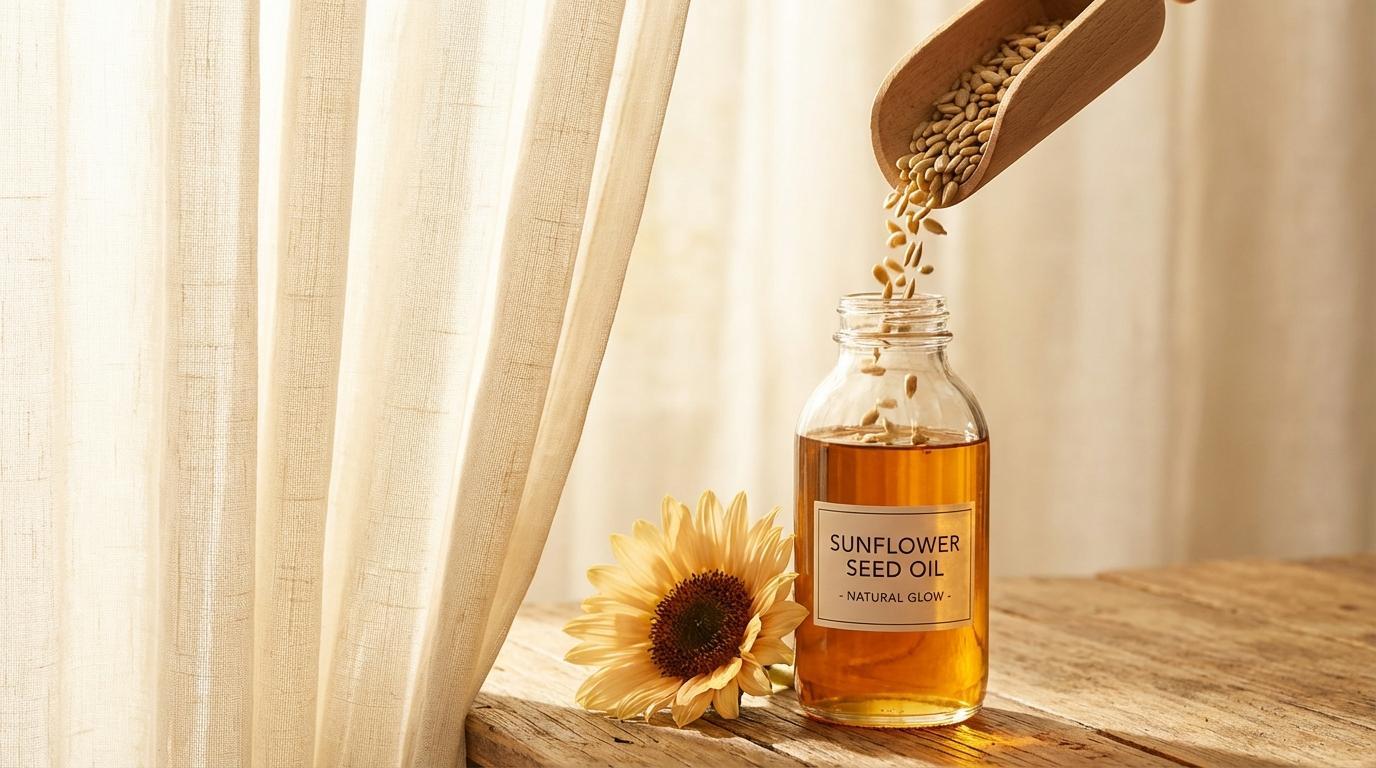
A deficiency in linoleic acid causes your sebum to become thick and sticky, leading to clogged pores and breakouts. That single biochemical fact changed how I think about face oils entirely. When I learned that acne-prone skin often contains lower levels of linoleic acid compared to clear skin, suddenly the affordable bottle of sunflower seed oil in my kitchen looked a lot more interesting.
Sunflower seed oil contains approximately 70-80% linoleic acid, making it one of the richest plant sources of this essential fatty acid. Research published in the International Journal of Molecular Sciences confirms that linoleic acid plays a crucial role in maintaining skin barrier function and regulating sebum composition. Your skin literally needs this fatty acid to function properly.
The Science Behind Linoleic Acid and Skin Health
Linoleic acid is an omega-6 fatty acid that your body cannot produce on its own. In your skin, it gets metabolized and incorporated into ceramides, which are the lipids that hold your skin barrier together. Think of ceramides as the mortar between the bricks of your skin cells.
When linoleic acid levels drop, several things happen. First, your sebum becomes more viscous. Instead of flowing freely and protecting your skin, it gets sticky and clogs your pores. Second, your skin barrier weakens, allowing moisture to escape and irritants to enter. Third, inflammation increases because linoleic acid has natural anti-inflammatory properties.
According to Dermatology Times, sunflower seed oil has been shown to preserve the integrity of the stratum corneum (your outermost skin layer) and improve hydration without causing redness or irritation. The mechanism involves activating something called PPAR-alpha receptors, which enhance keratinocyte proliferation and lipid synthesis.
Why Sunflower Oil Works for Acne-Prone Skin
The connection between linoleic acid and acne has been studied since the 1980s. Researchers found that the sebum of people with acne contains significantly less linoleic acid compared to people with clear skin. When you apply high-linoleic oils topically, you can help normalize your sebum composition.
Dr. Zoe Draelos, a consulting professor in dermatology at Duke University, has noted that oils high in linoleic acid are particularly useful for treating acne because they normalize follicular keratinization and reduce microcomedone formation. In plain terms: they help keep your pores clear by preventing the buildup of dead skin cells and thick sebum.
Sunflower oil scores a 0 on the comedogenic scale according to Fulton’s 1989 study, meaning it does not clog pores. This makes it safe for oily and acne-prone skin types. The lightweight texture absorbs quickly without leaving a greasy residue.
Choosing Quality Sunflower Seed Oil
Not all sunflower oils are created equal. The type you use matters significantly for skincare purposes.
High Linoleic vs High Oleic
Sunflower oil comes in two main varieties: high linoleic and high oleic. For skincare, you want high linoleic sunflower oil. High oleic varieties have been bred to contain more oleic acid (an omega-9 fatty acid) for cooking stability, but they lack the skin benefits of the linoleic-rich version.
High linoleic sunflower oil contains 70-80% linoleic acid. High oleic versions contain only about 20% linoleic acid and 80% oleic acid. Check the label or product description before purchasing.
Cold-Pressed and Unrefined
Cold-pressed, unrefined sunflower oil retains more of its beneficial compounds. The refining process strips away antioxidants like vitamin E and can damage the delicate fatty acid structure. Look for oil that is:
- Cold-pressed or expeller-pressed
- Unrefined or virgin
- Stored in a dark glass bottle
- Organic (to avoid pesticide residues)
The oil should have a light golden color and a subtle, slightly nutty scent. If it smells rancid or has no smell at all, the oil has either gone bad or been heavily refined.
Storage and Shelf Life
Linoleic acid oxidizes more easily than other fatty acids. Store your sunflower oil in a cool, dark place and use it within 6-8 months of opening. Refrigeration can extend shelf life. If your oil develops an off smell or darkens significantly, discard it.
How to Use Sunflower Seed Oil in Your Routine
Sunflower oil works as both a standalone treatment and a carrier oil for other ingredients. The application method depends on your skin type and goals.
As a Facial Oil
Apply 3-5 drops to clean, slightly damp skin. The water helps the oil spread evenly and penetrate better. You can use it morning or night, though nighttime application gives the oil more time to absorb without interference from makeup or sunscreen.
For oily skin, start with just 2-3 drops and see how your skin responds. Many people with oily skin find that applying the right oil actually helps regulate their natural sebum production over time.
Oil Cleansing Method
Sunflower oil makes an excellent cleansing oil. Massage a small amount onto dry skin to dissolve makeup and sunscreen, then emulsify with water and rinse or wipe off with a warm cloth. The linoleic acid content means it dissolves sebum effectively without stripping your skin.
Mixed with Moisturizer
Add 2-3 drops to your regular moisturizer for an extra hydration boost. This works well if you find straight oil too heavy but still want the linoleic acid benefits.
Building an Affordable Routine
One of the best things about sunflower seed oil is the price. A bottle of high-quality, cold-pressed, high-linoleic sunflower oil costs between $5-15 and lasts months. Compare that to fancy serums containing the same fatty acids for $40-80.
If you’re working with a limited budget, check out our guide to Budget Skincare Under $20 for more affordable options that actually deliver results. You can also build a complete routine under $30 by choosing multi-purpose products strategically.
Sunflower oil pairs well with simple routines. A basic regimen might include:
- A gentle cleanser (or oil cleansing with sunflower oil)
- Sunflower oil as your primary moisturizing step
- Sunscreen in the morning
For acne-prone skin, you might add a BHA product a few times per week. The sunflower oil will help counteract any dryness from the exfoliant while providing its own pore-clearing benefits.
What to Expect and Timeline
Sunflower oil is not an overnight miracle. Like most skincare ingredients, it takes consistent use over weeks to see meaningful changes.
In the first week, you might notice improved hydration and a softer skin texture. By week 4-6, many people see a reduction in minor breakouts and improved skin barrier function. Those with dehydrated skin often notice their skin becoming less oily as the barrier repairs itself.
Some people experience a brief purging period when introducing oils to their routine, especially if they have underlying congestion. This typically resolves within 2-3 weeks. If breakouts worsen significantly or persist beyond a month, the oil may not be right for your particular skin chemistry.
Potential Limitations
Sunflower oil is not a cure-all. While it provides excellent barrier support and may help with mild acne, severe or hormonal acne typically requires additional treatments. The oil also does not address hyperpigmentation, deep wrinkles, or other concerns that require actives like retinoids or vitamin C.
People with sunflower seed allergies should obviously avoid topical use. If you have nut or seed allergies, patch test carefully before applying to your face.
Additionally, quality matters more than with some other skincare products. A heavily refined cooking oil from the grocery store will not provide the same benefits as a cold-pressed, high-linoleic cosmetic-grade oil.
The Bottom Line
Sunflower seed oil represents what I love about science-backed skincare: an affordable, accessible ingredient with real research behind it. The high linoleic acid content addresses a genuine biochemical need that many of us have, especially those dealing with acne-prone or dehydrated skin.
The research from the International Journal of Dermatology on plant oils and skin barrier repair continues to support what traditional medicine knew for centuries: sometimes the simplest ingredients work best.
Look for high-linoleic, cold-pressed, unrefined sunflower oil. Use it consistently for at least 6 weeks before judging results. And remember that at under $15 a bottle, it is one of the lowest-risk experiments you can try in your skincare routine.