
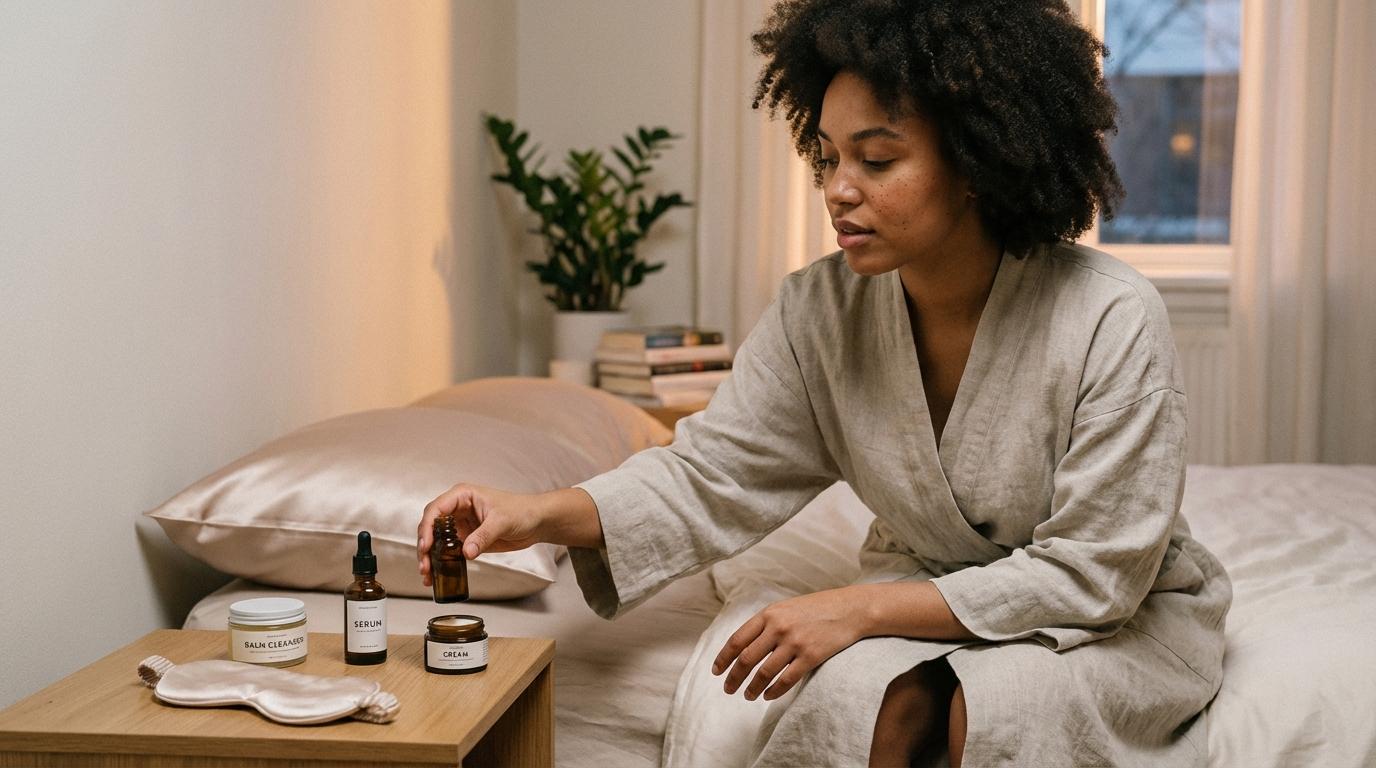
Your skin does its best work while you sleep. That is not just a nice idea, it is biology. Between 11 PM and 4 AM, your skin cells regenerate faster, blood flow to your face increases, and your body produces more collagen than at any other time of day. The question is not whether nighttime skincare matters. It is whether you are setting your skin up to make the most of those precious repair hours.
I used to overthink my evening routine. Fourteen steps, three serums, an elaborate layering sequence I could barely remember. Then I realized something: consistency beats complexity every single time. A simple routine you actually do is infinitely better than a complicated one you skip because you are too tired.
Here is how to build a before-bed routine that actually supports what your skin wants to do naturally.
Why Double Cleansing Changes Everything
If you wear sunscreen (and you should), makeup, or simply exist in a city with pollution, a single cleanse at night is not cutting it. Your water-based cleanser is great at removing sweat and some dirt, but it is not designed to break down the oil-based stuff sitting on your skin: SPF, makeup, sebum, and environmental grime.
Double cleansing is not about being extra. It is about being thorough. Start with an oil-based cleanser or micellar water to dissolve the day’s buildup. Then follow with your regular cleanser to clear away what is left. According to the American Academy of Dermatology, proper cleansing is the foundation of any effective skincare routine.
The texture difference you will feel after a proper double cleanse is noticeable. Your skin feels genuinely clean, not stripped. There is a softness that single cleansing rarely achieves. And your treatment products? They can actually penetrate instead of sitting on top of yesterday’s sunscreen residue.
One tip: keep your oil cleanser application to about 60 seconds. Massage it gently in circular motions. This is not a rush job, but it is not a ten-minute massage either. Just enough time to break down everything without overdoing it.
Timing Your Treatment Products for Maximum Absorption
The order you apply products matters, but so does the timing between them. Slapping everything on at once can dilute actives, cause pilling, or simply mean your expensive serum never reaches where it needs to go.
After cleansing, give your skin about 30 seconds to a minute before applying your first treatment. Your skin should be slightly damp, not dripping wet. This creates an optimal environment for absorption without diluting your products too much.
The general rule is thinnest to thickest. Toners and essences go first, then serums, then treatments, then moisturizer. But here is what really matters: if you are using active ingredients like retinol or vitamin C, give each product a minute or two to absorb before moving on.
For retinol specifically, many dermatologists recommend waiting until your skin is completely dry before applying. This can reduce irritation while still delivering results. If you are new to retinol, start with twice a week and build up slowly. Your skin needs time to adjust, and pushing too hard too fast usually backfires.
One thing I have stopped doing: waiting exactly 20 minutes between every single step. Life is short. A minute or two is plenty for most products. The exception is if something is causing irritation, in which case, space things out more or consider alternating nights.
Overnight Masks vs Regular Moisturizers: When Each Makes Sense
Sleeping masks and overnight treatments have become hugely popular, but they are not automatically better than a solid moisturizer. Understanding when to use each saves you money and gets you better results.
Your regular moisturizer is the workhorse. It creates a barrier that locks in everything underneath and prevents transepidermal water loss while you sleep. For most people, most nights, this is exactly what you need. A good moisturizer suited to your skin type will keep your skin balanced and hydrated.
Overnight masks are more like a weekly treatment. They typically contain higher concentrations of active ingredients and humectants. They are designed to deliver a more intensive dose of hydration or specific benefits like brightening or soothing. Think of them as a boost, not a replacement.
Here is when to reach for a sleeping mask:
- Your skin feels drier than usual (weather changes, travel, illness)
- You have been using actives that might be causing some dehydration
- You want to prep your skin before an event
- You are recovering from sun exposure or environmental stress
Most sleeping masks work best used 2-3 times per week maximum. Using them every night can actually overwhelm your skin or lead to clogged pores, depending on the formula. More is not always more, even with products designed for overnight use.
The Overlooked Factor: Your Pillow and Sleep Position
You can have the most perfect skincare routine in the world, and then spend eight hours grinding your face into a pillowcase that has not been washed in two weeks. Everything you applied gets transferred to the fabric, mixed with bacteria and oils, and then reapplied to your skin night after night.
Change your pillowcase at least once a week. Twice is better if you are prone to breakouts. This is not about being obsessive. It is about not undoing your skincare work while you sleep. According to Sleep Foundation, pillowcases should ideally be washed every few days for optimal skin health.
Silk or satin pillowcases have become popular for good reason. They create less friction against your skin than cotton, which can help reduce sleep creases and may mean less product transfer. They are not essential, but if you are waking up with pillow marks that take hours to fade, they are worth considering.
Sleep position matters too. Face-down sleepers put constant pressure on their skin, which can contribute to wrinkles over time and definitely increases product transfer. Back sleeping is technically best for your skin, though I recognize that is not always possible. If you are a side sleeper, at least alternate sides and keep that pillowcase fresh.
Putting It All Together: A Realistic Nightly Flow
Here is what a sustainable evening routine actually looks like:
Step 1: Oil cleanser or micellar water to remove sunscreen, makeup, and oil-based debris. About 60 seconds of gentle massage.
Step 2: Water-based cleanser to clear everything else. Another 60 seconds, gentle circular motions.
Step 3: Any toners or essences while skin is still slightly damp. Pat, do not rub.
Step 4: Treatment serums. One or two max. Wait a minute between each if you are using actives.
Step 5: Moisturizer or overnight mask, depending on your skin’s needs that day.
Step 6: Eye cream if you use one. The under-eye area is thin and benefits from targeted hydration.
The whole routine takes maybe ten minutes once you get the rhythm down. Some nights when you are exhausted? Just double cleanse and moisturize. Something is better than nothing, and your skin is more resilient than the beauty industry wants you to believe.
What matters most is not following this exactly. It is finding a routine that is sustainable for your real life, not your ideal life. The best before-bed routine is the one you will actually do, night after night, giving your skin the clean canvas and supportive products it needs to do its repair work while you rest.