
Your skin runs on a clock. Not the one on your nightstand. A biological one hardwired into every cell.
Scientists call it the circadian rhythm. You probably know it as your sleep-wake cycle. But it does way more than tell you when to crash at night. It controls when your skin repairs itself, when it produces oil, and when it’s most vulnerable to damage.
Understanding this internal timing system can transform your skincare routine from guesswork into strategy.
The 24-Hour Skin Cycle
Your skin has its own peripheral clock. Researchers have identified core circadian clock genes in skin cells that regulate a 24-hour cycle of activity. These genes, including BMAL1, CLOCK, and PER1, form feedback loops that tell your skin what to do and when.
During the day, your skin focuses on protection. At night, it shifts to repair mode.
A 2019 review in the Journal of Clinical and Aesthetic Dermatology found that the stratum corneum undergoes circadian rhythm changes. Skin permeability is higher in the evening than in the morning. Translation: your products absorb better at night.
This isn’t marketing. It’s biology.
The positive arm of the skin’s clock consists of BMAL1 and CLOCK proteins that form pairs to activate transcription of other clock genes. Meanwhile, the negative arm creates a self-regulating loop. When too much of certain proteins accumulate, they shut down their own production. This elegant system keeps your skin cycling through protection and repair modes every 24 hours without fail.
When Your Skin Actually Repairs Itself
The real work happens while you sleep.
DNA repair activity peaks during nighttime hours. Research shows that PARP1 enzyme activity, which mediates UV-induced DNA repair, follows a circadian rhythm. This repair process is more effective during sleep, aligning with the peak demand for cellular repair. Your body isn’t wasting its repair resources when you’re out getting sun damage. It saves them for when you’re resting.
Cell division also follows this pattern. In mouse studies, there are three to four times more stem cells in the synthesis phase at night compared to daytime. The circadian clock specifically reduces the proportion of epidermal stem cells in active division during the day, when UV radiation could damage them.
Smart design. Your skin minimizes DNA damage during high-risk hours and maximizes repair when you’re out of harm’s way.
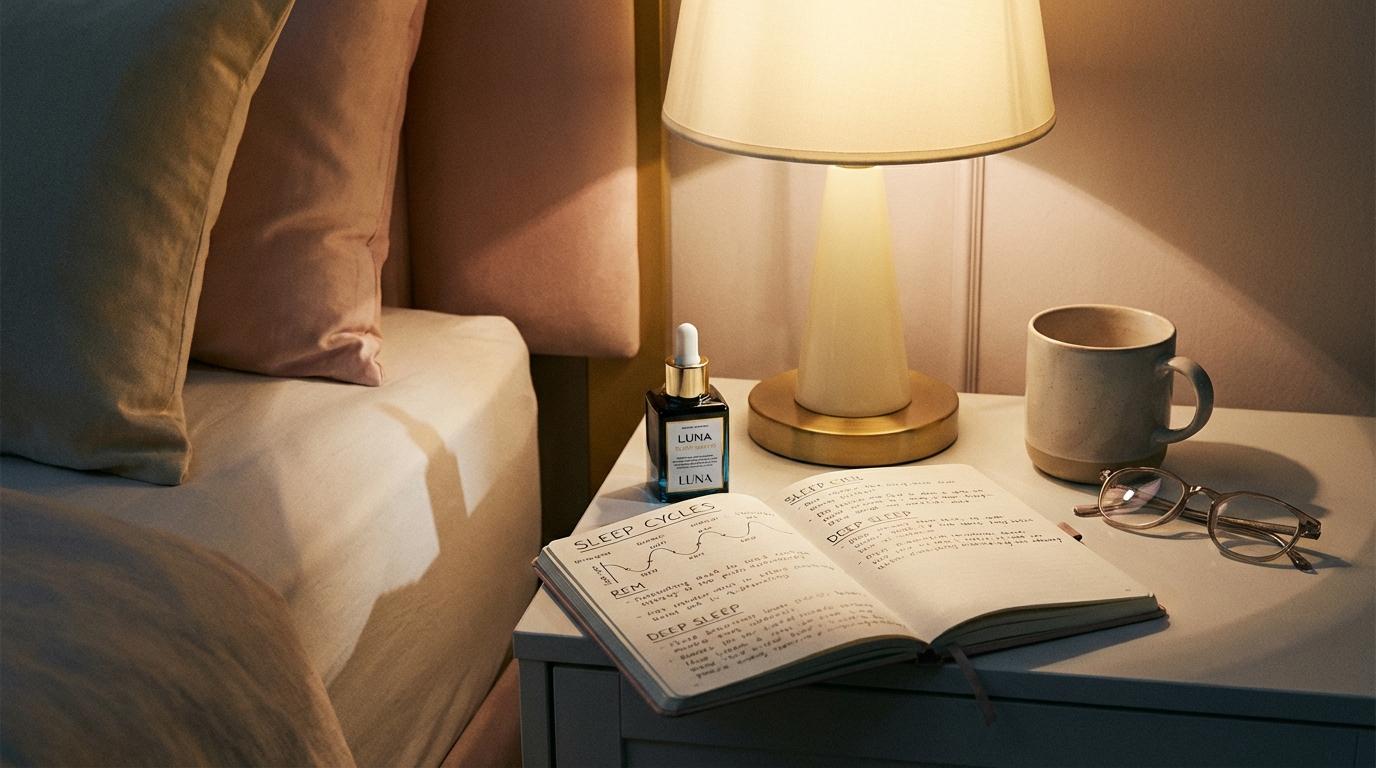
This is why the science behind sleep and skin repair matters so much. Skimp on sleep and you’re cutting your repair window short.
Growth hormone release also peaks during deep sleep phases. This hormone triggers cell regeneration and collagen production. Without adequate sleep, you miss this nightly repair surge. Your skin literally cannot rebuild itself as effectively.
The Sebum Schedule
Oil production follows a predictable pattern.
Research from the Journal of Drugs in Dermatology shows that sebaceous gland activity hits its lowest point around 4am. It climbs throughout the morning and peaks between noon and 4pm.
This timing makes biological sense. Your skin produces fresh, non-oxidized lipids to create a protective barrier exactly when UV exposure is highest. The sebum layer helps defend against environmental damage during your most active hours.
By evening, sebum production decreases and essentially stops at midnight. This explains why your face feels less oily in the early morning and why blotting papers get more action in the afternoon.
A December 2024 study on Chinese women confirmed these patterns, finding significant circadian rhythmic changes in sebum secretion, transepidermal water loss, and skin surface temperature throughout the day. The research also found ultradian rhythms with 8-hour periods layered on top of the main 24-hour cycle.
Interestingly, researchers have tried to link sebum production to hormone levels like testosterone, cortisol, and melatonin. The connection isn’t straightforward. Sebaceous glands appear to have their own autonomous clocks responding to different signals than we expected.
Barrier Function Fluctuates Too
Your skin barrier isn’t static throughout the day.
Transepidermal water loss changes with circadian rhythms. Your skin loses more moisture at certain times than others. Research shows the barrier function weakens somewhat in the evening, which is partly why products penetrate better then.
This has clinical implications. Increased skin permeability at night, combined with higher baseline inflammation during evening hours, suggests that moisturizers and barrier-repair products might offer increased benefits when applied before bed.
The stratum corneum pH also fluctuates. These changes affect how well your acid mantle protects against bacteria and irritants. Your barrier works hardest during daytime exposure hours and relaxes into repair mode at night.
Why Disrupted Sleep Wrecks Your Skin
Circadian rhythm disruption doesn’t just make you tired. It shows on your face.
When your internal clock gets thrown off, skin problems follow. Research links circadian disruption to exacerbated UV-induced skin damage, increased aging, and even higher cancer risk.
Night shift workers often report worse acne and oilier skin. When sebum production doesn’t follow its normal stop-and-start cycle, pores stay clogged. Stress acne has similar mechanisms at play.
A study published in the International Journal of Molecular Sciences in 2024 found that circadian rhythm disorders compromise the skin’s ability to repair DNA damage from sun exposure. This speeds up photoaging and increases mutation accumulation.
The S phase of cell division is particularly sensitive to UV damage. When your clock is disrupted, more cells end up in this vulnerable phase during high-exposure daytime hours. The result: more DNA damage that doesn’t get properly repaired.
Irregular sleep isn’t just about dark circles. It fundamentally impairs your skin’s ability to maintain and repair itself.
Timing Your Routine to Biology
Knowing this, you can work with your skin’s clock instead of against it.
Morning focus: protection. Your skin is already in defense mode. Support it with antioxidants and sunscreen. This is when environmental stressors hit hardest. Vitamin C serums work well in the morning because they boost your skin’s natural defense against free radicals during peak exposure hours.
Midday awareness: Sebum production peaks. If you’re acne-prone, this is when pores are most likely to get clogged. A midday cleanse or blotting paper can help, but don’t over-wash. Your skin needs some of that oil for protection.
Evening focus: repair and treatment. Skin permeability peaks. Active ingredients absorb better. This is prime time for retinoids, exfoliants, and repair serums. Your skin is primed to receive these ingredients and put them to work.
Dermatologists recommend using DNA repair enzymes in the late afternoon or evening, after you’ve accumulated sun damage from the day. Some use them twice daily, but if you’re choosing once, make it evening.
Moisturizers and barrier-repair products also work harder at night. The increased skin permeability that researchers observed means your creams aren’t just sitting on top. They’re actually getting in.
Recent Research Developments
The science keeps advancing.
A February 2025 study in Scientific Reports found that certain botanical compounds can actually enhance circadian amplitude without altering the period. Cinnamomi cortex extract and its components epicatechin and linalool showed promise in modulating clock gene expression. These compounds altered mRNA and protein levels of clock genes in a time-dependent manner.
Researchers have also identified 39 circadian rhythm-related genes connected to skin aging. These genes are enriched in signaling pathways including glucagon signaling, insulin resistance, thyroid hormone signaling, and adipocytokine pathways. Three key genes emerged from machine learning analysis: SIRT1, ARNTL, and ATF4. These findings could lead to targeted anti-aging strategies that work with your body’s natural timing.
At least 1,400 genes show circadian expression changes in skin. That’s a massive portion of skin function tied directly to time of day.
A 2025 study used mass spectrometry to track skin lipid changes over 24 hours. While only about 0.67% of all detected metabolites showed statistically significant circadian rhythmicity across all participants, individual variation was much higher. Some people showed rhythmic changes in up to 18% of their skin lipids.
Practical Takeaways
You don’t need to overhaul everything. Small timing adjustments make a difference.
Apply your heaviest treatments at night when absorption peaks. Save your lightweight protective products for morning. If you’re dealing with excess oil, don’t panic about midday shine. Your skin is literally programmed to produce more sebum then.
Protect your sleep. Chronic sleep disruption does measurable damage to skin function. Those morning-after recovery routines can help, but prevention beats damage control.
Consider your lifestyle. Night shift workers, frequent travelers crossing time zones, and chronic insomniacs face real skin challenges. If you can’t maintain a regular sleep schedule, focus extra effort on barrier support and sun protection.
Your skin has been following this schedule for as long as humans have existed. The question is whether your routine supports it or fights it.
Work with the clock. Not against it.