
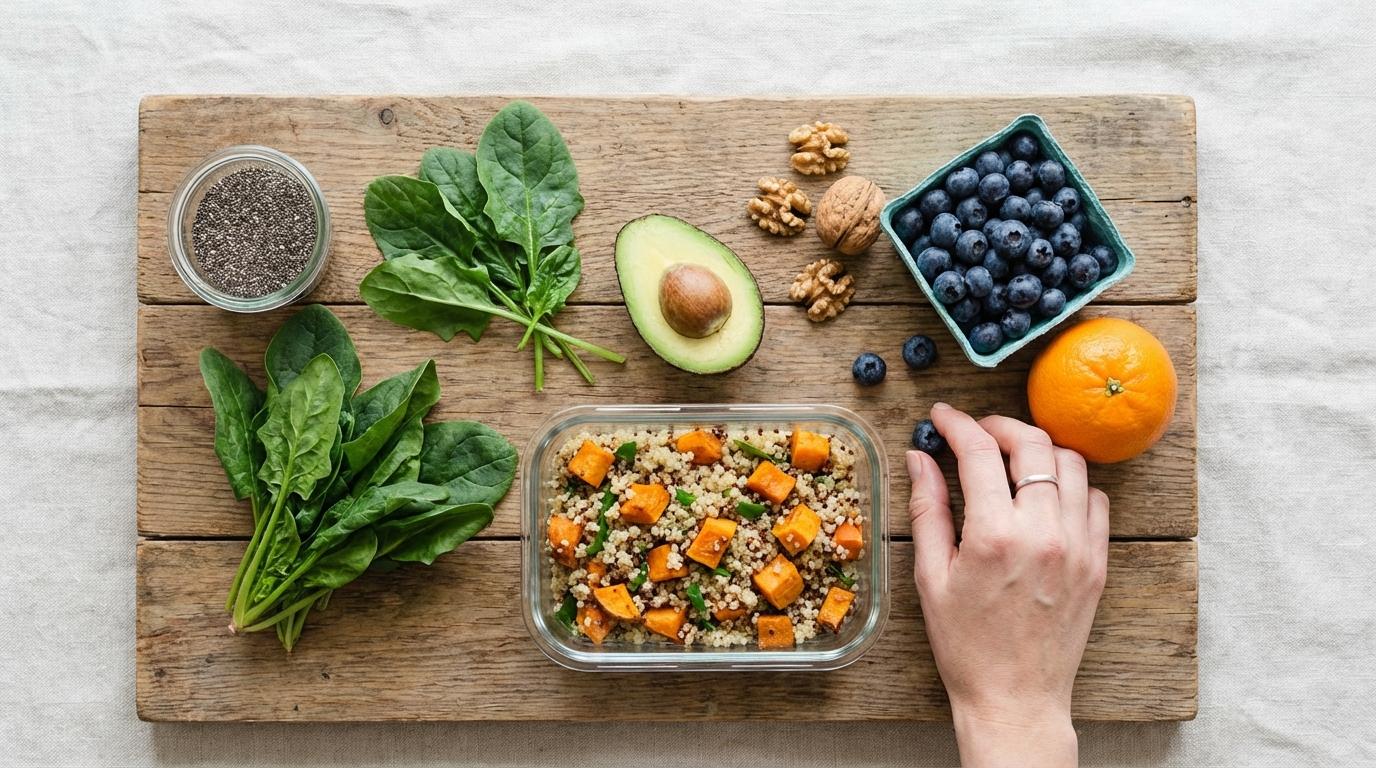
Look, I know what you’re thinking. Every time someone talks about “eating for better skin,” they start listing off wild salmon, organic blueberries from some small farm in Maine, and supplements that cost more than my rent. Been there, rolled my eyes at that. But here’s the thing: you really can eat your way to healthier skin without destroying your budget. I’ve been doing it on a college budget for years, and I’m about to share exactly how you can spend under $20 a week on skin-friendly foods.
Your skin is the largest organ in your body, and what you put inside shows up on the outside. Research in nutritional dermatology shows that vitamins A, C, and E, along with omega-3 fatty acids and antioxidants, play major roles in skin health. The good news? These nutrients aren’t hiding in expensive superfoods. They’re sitting in the regular produce section, probably on sale this week.
The Budget Omega-3 Sources That Actually Work
Omega-3 fatty acids help maintain your skin’s lipid barrier, which basically means they keep your skin hydrated and protect it from environmental damage. When people hear omega-3s, they immediately think salmon. And yes, wild-caught salmon is amazing for your skin. But at $12-15 per pound? Not happening every week.
Here’s what I buy instead:
- Canned sardines or mackerel ($2-3 per can): These little fish are packed with omega-3s, actually more per serving than many fresh fish. Plus, because they’re small fish, they have lower mercury levels. I toss them on toast with lemon juice and call it lunch.
- Canned tuna ($1-2 per can): Not as high in omega-3s as sardines, but still a solid source. I aim for chunk light because it’s cheaper and lower in mercury than albacore.
- Walnuts ($4-5 per bag): The only nut with significant omega-3s. I buy the store brand bag and sprinkle them on oatmeal, salads, or just eat them as snacks.
- Flaxseeds ($3-4 per bag): Ground flaxseed is dirt cheap and lasts forever. One tablespoon in your morning smoothie or oatmeal gives you a nice omega-3 boost.
- Chia seeds ($4-5 per bag): Similar to flax, and a bag lasts me about a month.
Weekly cost for omega-3 sources: Around $5-7 if you rotate between these options.
Antioxidant Foods That Won’t Break the Bank
Antioxidants fight free radicals, those unstable molecules that cause oxidative stress and accelerate skin aging. Cleveland Clinic dermatologists recommend loading up on colorful fruits and vegetables because the pigments that give them color are often the same compounds that protect your skin.
The trick to eating antioxidant-rich foods on a budget is knowing which ones give you the most bang for your buck:
Frozen berries ($3-4 per bag): Fresh berries are expensive and go bad in like three days. Frozen berries are picked at peak ripeness, flash-frozen, and often more nutritious than the sad fresh berries that have been sitting in transport for a week. I always have a bag of mixed berries in my freezer for smoothies.
Sweet potatoes ($1-2 per pound): These orange beauties are loaded with beta-carotene, which your body converts to vitamin A. Vitamin A supports skin cell turnover, helping you shed dead skin cells and reveal fresher skin underneath. I bake a few on Sunday and eat them throughout the week.
Carrots ($1-2 per bag): Another beta-carotene powerhouse. Raw with hummus, roasted with dinner, or thrown in a stir-fry. Versatile and cheap.
Spinach and kale ($2-3 per bunch or bag): Dark leafy greens contain vitamins A, C, and E, plus lutein and zeaxanthin. I buy the bagged stuff because it lasts longer and I’m being honest about my meal prep commitment level.
Tomatoes ($2-3 per pound or canned): Tomatoes contain lycopene, an antioxidant that may help protect against sun damage. Fun fact: cooking tomatoes actually makes the lycopene more available to your body, so canned tomatoes or homemade sauce totally count.
Seasonal Produce Picks to Save Even More
One of the best things I learned is that seasonal produce is not only cheaper, it’s also more nutritious because it hasn’t been shipped from across the world. Here’s a quick breakdown by season:
Spring: Asparagus, strawberries, spinach, and peas. Asparagus is surprisingly good for skin because it’s high in folate and vitamin E.
Summer: Tomatoes, bell peppers, watermelon, peaches, and zucchini. This is when vitamin C-rich produce is at its cheapest. Stock up.
Fall: Sweet potatoes, pumpkin, apples, and brussels sprouts. All those orange and yellow vegetables are your beta-carotene season.
Winter: Citrus fruits, cabbage, carrots, and winter squash. Oranges and grapefruits are dirt cheap in winter and loaded with vitamin C, which supports collagen production.
When you shop seasonally, you can often find produce for 50% less than off-season prices. I check the weekly flyer before I shop and build my meals around what’s on sale.
The Underrated Skin Foods
Some of the best foods for your skin barely get any attention because they’re not trendy. But they work, and they’re cheap.
Eggs ($3-4 per dozen): Eggs contain biotin, vitamin D, and protein, all of which support skin health. The yolk has most of the good stuff, so don’t skip it. I hard boil a dozen on Sundays for quick breakfasts and snacks.
Plain Greek yogurt ($4-5 for a large container): Fermented dairy is packed with probiotics that support gut health, which connects directly to skin health. The gut-skin axis is a real thing. When your gut microbiome is happy, it often shows on your face. I eat yogurt with frozen berries and a drizzle of honey almost every morning.
Oats ($2-3 per canister): Besides being a cheap breakfast staple, oats contain zinc and silicon, both of which play roles in skin structure and wound healing. Steel-cut oats are slightly more nutritious, but rolled oats are faster and still great.
Beans and lentils ($1-2 per can or bag): These are protein-rich, high in zinc, and incredibly cheap, especially if you buy dried. Zinc helps with skin cell production and wound healing. I make a big batch of lentil soup and eat it for days.
Green tea ($3-4 for a box of tea bags): Dermatologists note that green tea polyphenols have been shown in studies to decrease wrinkling and sun damage. I switched from my third coffee to green tea in the afternoon and it’s become a nice little ritual.
Meal Prep Ideas That Actually Happen
I’m not going to pretend I spend Sundays making elaborate meal preps with labeled containers. But I do have a system that works for busy weeks and still keeps my skin happy.
Sunday prep (30 minutes):
- Hard boil a dozen eggs
- Bake 3-4 sweet potatoes
- Wash and prep your greens so they’re ready to grab
- Make a batch of overnight oats for the week (oats + yogurt + chia seeds + frozen berries)
Quick breakfast ideas:
- Overnight oats with berries and walnuts
- Greek yogurt parfait with frozen berries
- Scrambled eggs with spinach
- Toast with mashed avocado (when avocados are on sale) and a hard-boiled egg
Easy lunches:
- Sardines on whole grain toast with lemon and greens on the side
- Sweet potato loaded with beans, salsa, and a dollop of yogurt
- Big salad with hard-boiled eggs, carrots, tomatoes, and whatever vegetables need using up
Simple dinners:
- Stir-fry with whatever vegetables are in season, served over rice or with eggs
- Lentil soup with crusty bread
- Baked fish (when on sale) with roasted vegetables
- Bean tacos with cabbage slaw and salsa
A Sample $20 Grocery List
Here’s what a typical skin-friendly grocery run looks like for me:
- Frozen mixed berries: $3.50
- Bag of spinach: $2.50
- Sweet potatoes (2 lbs): $2.00
- Carrots (1 lb bag): $1.50
- Can of sardines: $2.50
- Dozen eggs: $3.50
- Greek yogurt (large container): $4.50
Total: $20.00
Add in staples you probably already have, like oats, olive oil, and green tea, and you’ve got a week’s worth of skin-supporting meals. If you’ve got a few extra dollars, throw in some walnuts or a bag of lentils.
What to Avoid (Without Being Extreme)
I’m not going to tell you to never eat sugar or carbs again. That’s unrealistic and honestly not necessary. But there are a few things worth being aware of.
Foods high in refined sugar and processed carbs can trigger inflammation, which shows up as breakouts or dull skin for some people. This doesn’t mean you can never have cake. It means that if you’re eating processed snacks and sugary drinks every day and wondering why your skin looks tired, that might be worth addressing.
Trans fats from deep-fried foods and certain packaged snacks are generally bad news for skin and overall health. Again, the occasional treat isn’t going to ruin your skin. But making these foods your daily staples might not do you any favors.
For some people, dairy causes breakouts. If you suspect this is you, try swapping regular yogurt for a dairy-free alternative for a few weeks and see what happens. But don’t cut dairy just because someone on TikTok said to. If your skin and diet are working for you, keep doing what you’re doing.
The Bigger Picture
Eating for skin health isn’t about perfection. It’s about gradually shifting toward more nutrient-dense foods while still enjoying your life. If you’re currently eating takeout every night, even adding one vegetable to your plate is progress. If you’re already eating pretty well, maybe the omega-3 focus is your next step.
Also worth mentioning: food is just one piece of the puzzle. Hydration matters. Sleep matters. Stress management matters. Wearing sunscreen every single day matters. But when all those things are relatively in check, the food you eat can be a real support system for your skin.
The best part about this approach is that these foods aren’t just good for your skin. They’re good for your energy levels, your mood, your digestion, everything. When I started eating this way in college, I noticed my skin clearing up, but I also noticed I wasn’t crashing at 3pm anymore. Win-win.
So yeah, you don’t need to spend half your paycheck on groceries to eat for better skin. You just need to know where to look, shop smart, and actually eat the vegetables you buy. That last part is the hardest, honestly. But if you prep even a little bit on the weekend, you’ll be surprised how much easier it gets.
Start with one or two swaps this week. Maybe trade your afternoon soda for green tea. Maybe throw some frozen berries into your morning routine. Small changes add up, and your skin will notice even if nobody else does.