
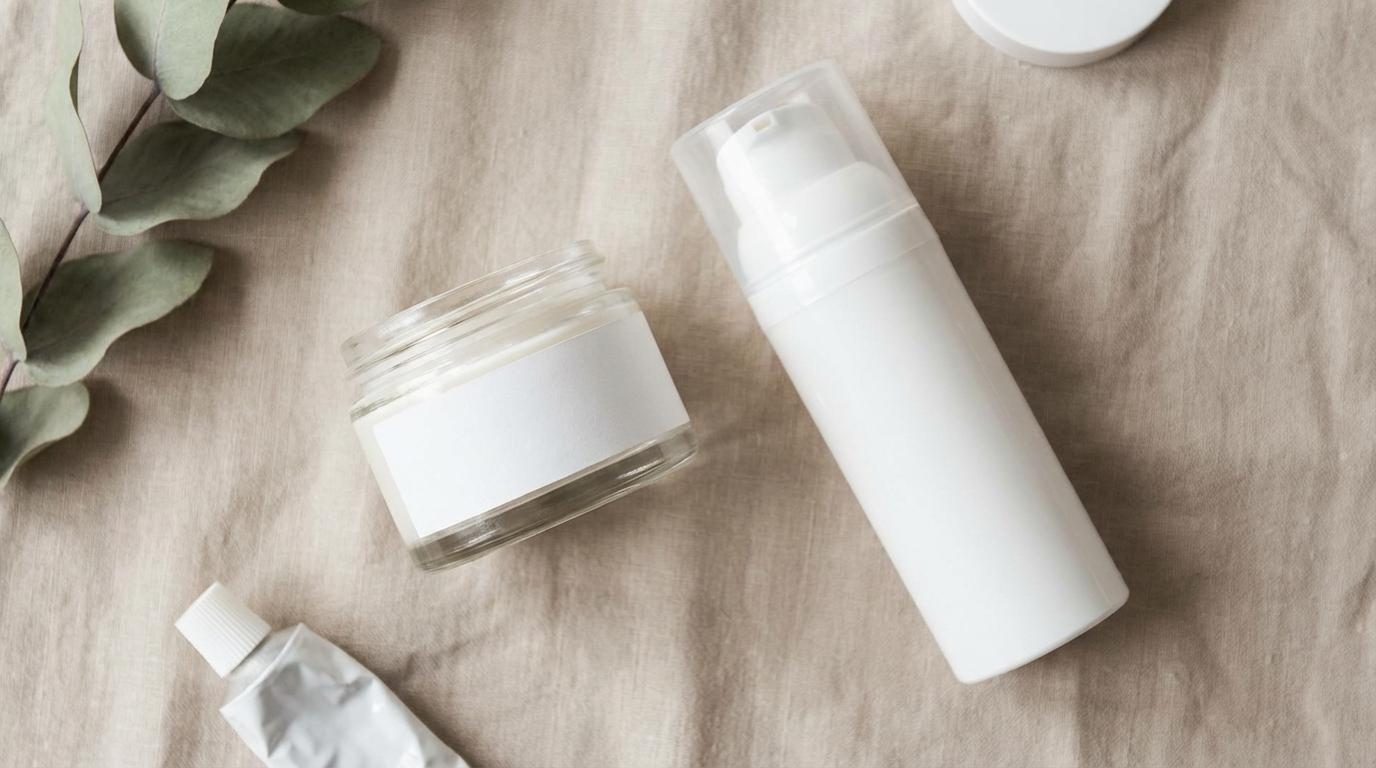
That gorgeous glass bottle sitting on your bathroom shelf looks stunning in your shelfie, but here’s something the skincare industry would rather you not think about too hard: a huge chunk of what you’re paying for has nothing to do with what’s actually inside. I’ve spent way too much time comparing products and reading packaging specs (yes, this is what my life has become), and the difference between smart packaging and pretty packaging is something every budget-conscious skincare lover needs to understand.
Let’s break down what actually matters when it comes to skincare packaging, what’s pure marketing fluff, and when you can happily grab that cheap plastic tube without a second thought.
Glass Jars vs Airless Pumps: The Real Difference
Glass jars are everywhere in skincare, especially in the “luxury” category. They photograph beautifully, feel weighty in your hand, and make you feel like you’re treating yourself. But here’s the thing: for many formulas, glass jars are actually the worst packaging choice.
Every time you dip your fingers into a jar, you’re introducing bacteria. Every time you open the lid, air rushes in. For products containing antioxidants like vitamin C, retinol, or other light-sensitive and air-sensitive ingredients, this is a problem. Air exposure can cause oxidation issues similar to the problem with DIY vitamin C serums. According to research published in the International Journal of Cosmetic Science, oxidation can significantly reduce the effectiveness of active ingredients like L-ascorbic acid within weeks of regular use from an open jar.
Airless pumps, on the other hand, work by pushing product up from the bottom as you dispense it. No air gets in. Your fingers never touch the formula. The product stays stable until the last drop. These pumps cost more to manufacture, sure, but they actually protect your investment in the product itself.
So why do so many expensive brands still use jars? Because they look premium. That’s it. The packaging is for you to look at, not for your product to thrive in.
Why Pretty Bottles Cost More (And Why You’re Paying For Them)
Let me be real with you: packaging can account for anywhere from 20% to 50% of a product’s retail price in the prestige skincare market. That custom-molded glass bottle, the magnetic cap, the metallic printing, the secondary box with embossing? You’re funding all of it.
Here’s what typically drives up packaging costs:
- Custom molds for unique bottle shapes (generic shapes are way cheaper)
- Heavy glass (weight equals perceived luxury)
- Multiple components like outer caps, inner stoppers, and decorative elements
- Metallic or holographic printing and finishes
- Secondary packaging like boxes, tissue paper, and seals
- Small batch production runs for limited editions
A brand like The Ordinary figured out early on that if you strip away all the fancy packaging, you can offer effective formulas at drugstore prices. Their basic dropper bottles and tubes aren’t Instagram bait, but they get the job done and keep costs down. Meanwhile, you might pay three times as much for a similar formula from a luxury brand, with half that premium going straight to the packaging.
Cosmetic chemist Michelle Wong of Lab Muffin Beauty Science has talked extensively about how packaging affects pricing, and her breakdown of what you’re actually paying for is eye-opening if you’ve never thought about it before.
Packaging That Actually Matters For Product Stability
Okay, so we’ve established that fancy doesn’t mean functional. But some packaging genuinely does matter for keeping your products effective. Here’s when you should pay attention:
Vitamin C serums: Especially L-ascorbic acid formulas. These need protection from light and air. Look for opaque bottles (dark glass or opaque plastic), airless pumps, or tubes. Clear glass dropper bottles? Your vitamin C is oxidizing every time you use it. If your vitamin C has turned orange or brown, you’ve seen this in action.
Retinol products: Similar deal. Retinol degrades with light and air exposure. Airless pumps or aluminum tubes are your friends here. Paula’s Choice and other brands that take stability seriously use appropriate packaging for their retinol products, and there’s a reason for that.
Sunscreen: Interestingly, sunscreen is one area where packaging type matters less than you’d think, as long as it’s not a clear container sitting in direct sunlight. Most modern sunscreen formulas are pretty stable. The American Academy of Dermatology notes that storing sunscreen properly matters more than the packaging type.
Products with preservative systems: Any water-based product needs preservatives to prevent microbial growth. Tubes and pumps are generally better than jars because less contamination means the preservative system doesn’t have to work as hard. But a well-formulated jar product with robust preservation is still safe to use.
When Cheap Packaging Is Totally Fine
Here’s where I can save you some money: plenty of products work perfectly well in basic packaging. Don’t let anyone make you feel like you need to spend more for certain categories.
Cleansers: You’re washing them off your face in 30 seconds. That fancy pump bottle isn’t doing anything for the formula. A basic plastic bottle or tube is absolutely fine. Your cleanser doesn’t need light protection because it’s not sitting on your skin absorbing into it.
Basic moisturizers without actives: If your moisturizer is just hydrating ingredients like glycerin, hyaluronic acid, and ceramides without any fancy light-sensitive actives, a jar is fine. These ingredients are stable. The main issue is bacterial contamination, which you can minimize by using clean, dry hands or a small spatula.
Body lotions: Absolutely no need for premium packaging. Big plastic bottles with pump tops are practical and cost-effective. Your body lotion does not need to come in glass.
Lip balms: Tubes, pots, sticks, whatever. These are wax-based products that are inherently stable. Buy what you’ll actually use, not what looks cutest.
Oil-based products: Pure facial oils like rosehip, jojoba, or squalane are pretty stable because bacteria can’t grow without water. A basic dropper bottle works fine. Dark glass is slightly better for oils with vitamin E or other antioxidants, but honestly, you’ll use up most oils before oxidation becomes an issue.
How To Shop Smarter
Armed with this knowledge, here’s how to approach skincare shopping with packaging in mind:
Check what’s actually in the product. Does it contain vitamin C, retinol, or other unstable ingredients? Then packaging matters. Is it a basic hydrator or cleanser? Packaging matters less.
Compare same-ingredient products across price points. If a drugstore brand offers the same active ingredient in appropriate packaging as a luxury brand in a pretty jar, the drugstore option might actually be more effective long-term because the formula stays stable.
Don’t buy clear packaging for sensitive ingredients. If you see a vitamin C serum in a clear glass bottle, that’s a red flag that the brand prioritized looks over formula integrity. Hard pass.
Consider how fast you’ll use it. Buying a larger size in less ideal packaging might be fine if you’ll finish it quickly. A jar of retinol cream that lasts you six months? The first month’s worth will work great, the last month’s worth will be significantly degraded.
Think about travel and practicality. That heavy glass bottle might feel luxurious, but it’s also breakable and heavy. Plastic tubes and bottles are lighter, safer, and often more hygienic with their smaller openings.
The Environmental Angle
I can’t talk about packaging without mentioning sustainability, because this factors into the budget conversation too. All that fancy packaging often means more waste. Multiple components made of different materials are harder to recycle. Heavy glass has a bigger carbon footprint to ship.
Some brands are moving toward refillable systems, which is great if you actually commit to refilling. Others are using post-consumer recycled plastic, which cuts down on new plastic production. The most sustainable packaging is often the simplest: a basic tube or bottle that can be easily recycled in most municipal programs.
If you’re trying to reduce your environmental impact, simpler packaging is usually better. Bonus: it’s usually cheaper too. The Environmental Working Group’s Skin Deep database can help you research products and find cleaner options in practical packaging.
The Bottom Line
Skincare packaging is honestly one of the biggest areas where the industry takes advantage of consumers. We’re wired to associate heavy glass and beautiful design with quality, but the reality is that smart packaging prioritizes formula stability over aesthetics.
You can absolutely find effective products in basic packaging at budget prices. You can also pay a premium for a beautiful bottle that actively degrades your product. The key is knowing which ingredients need protection and which ones don’t, then shopping accordingly.
Next time you’re tempted by a gorgeous jar of vitamin C cream, ask yourself: am I paying for skincare or am I paying for home decor? Your skin (and your wallet) will appreciate you knowing the difference.