
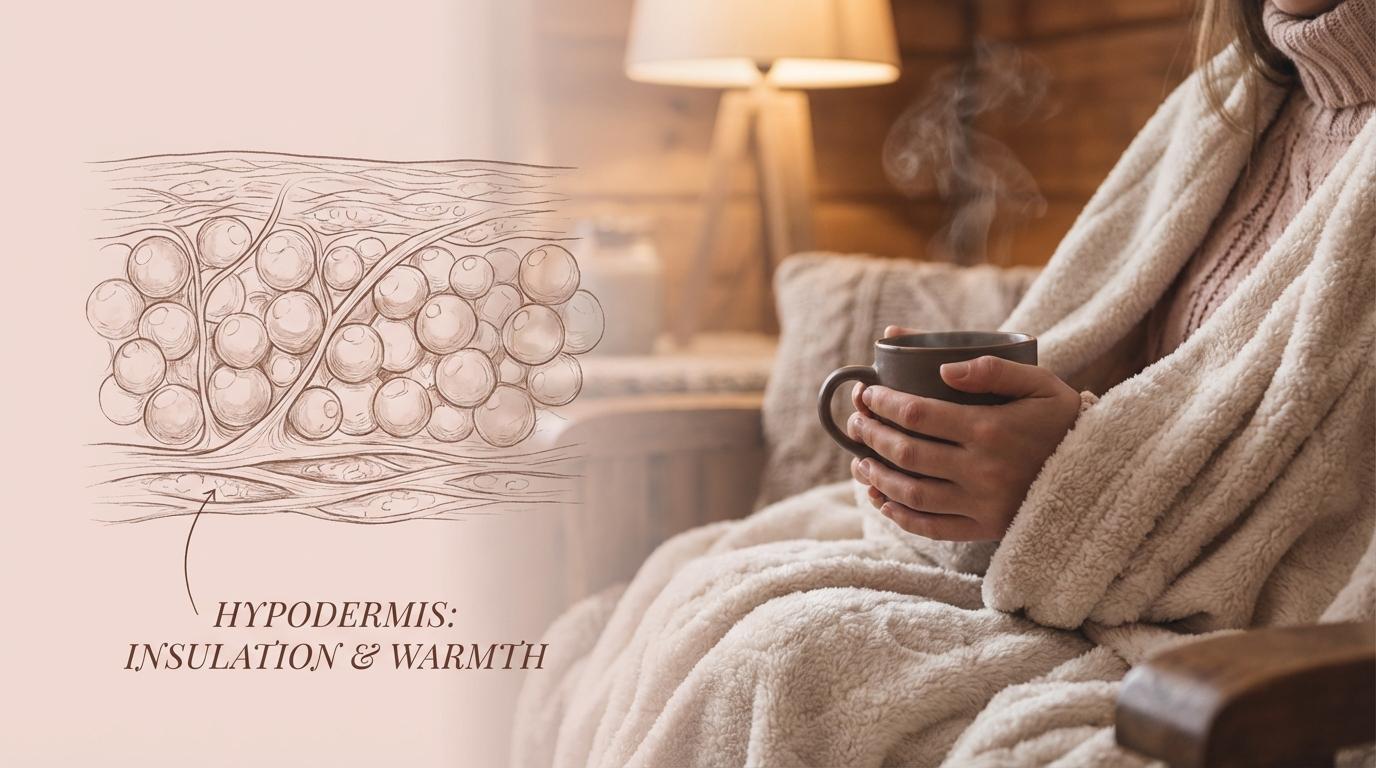
About 80% of your skin’s thickness exists beneath what you can actually see or touch. The hypodermis, that deepest layer most skincare conversations completely ignore, does far more than just cushion your bones. It regulates your temperature, stores energy, and anchors everything above it. Understanding this layer changed how I think about aging, skincare claims, and what topical products can realistically accomplish.
What Even Is the Hypodermis
Technically called the subcutaneous layer, the hypodermis sits beneath the dermis (where collagen and elastin live) and above your muscles and bones. It’s primarily composed of fat cells called adipocytes, along with connective tissue and blood vessels. The thickness varies dramatically across your body, from nearly nonexistent on your eyelids to several centimeters on your abdomen.
This layer isn’t just “fat.” Those adipocytes are metabolically active cells that store and release energy, produce hormones, and play a role in immune function. The connective tissue (called septa) creates a scaffolding structure that keeps everything organized. Blood vessels running through this layer help regulate your body temperature by dilating or constricting based on environmental conditions.
The Dermis Connection
The hypodermis and dermis aren’t neatly separated. They interlock through a zone where collagen fibers extend downward and fat lobules push upward. This connection matters because what happens in one layer affects the other. When you lose fat in the hypodermis, the dermis above it loses structural support. When dermal collagen degrades, it affects how smoothly the skin sits over the fatty layer beneath.
Think about areas where you first notice aging: cheeks, under-eyes, hands. These spots have thin hypodermal layers to begin with. Lose even a small amount of that underlying support, and the skin above shows it immediately. This is why volume loss often looks more dramatic than texture changes, even though we obsess over texture in skincare conversations.
Temperature Regulation Is Wild
Your hypodermis acts like natural insulation, which anyone who’s ever been cold understands intuitively. Fat cells trap air and slow heat transfer from your warm core to the cold environment. But the regulation works in both directions. When you’re overheating, blood vessels in the hypodermis dilate, moving warm blood closer to the skin’s surface where heat can dissipate.
This temperature regulation explains certain skin behaviors we notice but rarely connect to the hypodermis. Flushing when you’re hot, paler appearance when cold, the way your skin feels different in various temperatures. The hypodermis is orchestrating responses that your epidermis and dermis simply display.
Aging Changes Everything Here
As we age, the hypodermis thins. Fat cells decrease in number and change in distribution. The connective tissue septa weaken. Blood vessel walls become less elastic. These changes happen regardless of your skincare routine because topical products physically cannot reach this layer. The epidermis is about 0.1mm thick. The dermis is 1-4mm. The hypodermis sits beneath all of that.
This is why facial aging involves volume loss, not just wrinkles. Your grandmother’s face shape looks different from yours not because her skin quality is worse but because she has less hypodermal fat supporting her facial structure. Procedures like fillers address this by replacing lost volume rather than trying to improve skin quality. Different problem, different solution.
What Skincare Can and Cannot Do
No serum penetrates to the hypodermis. Period. When products claim to address “deep layers” of skin, they mean the dermis at most, and even reaching that layer effectively is challenging for most topicals. The hypodermis operates beyond the reach of anything you apply to your face. This isn’t a limitation of current technology. It’s basic anatomy.
This doesn’t mean skincare is pointless. Improving epidermal and dermal health absolutely matters. But understanding that an entire structural layer exists beyond your products’ reach helps set realistic expectations. Some changes, particularly volume-related ones, require different interventions than topical products can provide.
Why This Matters for Your Routine
If you’re dealing with volume loss or structural changes in your face, spending money on expensive creams hoping they’ll “plump” deep tissue is wasting resources. That money might be better saved toward procedures that actually address hypodermal concerns, or spent on products that improve the layers they can actually reach. As someone perpetually budget-conscious, I find this distinction extremely practical.
Similarly, understanding the surface layer dynamics helps you appreciate that skin health happens in layers, literally. The hypodermis supports the dermis, which supports the epidermis. You can only directly influence the outer layers, but keeping those healthy still matters for overall appearance.
The Lifestyle Connection
While topicals can’t reach the hypodermis, lifestyle factors absolutely affect it. Dramatic weight fluctuations can change hypodermal fat distribution. Chronic stress affects fat storage patterns through hormonal pathways. Nutrition impacts the health of adipocytes and the connective tissue scaffolding. Smoking accelerates tissue degradation throughout all skin layers, including this one.
This is the boring answer nobody wants: overall health supports this deep layer better than any product could. Adequate sleep, reasonable stress management, consistent nutrition, avoiding smoking. The fundamentals apply here too.
Appreciating the Full Picture
Skincare marketing focuses almost exclusively on surface concerns because that’s where products work. But your skin is an organ with multiple layers serving different functions. The hypodermis might never appear in an ingredient list or product claim, but it’s holding everything together beneath the scenes. Recognizing its role helps you understand what topical skincare can accomplish and where its limits necessarily lie.
We don’t need to obsess over a layer we can’t directly influence. We just need to acknowledge it exists, understand its role in how our skin looks and ages, and make informed choices about where to direct our time and money accordingly.