
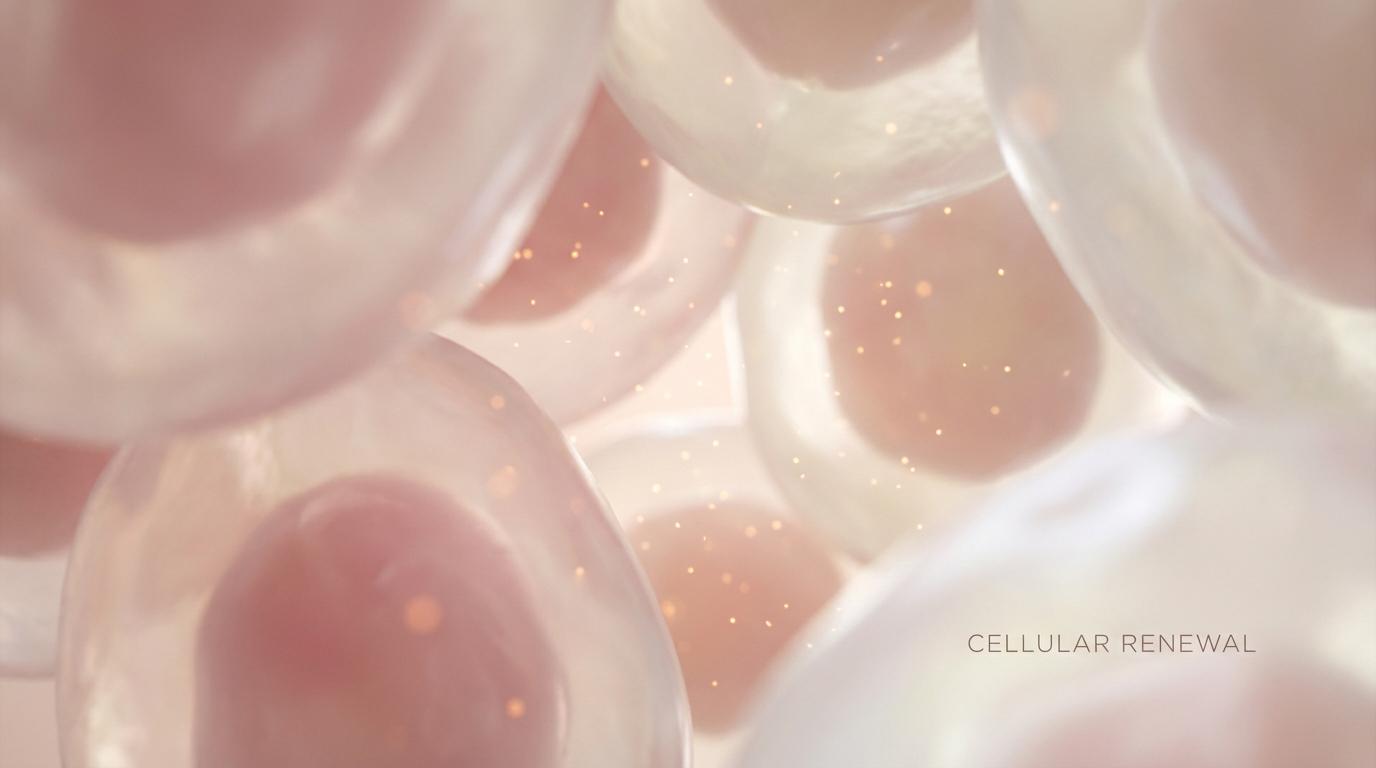
Around 50 billion skin cells shed from your body every single day, and alpha hydroxy acids help speed up that process in a way that actually makes sense once you understand what’s happening at the cellular level. I spent way too long just slapping glycolic acid on my face because everyone said it works, without really getting why. Turns out the science is pretty cool, and understanding it helped me figure out which AHA to use and how often.
Fair warning: we’re going to get a little nerdy here. But I promise this knowledge will save you from wasting money on products that aren’t right for your skin, and that’s always the goal.
Breaking the Bonds Between Dead Cells
Your outer layer of skin, the stratum corneum, is basically a wall of flat, dead cells held together by protein structures called desmosomes and a lipid-based mortar. Think of it like bricks and cement, except the bricks are dead cells and the cement is a combination of fats and protein connections. This structure is what keeps the outside world out and your inside world in.
Normally, new cells push up from below, and old cells naturally slough off from the top. But that process slows down as you get older, or when skin is dry, or sometimes just because genetics said so. When dead cells accumulate instead of shedding, you get dullness, clogged pores, and rough texture.
AHAs work by breaking down the specific structures that hold these dead cells together. The main target is something called corneodesmosomes, which are modified versions of the desmosomes I mentioned. These protein complexes act like rivets between cells. AHAs weaken these rivets, allowing the cells to detach and shed more easily.
This isn’t random destruction. AHAs specifically affect the bonds in the uppermost layers of dead skin while leaving the living cells below relatively alone. At proper concentrations, you’re just accelerating what your skin is already trying to do.
pH and Acid Effectiveness
Here’s where a lot of people, including me at first, mess up. The pH of an AHA product determines whether it actually works or just sits there doing nothing. AHAs need to be in their “free acid” form to penetrate skin, and that only happens when the pH is low enough.
At a pH above 4, most of an AHA is in its neutralized, ionic form. It carries an electrical charge that prevents it from passing through your skin’s lipid barrier. Below pH 3.5, more of the acid is in its uncharged, free acid form, which can actually penetrate and do its job.
This is why a product labeled “10% glycolic acid” might not work as well as a different product with only 5% glycolic acid. If the first one has a pH of 5 and the second has a pH of 3.5, the lower concentration product might deliver more actual exfoliation because more of its acid is in the active form.
The tricky part is that lower pH means more irritation potential. Your skin’s natural pH is around 4.5 to 5.5, so anything significantly lower is already pushing outside the comfort zone. Finding products that balance effective pH with tolerable irritation is the real skill here.
Unfortunately, most brands don’t list pH on the packaging. Some skincare websites test and report pH values, or you can buy pH strips for a few bucks and test products yourself. It’s not something you need to obsess over, but if you’ve tried an AHA product and it did nothing, pH might be why.
Concentration Considerations
More acid isn’t always better, especially if you’re working with a budget and can’t afford to damage your skin and then pay to fix it. Higher concentrations do provide more exfoliation, but they also increase irritation risk and can backfire if your barrier gets compromised.
At-home products typically range from 5% to 15% for glycolic acid, with most effective daily-use products sitting around 8% to 10%. Lactic acid products usually contain 5% to 12% since lactic is gentler than glycolic. Mandelic acid products often go higher, up to 15% or 20%, because mandelic’s larger molecule size makes it penetrate more slowly and gently.
Professional peels go much higher, 30% to 70%, but they’re also applied for shorter times and by people trained to recognize when things are going wrong. Trying to recreate a professional peel at home is a great way to burn your face and spend the next month recovering.
Start lower than you think you need. I know it’s tempting to go for the maximum strength because you want results now, but irritation sets you back further than starting gently sets you forward. A 5% glycolic used consistently beats a 15% glycolic that you can only tolerate twice a month.
Different AHAs for Different Needs
Not all AHAs are the same, and this is actually useful information when you’re picking products. The main difference comes down to molecule size, which affects how deeply the acid penetrates.
Glycolic acid has the smallest molecule of the common AHAs. It penetrates fastest and deepest, which makes it the most potent but also the most potentially irritating. If your main concern is fine lines or you’ve got thick, resilient skin, glycolic is probably your pick. It’s also the most researched, so there’s good data on what it can do.
Lactic acid has a larger molecule, so it works more on the surface. It’s gentler than glycolic and actually has some hydrating properties because it’s part of your skin’s natural moisturizing factor. If you have sensitive skin or dryness is a concern alongside needing exfoliation, lactic is often the better choice.
Mandelic acid has an even larger molecule. It’s the gentlest of the three and also has some antibacterial properties, which can help if acne is part of your picture. Mandelic is great for beginners or anyone who’s found other AHAs too harsh.
There are other AHAs too, like citric acid, malic acid, and tartaric acid, but you’ll see these less often as the star ingredient and more often as pH adjusters or supporting players in formulas.
How This Changes How You Use Them
Understanding the mechanism changes how you approach AHAs practically. Here’s what I figured out that actually made a difference:
You don’t need to use AHAs every day. Because they’re accelerating cell turnover, using them too frequently can lead to over-exfoliation. For most people, two to three times a week is plenty. Your skin needs time to rebuild between exfoliation sessions.
Wait times matter but not as much as people claim. Some sources say you need to wait 20 to 30 minutes after applying an AHA before putting on other products. The reality is that the acid does most of its work in the first few minutes. Waiting five minutes is probably fine for most routines. The long waits were more relevant for older formulas that weren’t as well buffered.
Layering AHAs with other actives can go wrong fast. AHAs compromise your barrier temporarily while they work. Adding other potentially irritating ingredients, like retinoids or vitamin C, on top can push your skin past its tolerance threshold. Simplify on the nights you use AHAs.
Sun sensitivity is real and not just a marketing warning. AHA use increases your skin’s sensitivity to UV damage because you’ve removed some of the dead cell protection. Sunscreen becomes non-negotiable when you’re using these products regularly. If you can’t commit to daily sunscreen, AHAs might not be the right exfoliation method for you.
What This Means for Your Wallet
Here’s the part I care about most: you don’t need expensive AHA products. The molecule is the molecule. A drugstore glycolic acid at 8% does the same thing as a fancy one at 8% if they’re formulated at similar pH levels.
What you’re sometimes paying for with more expensive products is better formulation, meaning other ingredients that buffer irritation or add hydration. But plenty of affordable brands have figured this out too. Check ingredient lists and pH information if you can find it. Don’t assume price equals quality.
The ordinary basics like understanding that exfoliation doesn’t require harsh scrubbing and that chemical exfoliants are often gentler than physical ones will serve you better than any single product purchase. AHAs are one tool. Used correctly, they’re an effective and affordable one.