
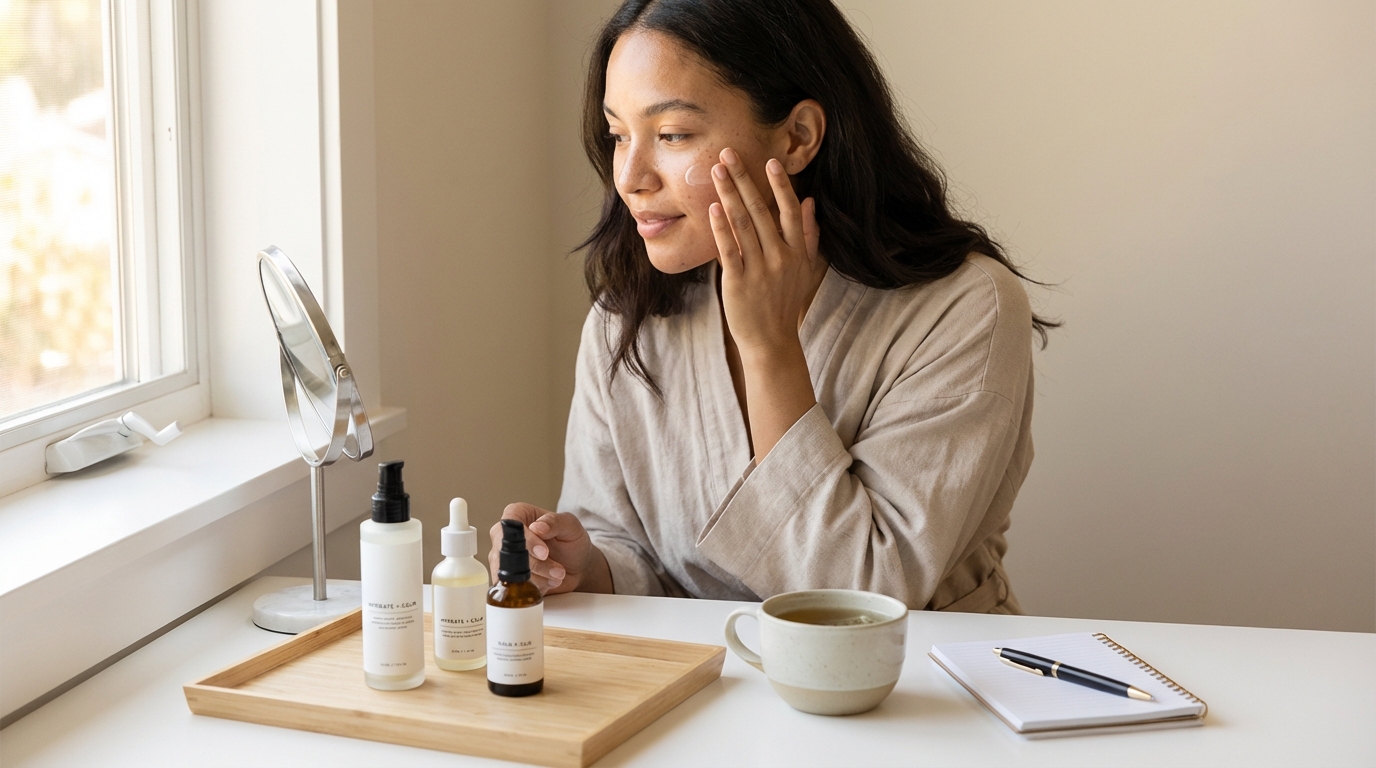
You’ve got an interview coming up. You want to look put-together, professional, and confident. What you don’t want is a surprise breakout, an allergic reaction, or skin so dewy it looks like you ran to get there.
Here’s exactly how to handle your skin before a big interview, broken down into what to do in the week leading up to it and what to do on the actual day.
The Week Before: Preparation Mode
This is when you do all your active work. If you’re going to try something new, do it now so you have time to recover if your skin hates it.
If you exfoliate, do it early in the week. Chemical exfoliants can temporarily increase sensitivity, and the last thing you want is pink, reactive skin on interview day. Give yourself at least three to four days between any exfoliation and your interview.
This is a good week to use a hydrating mask once or twice. Sheet masks, sleeping packs, whatever works for you. Well-hydrated skin looks plumper, healthier, and more even-toned.
If you have a blemish that’s forming, now is when you treat it aggressively. Spot treatments with salicylic acid or benzoyl peroxide work best when you catch things early. By the time you’re a day out, you’re mostly doing damage control.
Pay attention to your neck and chest if they’ll be visible. Whatever routine you’re doing on your face, extend it down. Mismatched skin between your face and neck is noticeable.
Two Days Before: Calm Down
Stop any active treatments. No retinol, no acids, no new products. You’re in maintenance mode now.
Focus on hydration and barrier support. Use your gentlest cleanser and your most reliable moisturizer. Boring is good right now.
Get enough sleep. I know this sounds like obvious advice, but lack of sleep shows up in your skin faster than almost anything else. Dull, puffy, dark circles. You’ve got two nights. Use them.
The Night Before: Keep It Simple
Do your normal evening routine. Nothing new, nothing extra. Wash your face, apply your usual products, go to bed early.
If you’re prone to morning puffiness, sleep slightly elevated and avoid salty foods at dinner. Also skip alcohol, which dehydrates your skin and can make you look tired.
This is not the night to do a peel-off mask, try your roommate’s fancy serum, or experiment with anything. Seriously. I don’t care how good the reviews are. Do not try new products the night before an interview.
Interview Morning: The Routine
You need to balance looking polished with not looking overdone. Interviewers don’t need to see your skincare working. They need to see you.
Cleanse gently. If you washed your face thoroughly the night before and your skin isn’t oily, you can even just rinse with water. Over-cleansing can leave your skin tight and dry-looking.
Use a lightweight, hydrating serum. Something with hyaluronic acid works well because it plumps without adding shine. Apply to damp skin for best absorption.
Moisturize appropriately for your skin type. If you’re oily, use something mattifying. If you’re dry, use something richer but give it time to absorb. You don’t want a greasy base for makeup.
Eye cream if you use it. Nothing too rich that will slide around under concealer. Something that absorbs quickly.
Sunscreen if needed. If your interview is during the day and you’ll be near windows or outside, use it. Choose something that works well under makeup and doesn’t leave a white cast in photos or on video.
Dealing With Morning Disasters
Woke up with a pimple? Don’t panic, and don’t pick at it. Apply a spot treatment and let it absorb. If you’re wearing makeup, you can use a green color corrector before concealer to neutralize redness. But a small blemish is not the end of the world. Interviewers are not examining your pores.
Puffy eyes? Cold spoons, cold gel patches, or just splash cold water on your face. Light eye massage can help move fluid around. Caffeine-based eye products work if you have time for them to kick in.
Looking dull? A quick application of a glow-enhancing primer can help. Or mix a tiny drop of liquid highlighter into your moisturizer for subtle radiance without obvious shimmer.
What Not to Do
Do not use pore strips. They can leave your skin red and irritated.
Do not do a strong facial massage that morning. You might accidentally create temporary redness or puffiness.
Do not layer on so many products that your face feels heavy or looks shiny. Less is more when you need your skin to look natural and professional.
Do not stress about your skin so much that you make yourself anxious. Interviewers care about your qualifications and how you present yourself, not whether your skin is absolutely flawless.
The Actual Goal
Your skin on interview day should look healthy, even, and like you take care of yourself without being high-maintenance about it. Think of it like your outfit: appropriate, put-together, not distracting from what matters.
Clean, hydrated skin with any redness or uneven tone minimized is plenty. You don’t need to be glowing like a highlighter commercial. You need to look like a competent professional who has their life together.
Do your prep work in the week before. Keep things simple as the day approaches. And then stop thinking about your skin and focus on showing them why they should hire you.
You’ve got this.