
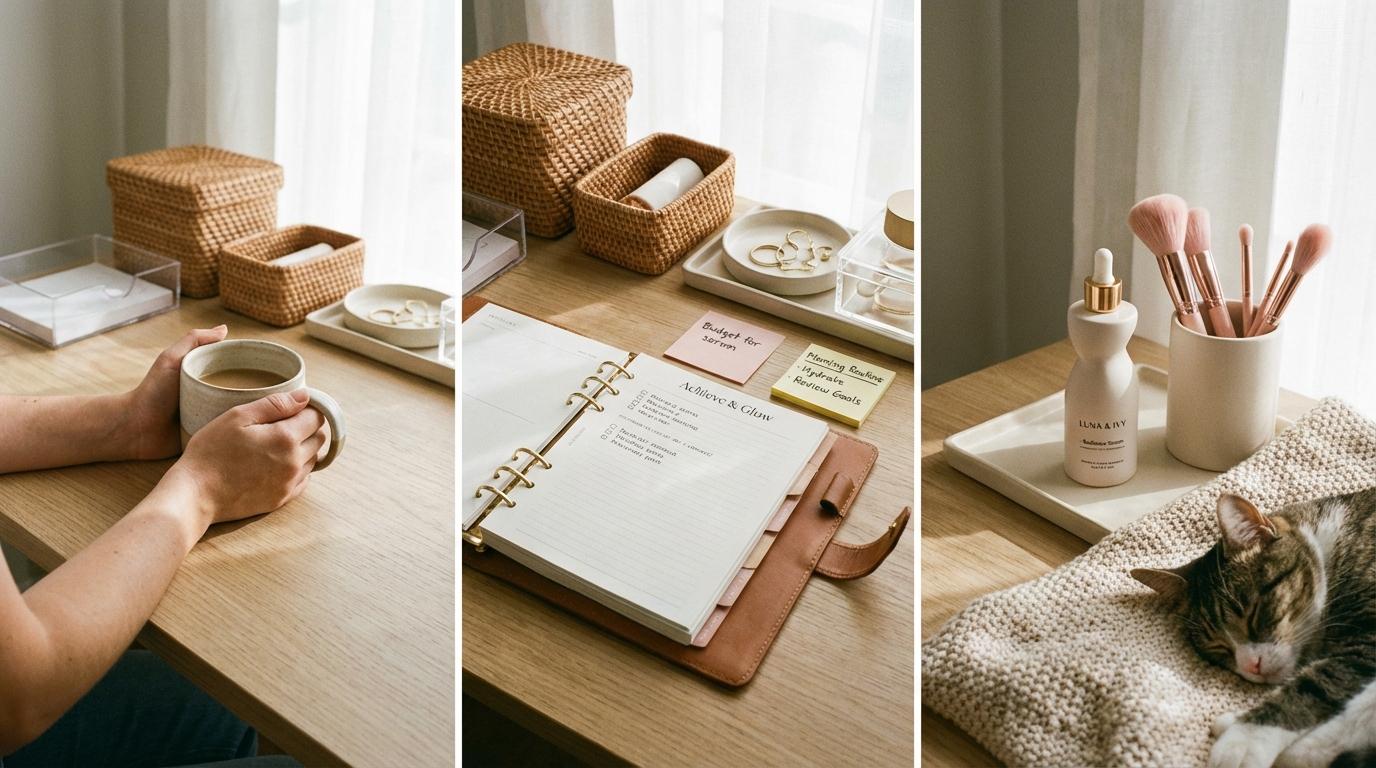
It feels almost painful to watch a thick pump of expensive serum splatter onto your palm, knowing half of it will just sit on top of your skin without absorbing. That sinking feeling when you realize your $60 bottle is already half-empty after six weeks is something most of us have experienced. But the truth is, how long a product lasts has less to do with how much you bought and more to do with how you use, store, and dispense it.
I studied cosmetic chemistry in undergrad, and one thing that always surprised me was how much product gets wasted through poor technique alone. Research on consumer usage patterns shows most people apply 2-3 times the recommended amount of serums and moisturizers. That means your 30ml bottle that should last two months is gone in three weeks.
Why Dispensing Technique Matters More Than You Think
The amount of product you actually need is almost certainly less than what you are using. A full pump of most serums delivers about 0.5ml. For your entire face, you need roughly 0.2-0.3ml of a serum. That means half a pump, carefully dispensed, is enough.
For moisturizers, a pea-sized amount (about the size of an actual garden pea, not a chickpea) covers your entire face when applied to slightly damp skin. The moisture on your skin helps the product spread further and absorb more efficiently. This is basic surface chemistry: a thin, even layer penetrates better than a thick glob sitting on top.
Some practical dispensing tips that make a real difference:
- For pump bottles, do a half-pump and work with that first. Add more only if coverage feels uneven.
- For dropper bottles, use 2-3 drops and spread between your fingertips before pressing into skin. The warmth from your fingers helps the formula spread.
- For tubes, squeeze from the bottom and roll the tube up as you go. This prevents product from getting trapped in the lower portion.
- For jar products, use a small spatula instead of fingers. Your fingers pick up far more product than necessary, and they introduce bacteria that shortens shelf life.
The difference between careful dispensing and careless pumping can extend a product’s life by 40-60%. On a $50 serum, that is an extra month of use for free.
Storage Tips That Preserve Potency and Volume
Where and how you store your products affects both how long they remain effective and how much product you lose to degradation. Most active ingredients are sensitive to light, heat, and air exposure. When these factors break down your product, you end up needing more of it to achieve the same results, which means the bottle empties faster.
Temperature is the biggest factor. Bathroom cabinets seem like the obvious storage spot, but bathrooms experience significant temperature and humidity swings from showers. A bedroom drawer or closet shelf maintains more consistent conditions. For products containing retinol or vitamin C, consistent cool temperatures genuinely extend their active life.
Some specific storage guidelines based on ingredient stability:
- Vitamin C serums: Store in a cool, dark place. Some people refrigerate these, which is fine but not strictly necessary if your home stays below 75 degrees Fahrenheit. Oxidized vitamin C turns orange or brown and loses effectiveness.
- Retinol products: Keep away from light entirely. If your retinol comes in a clear bottle (which is a design flaw, honestly), store it inside a drawer or wrap the bottle.
- SPF products: Never leave sunscreen in a hot car or direct sunlight. Heat degrades UV filters, meaning you need to reapply more frequently and use more product each time.
- Oil-based products: These are generally more stable, but rancid oils can irritate skin. Store at room temperature and use within the period-after-opening (PAO) window printed on the packaging.
Another storage detail people overlook: always close lids tightly after use. Products with active ingredients oxidize when exposed to air. Even leaving a cap loosely screwed for a few hours lets enough oxygen in to start degradation. Airless pump bottles are worth seeking out for this reason, as they minimize air contact with each use.
Strategic Mixing With Affordable Products
This is where a bit of formulation knowledge saves you real money. Many expensive products can be extended by mixing them with cheaper base products, as long as you understand what you are doing.
The key principle is this: most serums and treatments deliver their active ingredients within a specific concentration range. If a serum contains 10% niacinamide, mixing it 50/50 with a simple hydrating toner gives you 5% niacinamide, which is still well within the effective range according to published research. You have just doubled how long that serum lasts.
Combinations that work well:
- Expensive hyaluronic acid serum + cheap hydrating toner: Most HA serums are effective at concentrations as low as 0.1%. Mixing with a basic hydrating toner still delivers results.
- Pricey moisturizer + affordable one: Mix a small amount of your expensive ceramide cream with a larger amount of a basic CeraVe or Cetaphil moisturizer. You get the benefit of premium ingredients with more volume.
- High-end facial oil + basic squalane or jojoba: A few drops of an expensive oil blend mixed with plain squalane extends your supply without diluting the botanical benefits below effective levels.
Combinations to avoid:
- Do not mix products with different pH requirements. A vitamin C serum (low pH) mixed with a niacinamide product (neutral pH) can reduce the effectiveness of both.
- Do not mix sunscreens with anything. Diluting SPF reduces protection in ways that are not proportional, meaning you lose more coverage than you might expect.
- Do not mix prescription treatments like tretinoin with other products unless your dermatologist specifically approves it.
A good approach: use your expensive treatment products on areas that need them most (problem zones, under-eyes, areas of concern) and use the affordable alternative everywhere else. You do not need a $70 serum on your entire face if only your cheeks have the issue you are targeting.
Getting Every Last Drop
The final 15-20% of most skincare bottles is surprisingly hard to access, and people throw away products with usable product still inside. This is where a few simple tricks recover real value.
For pump bottles that stop dispensing, remove the pump mechanism and use a small spatula or cotton swab to reach the remaining product at the bottom. Most pump bottles have a dip tube that does not reach the very bottom, leaving behind 1-2ml of product. On a $50 serum, that orphaned product is worth about $8-10.
For tubes, cut them open. Once a tube feels empty, cut it in half with scissors. You will find enough product clinging to the inside walls for another 3-5 applications. Store the cut tube in a small zip-lock bag to prevent it from drying out between uses.
For dropper bottles, take the dropper out entirely when the level gets low. Tip the bottle directly onto your fingertips for the remaining applications. Droppers have dead space in the pipette that traps product.
For jar products, a silicone spatula scraped around the sides and bottom recovers product that your fingers cannot reach. The rounded corners of most jars hide a surprising amount.
Something worth considering: when products do run out, check if the brand offers refill packaging. Several premium brands now sell refill pods or pouches at 20-30% less than the original package. Paula’s Choice and a growing number of other companies have moved in this direction, and the savings are meaningful over time.
Putting It All Together
When you combine proper dispensing, smart storage, strategic mixing, and thorough extraction, a product that previously lasted six weeks can easily stretch to ten or twelve. On an annual basis, if you spend $500 on skincare, these habits could save you $150-200 per year without changing a single product in your routine.
The underlying principle is respect for formulation. Cosmetic chemists design products to work at specific amounts and concentrations. Using more does not mean better results. It just means an empty bottle sooner. Your skin can only absorb so much at once, and everything beyond that threshold sits on the surface doing nothing.
Start with one change. The next time you reach for your most expensive product, use half the amount you normally would. Apply it to damp skin. Notice how it still covers your entire face. That moment of realization, when you see that less actually works, is where you start saving real money without sacrificing any results.