
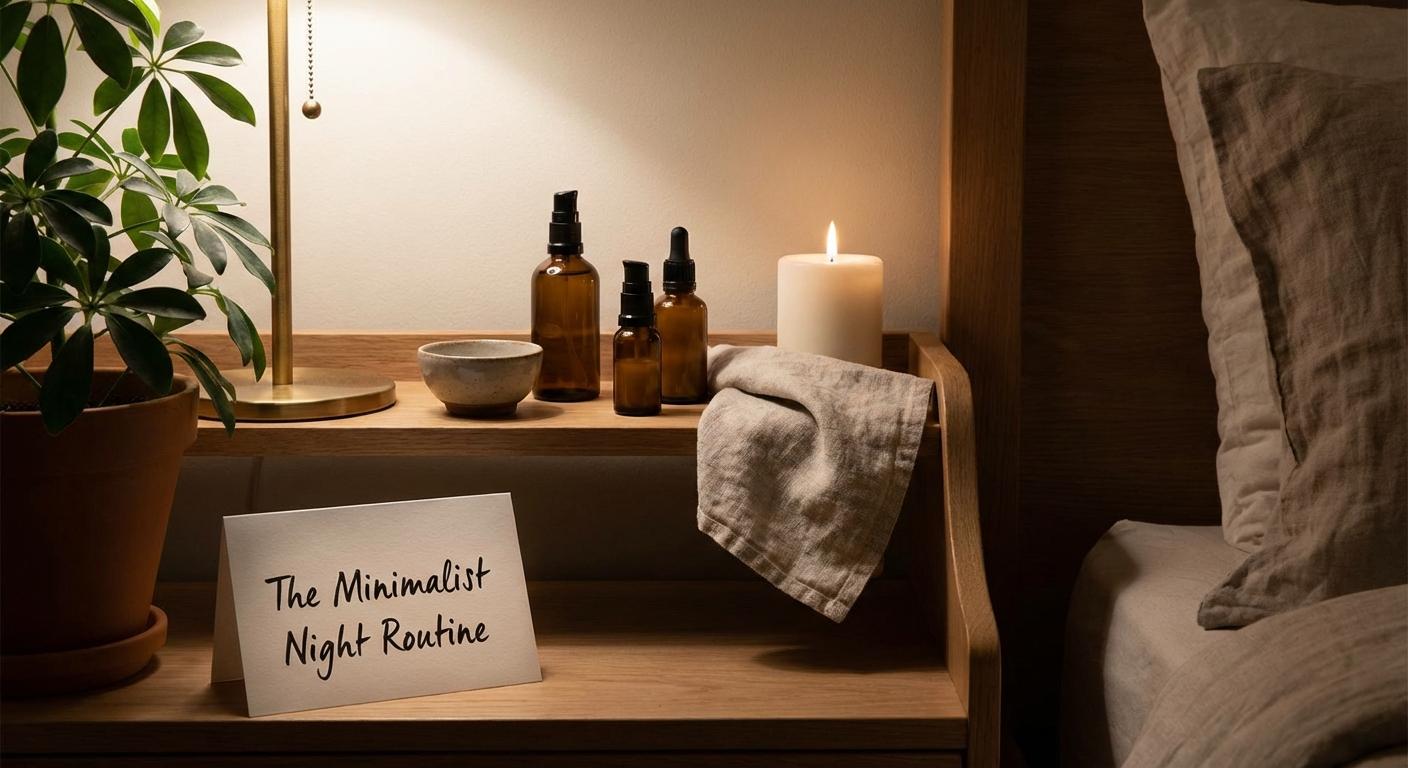
Somewhere between the ten-step routines and the endless product launches, many women are quietly stepping back. They are clearing their bathroom shelves, simplifying their evenings, and discovering that their skin actually responds better when given space to breathe. The minimalist night routine is not about deprivation or cutting corners. It is about understanding what your skin truly needs and honoring that with intention rather than excess.
There is a certain peace that comes with having just a few carefully chosen products waiting for you at the end of the day. No decision fatigue about which serum to layer first, no mental math calculating wait times between actives. Just a gentle, purposeful ritual that takes five minutes and leaves your skin genuinely cared for.
Why Less Actually Works Better
Your skin is remarkably capable of taking care of itself. The barrier function, the microbiome, the natural repair processes that happen while you sleep all work together in an elegant system that has evolved over thousands of years. When we pile on product after product, we sometimes disrupt this natural balance rather than supporting it. Dermatologist Dr. Sandra Lee (Dr. Pimple Popper) explains that a minimalistic approach allows you to reap the benefits of essential ingredients without the potential risk of irritation from layering too many actives.
This is not to say that skincare products do not work. They absolutely do. But there is a point of diminishing returns, and many of us have crossed it without realizing. If you have ever experienced unexplained breakouts, sensitivity, or that tight yet oily feeling, your skin might be signaling that it is overwhelmed. Pulling back often reveals that your skin needs support, not intervention.
The beauty of a minimalist approach extends beyond your complexion. When you simplify your regimen and choose multi-functional products, you become more consistent. And consistency, as any dermatologist will tell you, matters far more than having the perfect lineup of twelve different bottles.
The Essential Steps Your Night Routine Needs
Every effective skincare routine, whether minimalist or elaborate, comes down to three core actions: cleanse, treat, moisturize. For nighttime specifically, dermatologists recommend focusing on repair and recovery since this is when your skin regenerates at nearly twice its daytime rate.
Your cleanser is genuinely non-negotiable. Throughout the day, your face accumulates oil, pollution particles, bacteria, and if you wear any, makeup and sunscreen residue. Going to bed without washing this away means your skin spends the entire night trying to repair itself while still carrying the burden of everything it collected during the day. A gentle, non-stripping cleanser suited to your skin type is all you need. If you wear heavy makeup, you might double cleanse with an oil-based cleanser first, but this counts as one step, not two separate routines.
The treatment step is where minimalism requires you to be intentional. Rather than layering multiple serums, choose one active that addresses your primary concern. For most women, a retinoid is the single most impactful product you can add to your nighttime routine. According to Elite Dermatology, retinoids remain the number one dermatologist-recommended anti-aging ingredient because they stimulate collagen, increase cell turnover, and help prevent acne all at once. If you are not ready for retinoids or your skin is sensitive, alternatives like niacinamide or a hydrating serum can serve as your single treatment.
Moisturizer seals everything in and supports your barrier overnight. Even oily skin benefits from nighttime moisturizing. The key is finding a formula that works for you, whether that is a lightweight gel, a richer cream, or something in between. Your moisturizer is the protective layer that helps your skin do its repair work without losing hydration.
When Minimalism Works Best
A stripped-back routine is not for everyone at every phase of life, and that is perfectly fine. But there are specific situations where less truly serves you better.
If your skin is irritated, reactive, or recovering from a procedure, minimalism is medicine. Every additional product is another potential irritant, another variable that could slow healing. Returning to basics, just a gentle cleanser and a barrier-supporting moisturizer, gives your skin the rest it needs to recover.
For those dealing with persistent breakouts that seem unconnected to any specific product, simplifying helps you identify what is actually causing problems. When you are using seven different products, isolating the culprit becomes nearly impossible. Strip everything back, let your skin stabilize, then reintroduce items one at a time with several weeks between each addition.
Busy seasons of life also call for realistic routines. New parents, students during finals, anyone going through a demanding period will benefit from having a routine that actually gets done. A five-minute routine you complete every night will always outperform a twenty-minute routine you abandon after three days.
And honestly, some skin types simply thrive on less. If you have always had relatively clear, balanced skin, there is no rule that says you need to add complexity. Trust what works.
Streamlining Your Application
Part of what makes a minimalist routine sustainable is how it flows. There is no need for elaborate waiting periods between products when you are only using a few. Cleanse, let your face dry for a moment while you brush your teeth, apply your treatment, follow with moisturizer. Done.
If you want to be extra efficient, look for multi-functional products that combine benefits. A moisturizer with peptides built in, for example, handles two concerns in one step. A cleanser that removes makeup without needing a separate first cleanse. These choices let you address multiple needs without multiplying your product count.
The order remains consistent regardless of how minimal you go: always apply products from thinnest to thickest consistency. Your cleanser comes first by default since it gets rinsed off. Then any water-based treatments, followed by your moisturizer. If you use a facial oil, that typically goes last since oil sits on top of water-based products.
Building Your Personal Minimal Routine
The specific products that belong in your routine depend entirely on your skin and your goals. A minimalist routine for someone focused on anti-aging will look different from one designed around acne prevention or maintaining already healthy skin.
Start by identifying your single biggest concern. Not your top three concerns, just the one that matters most to you right now. Build your treatment step around addressing that one thing. Give it at least four to six weeks before judging results. Skin takes time to turn over and show improvement, and constantly switching products prevents you from ever knowing what actually works.
Consider your lifestyle honestly. If you know you will not wait five minutes for a serum to absorb before applying moisturizer, do not build that requirement into your routine. Skincare routines only work when they fit into your actual life, not the idealized version of your life where you have unlimited time and motivation every evening.
Pay attention to how your skin responds over time. The goal is skin that feels balanced, looks healthy, and does not require constant management or new products to address problems created by other products. If you notice your skin improving, that is confirmation your routine is working. If new issues keep appearing, something in your current setup might be the cause.
What About All Those Other Products?
You might wonder where things like eye cream, essence, toner, facial mist, sleeping masks, and spot treatments fit into a minimalist routine. The honest answer is that many of these are optional enhancements rather than necessities.
Eye cream, for instance, is essentially a moisturizer marketed for the delicate eye area. Many people use their regular moisturizer around their eyes without any problems. Others find that a dedicated eye product helps with specific concerns. Neither approach is wrong, but if you are simplifying, your regular moisturizer can likely handle both jobs.
Toners have evolved significantly and some provide real benefits, particularly hydrating toners that prep the skin for subsequent products. But they are not required for a complete routine. If a toner feels supportive and fits naturally into your flow, keep it. If it feels like an extra step you are doing out of obligation, let it go.
The same principle applies to everything else. Ask yourself whether each product in your current collection is genuinely serving a purpose or simply taking up space. Be honest about whether you included something because it helps your skin or because marketing made you feel like you needed it.
Embracing the Quiet Confidence of Less
There is something profoundly freeing about realizing you do not need dozens of products to have good skin. The beauty industry benefits when we believe that more is always better, that every new ingredient deserves a spot in our rotation, that complexity equals effectiveness. But your skin did not evolve to require sixteen nightly products. It evolved to be resilient, adaptive, and largely self-sufficient with just a bit of support.
A minimalist night routine is an act of trust in your skin and in yourself. It says that you understand what matters, that you can resist the pressure to constantly add and accumulate, and that you value your time and energy enough to spend them wisely. Five minutes of intentional care, consistently applied, will serve your skin better than an hour of elaborate rituals you cannot sustain.
Start where you are. You do not need to throw out your entire collection tomorrow. Simply begin paying attention to what your skin actually needs versus what you have been told it needs. Let go of one product that is not earning its place. Notice how it feels to have a little more space, a little more simplicity. Your skin, and your evenings, will be better for it.