
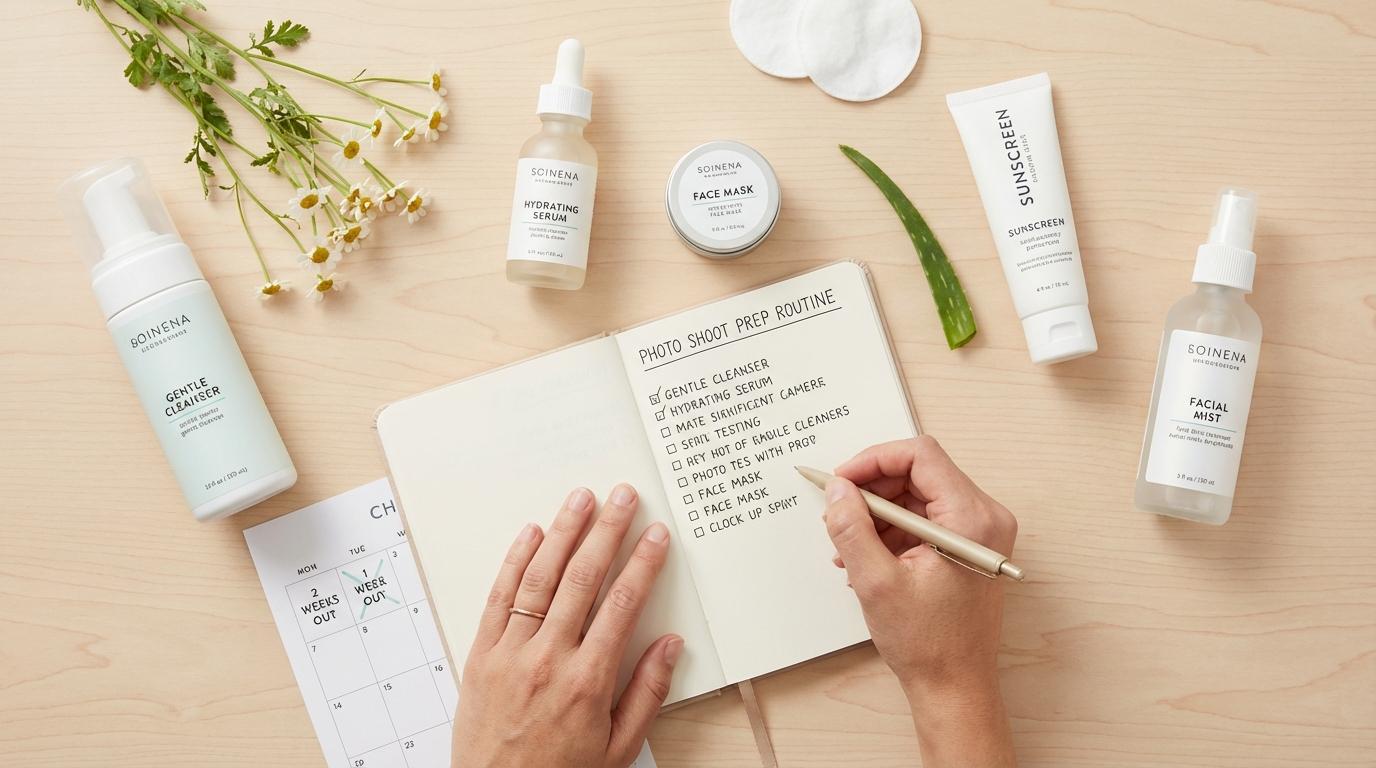
You’ve got a photo shoot coming up. Maybe it’s for a special occasion, your professional headshots, or content for your own brand. Either way, you want your skin to look its absolute best on camera. Here’s the thing: cameras pick up everything. Every bit of texture, every dry patch, every sneaky breakout that decided to show up uninvited. The good news? With a solid prep routine starting two weeks out, you can walk into that shoot feeling confident about your skin.
I’m going to walk you through exactly what to do at each stage leading up to your photo shoot, plus what to do if something goes wrong last minute. Because let’s be honest, skin doesn’t always cooperate with our schedules.
Two Weeks Out: The Foundation Phase
This is when the real work starts. Two weeks gives your skin enough time to respond to adjustments without the risk of a reaction showing up on shoot day. The number one rule during this phase? Do not try anything new. Seriously. That exciting new serum your friend recommended? It can wait. That American Academy of Dermatology has been saying this for years, and it’s especially true before photos.
Your focus during these two weeks should be on consistency and hydration. Stick to products your skin already knows and loves. This isn’t the time for experimentation. It’s the time for reliability.
Here’s what your routine should include:
- A gentle cleanser that doesn’t strip your skin
- Your regular moisturizer (bump it up to twice daily if you’re usually once-a-day)
- Sunscreen every single day, no exceptions
- Whatever actives you’ve been using successfully for at least a month
If you use retinoids, keep using them during this phase. They help with skin texture and cell turnover, which means smoother skin on camera. Just don’t start them now if you haven’t been using them already.
Schedule any professional treatments during this window too. If you want a facial, get it done 10 to 14 days before the shoot. This gives your skin time to settle after extractions or any temporary irritation. The same goes for any laser treatments or chemical peels. Board-certified dermatologist Dr. Marc Henrich recommends at least two weeks between professional treatments and photo shoots to avoid residual redness or sensitivity.
One Week Out: Fine-Tuning Time
Now we’re getting closer. At the one-week mark, you’re shifting into maintenance and gentle enhancement mode. Everything should be stable by now. If it’s not, that’s a sign something in your routine isn’t working, and you need to simplify.
This week, add in gentle exfoliation if you haven’t already. The key word is gentle. A mild AHA like lactic acid or mandelic acid two to three times this week will help slough off dead skin cells and create a smoother canvas for makeup. Avoid anything aggressive like high-percentage glycolic acid peels or physical scrubs with harsh particles. You want glow, not irritation.
Hydration becomes even more important this week. Well-hydrated skin photographs beautifully because it reflects light evenly. Dehydrated skin, even if it’s oily, tends to look dull and emphasizes texture. Consider adding a hydrating serum with hyaluronic acid if you don’t already use one. Apply it to damp skin for maximum benefit.
What to avoid this week:
- New products (yes, still)
- Harsh physical exfoliants
- Pore strips or aggressive extractions
- Skipping sunscreen (sun damage shows up fast)
- Late nights if you can help it (sleep affects skin more than people realize)
If you’re prone to breakouts, don’t panic and start layering on a bunch of acne treatments. Overdoing actives will dry out your skin and potentially cause more problems. Stick to your usual spot treatment if something pops up, and resist the urge to pick at it.
Three Days Before: The Home Stretch
Three days out, you’re officially in preservation mode. Your skin should be looking pretty good by now, and your job is simply not to mess it up. This means keeping your routine simple and consistent.
Stop using retinoids three days before the shoot. While retinoids are great for long-term skin health, they can cause slight peeling or sensitivity that might show up on camera or make your skin react weirdly to makeup. According to skincare experts at Paula’s Choice, pausing retinoids a few days before an event helps ensure your skin is calm and stable.
Focus on:
- Cleansing gently (morning and night)
- Hydrating serums
- Rich but non-comedogenic moisturizer
- SPF during the day
- Getting enough sleep
Watch your diet too. I know it sounds basic, but reducing salt intake helps prevent puffiness, especially around your eyes. Same with alcohol. Both can dehydrate your skin and cause inflammation that’ll show up in photos. Drink plenty of water and eat whole foods when possible.
The Night Before: Final Prep
The night before your photo shoot is all about setting yourself up for success. Do your full evening skincare routine, but keep it simple. Cleanse, apply a hydrating serum, follow with a good moisturizer. If your skin tolerates sheet masks well (meaning you’ve used them before without issues), a hydrating mask can give you a nice boost of radiance.
Avoid anything that might cause irritation overnight:
- Strong actives like vitamin C serums (can be sensitizing for some)
- Heavy occlusive products if you’re acne-prone
- New sheet masks or overnight treatments
- Physical exfoliation of any kind
Sleep on a clean pillowcase, ideally silk or satin if you have one. Cotton can absorb moisture from your skin and cause creasing. Get to bed at a reasonable hour. Undersleeping shows up as puffiness, dark circles, and dull skin. Your body does significant skin repair while you sleep, so give it the time it needs.
Don’t do any last-minute extractions or pimple-popping. I know it’s tempting if you spot something, but squeezing will only create redness and potentially scarring that’s much harder to cover than the original blemish.
Day Of: Morning Routine
You made it. Here’s how to handle the morning of your shoot.
Start with a gentle cleanse to remove any overnight product buildup. Follow with a lightweight hydrating serum. Then apply a moisturizer that works well under makeup. If you’re doing your own makeup, choose products you know your skin agrees with. If a makeup artist is handling it, arrive with clean, moisturized skin and skip any heavy primers or SPF (unless the shoot is outdoors, in which case, sunscreen is still essential but apply it early so it has time to absorb).
Morning of tips:
- Use cold spoons or a cold roller to depuff your under-eyes
- Avoid salty foods at breakfast
- Drink water, but don’t overdo it right before (bloating is real)
- Skip the workout if it leaves you red-faced for hours afterward
- Give your skincare 15 to 20 minutes to absorb before makeup application
If you’re working with a photographer or makeup artist, communicate any skin sensitivities upfront. Professional makeup artists, like those featured on Byrdie, appreciate knowing about allergies, sensitives to certain ingredients, or areas of concern so they can adjust their approach accordingly.
Emergency Situations: When Things Go Wrong
Even with the best preparation, skin doesn’t always cooperate. Here’s how to handle common emergencies.
Last-minute breakout
If a pimple shows up the night before or morning of, don’t panic and definitely don’t squeeze it. Apply a spot treatment with benzoyl peroxide or salicylic acid overnight if it’s the night before. Morning of, you can use a pimple patch to flatten it and protect it from irritation. These patches also create a smoother surface for makeup application. Let your makeup artist know it’s there so they can work around it. A skilled MUA can make blemishes practically invisible.
Dry, flaky patches
If you wake up with unexpected dry patches, avoid the temptation to scrub them away. Instead, apply a gentle oil or rich moisturizer and let it sink in for at least 20 minutes before gently pressing off any excess with a tissue. The moisture will help soften the flakes so makeup applies more smoothly.
Puffy face or under-eyes
Puffiness usually comes from salt, alcohol, lack of sleep, or crying. Cold is your friend here. Use cold spoons, a chilled roller, or even bags of frozen vegetables wrapped in a cloth. Caffeine-containing eye creams can also help temporarily tighten the area. Drink water and avoid adding more salt to your system.
Redness or irritation
If your skin is suddenly red or irritated, simplify immediately. Wash off everything and apply a basic, fragrance-free moisturizer. Products with centella asiatica or aloe can help calm things down. Avoid any actives. Let your makeup artist know about the irritation so they can use gentle, hypoallergenic products.
Sunburn
This is a tough one because there’s no quick fix for actual sun damage. Apply aloe vera and keep the skin moisturized. Avoid any makeup that might irritate the burned area. If the burn is severe, you may need to reschedule or adjust your look to minimize makeup on the affected area. This is why daily sunscreen in the weeks leading up to your shoot is so important.
Products Worth Having On Hand
Whether you’re building out your prep kit or just want to be ready for emergencies, these are helpful items to have:
- Hydrating sheet masks (ones you’ve used before)
- Pimple patches
- A gentle spot treatment
- Cold roller or facial tool you can refrigerate
- Fragrance-free, basic moisturizer for emergencies
- Eye drops for red eyes (tiredness shows)
- A good lip balm (dry lips look terrible on camera)
What To Remember
Preparing your skin for a photo shoot isn’t complicated, but it does require planning ahead. The biggest mistakes people make are trying new products too close to the date, overdoing treatments in a panic, or neglecting basics like hydration and sleep. Trust the process, stick to what works for your skin, and give yourself enough lead time to address any issues that come up.
Your skin doesn’t need to be perfect. Good lighting, a skilled photographer, and professional editing can work wonders. But when you’ve taken the time to care for your skin properly, you’ll feel more confident in front of the camera, and that confidence shows up in photos more than any filter ever could.