
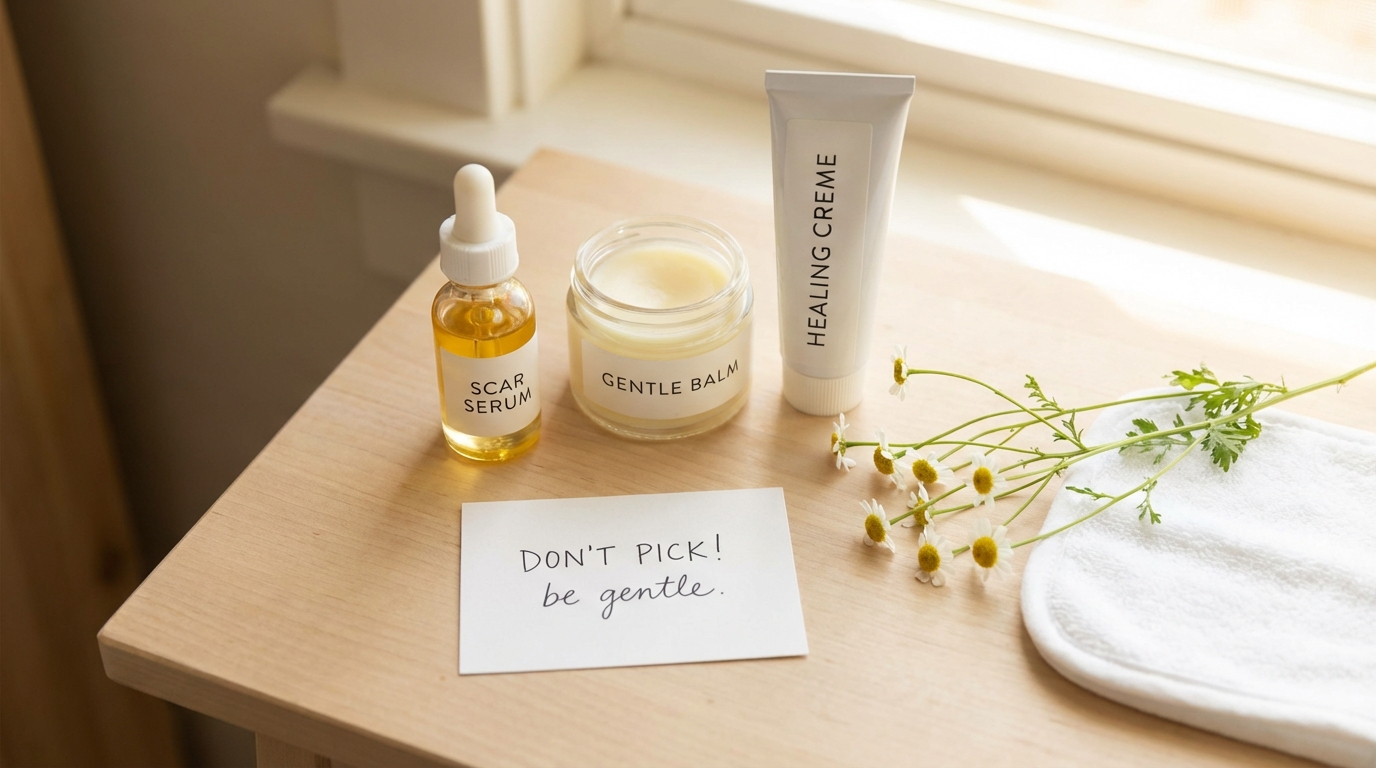
So that breakout finally calmed down, and now you’re staring at the aftermath wondering what comes next. I get it. The good news? What you do in the days and weeks following a breakout significantly affects whether those marks fade gracefully or stick around like uninvited guests. Let me walk you through the science of post-breakout care and why timing matters more than you might think.
Why Your Healing Skin Needs a Different Approach
When a pimple finally resolves, your skin enters what dermatologists call the “remodeling phase” of wound healing. During this stage, your skin is actively producing new collagen and working to restore its normal structure. This process can take anywhere from several weeks to months, and it’s genuinely fragile.
Here’s what’s happening beneath the surface: inflammation from the breakout triggered your melanocytes (pigment-producing cells) to go into overdrive, which is why you’re left with those reddish or brownish marks called post-inflammatory hyperpigmentation (PIH). Meanwhile, if the breakout was deeper, your skin might be rebuilding collagen in ways that could lead to textural scarring if not supported properly.
The absolute most important thing right now? Keep your hands away from the area. I know it’s tempting to touch, pick at remaining flaky skin, or squeeze out what looks like residual gunk. But every time you manipulate healing skin, you restart the inflammatory cascade. A 2019 study in the Journal of Clinical and Aesthetic Dermatology confirmed what dermatologists have long observed: mechanical manipulation of healing acne lesions significantly increases the risk of permanent scarring. Your body knows how to heal. Let it do its job.
The Gentle Healing Phase (Weeks 1-3)
For the first few weeks after a breakout resolves, your goal is simple: protect and support without adding stress to compromised skin.
Start with a gentle, non-foaming cleanser. Anything with harsh surfactants like sodium lauryl sulfate can strip away the protective lipids your skin desperately needs right now. Look for cleansers with ceramides or fatty acids that clean without disrupting the skin barrier.
Hydration is critical during this phase. When skin is properly hydrated, the wound healing process actually speeds up. A basic hyaluronic acid serum followed by a simple moisturizer creates an environment where your skin can focus on repair rather than fighting to maintain moisture levels. The American Academy of Dermatology recommends using non-comedogenic moisturizers even for acne-prone skin, especially during healing periods.
Sunscreen becomes even more essential now. Post-inflammatory hyperpigmentation gets dramatically worse with UV exposure because those already-activated melanocytes respond even more aggressively to sun. Use a broad-spectrum SPF 30 or higher daily, even if you’re mostly indoors. Windows don’t block UVA rays, and UVA is the primary culprit in making dark marks darker and more persistent.
What to avoid during this phase: retinoids, strong acids (anything with a pH below 3.5), physical exfoliants, and any “active” treatment beyond basic moisturizing ingredients. Your skin needs stability, not stimulation.
When to Start Active Scar Prevention (Week 3+)
Once the area is no longer tender, flaky, or noticeably inflamed, you can gradually introduce ingredients that actively help fade discoloration and support healthy collagen production.
Niacinamide (vitamin B3) is an excellent starting point. It’s well-tolerated, reduces inflammation, inhibits melanosome transfer (the process that leads to hyperpigmentation), and supports barrier function. Research published in the British Journal of Dermatology found that 4% niacinamide significantly reduced hyperpigmentation after 4 weeks of use. You can find effective concentrations in affordable serums from brands like The Ordinary or CeraVe.
Vitamin C (L-ascorbic acid) is another evidence-backed option. It inhibits tyrosinase, the enzyme responsible for melanin production, and supports collagen synthesis. The catch? Vitamin C is notoriously unstable and can irritate sensitive skin. Start with a lower concentration (10-15%) and use it in the morning before sunscreen for antioxidant protection.
If you’re dealing with textural concerns rather than just discoloration, retinoids become relevant around week 4-6, once the skin is fully healed. Retinoids increase cell turnover and boost collagen production, both of which help smooth out minor textural irregularities. Start with retinol (the gentler over-the-counter form) before considering stronger prescription options. The key is introducing it slowly, perhaps every third night initially, to avoid triggering new irritation.
Products That Actually Help Fading
Let’s talk specific ingredients that have solid research behind them for post-acne marks:
Azelaic acid (15-20%) works on multiple pathways. It’s anti-inflammatory, antibacterial (helpful if you’re still breakout-prone), and inhibits abnormal melanocyte activity. It’s gentle enough to use on recently healed skin and is often recommended by dermatologists for exactly this purpose.
Alpha arbutin is a gentler alternative to hydroquinone for reducing hyperpigmentation. It’s derived from bearberry and works by inhibiting tyrosinase without the irritation potential of stronger lightening agents.
Tranexamic acid is having a moment, and for good reason. Originally developed to control bleeding, it was discovered to have impressive effects on pigmentation. A 2017 clinical study showed significant improvement in melasma with topical tranexamic acid, and dermatologists are increasingly recommending it for PIH as well.
Centella asiatica (cica) deserves mention for textural concerns. The triterpenoids in centella support collagen synthesis and have been used in wound healing for decades. You’ll find it in many Korean skincare products marketed for “sensitive” or “barrier repair” formulations.
A sample routine once you’re past the initial healing phase might look like this: gentle cleanser, niacinamide serum (morning), vitamin C serum or azelaic acid (alternate mornings), basic moisturizer, SPF 30+. In the evening: gentle cleanser, a hydrating serum with hyaluronic acid, followed by a retinol product 2-3 times per week (once your skin has adjusted), and moisturizer.
Managing Expectations and When to See a Professional
Here’s the honest truth: hyperpigmentation from a normal breakout typically fades within 3-12 months with consistent sun protection and proper care. Deeper marks may take longer. True atrophic scars (the pitted or indented kind) are permanent structural changes that topical products cannot fully correct, though they can improve the appearance.
If you have persistent textural scarring that bothers you after 6+ months of consistent topical treatment, that’s when professional interventions like microneedling, chemical peels, or laser treatments become worth discussing with a dermatologist. These procedures can stimulate deeper collagen remodeling than anything you can achieve at home.
For now, focus on what you can control: gentle care, consistent SPF, patience, and keeping your hands off your face. Your skin genuinely wants to heal. Give it the environment to do so, and those marks will fade. Not overnight, but they will fade.