
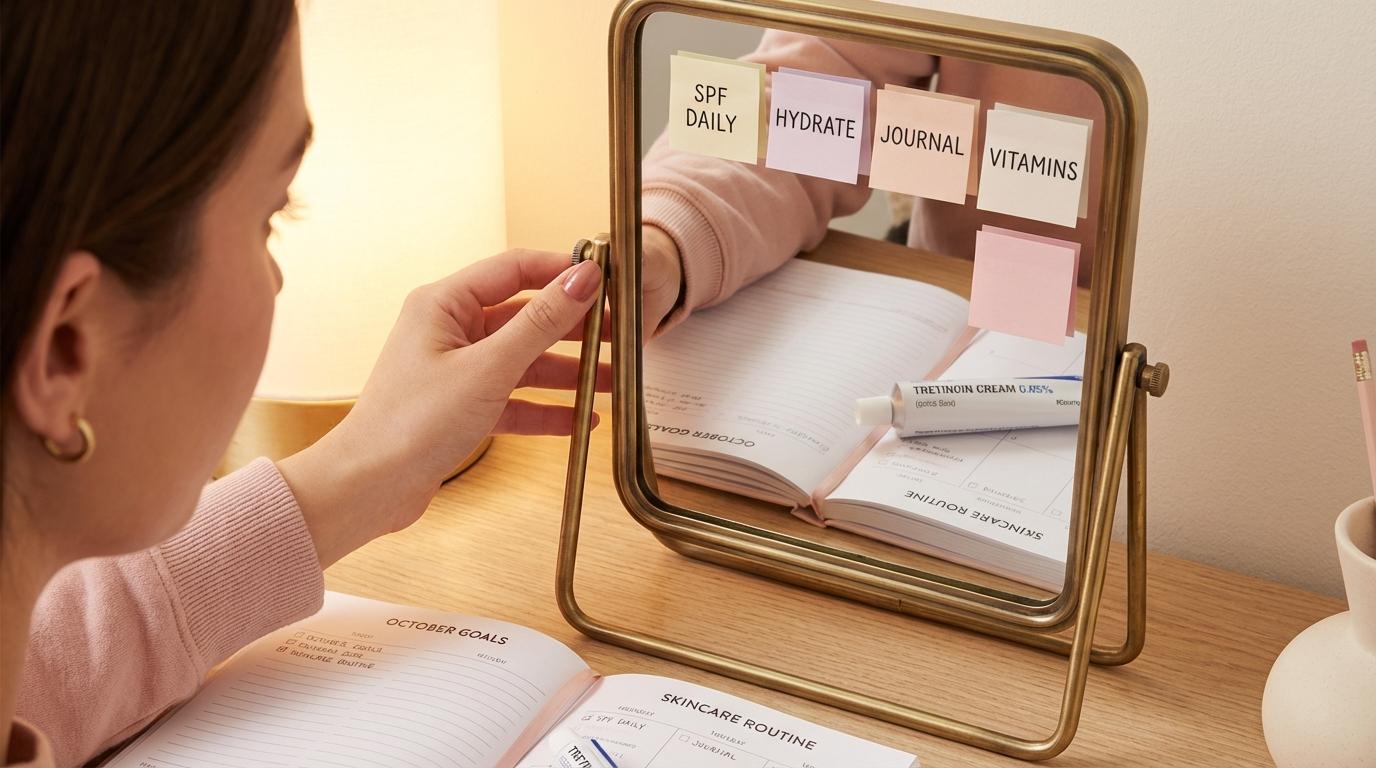
Tretinoin has been clearing acne for over 50 years, and dermatologists still consider it the single most effective topical treatment available. Not the trendy new serum your favorite influencer just posted about. Not that viral TikTok product. A prescription retinoid that’s been around since your parents were in high school.
If you’ve tried every over-the-counter acne treatment and nothing’s worked, or if you’re already using retinol and wondering whether it’s time to level up, you’re in the right place. Let’s talk about what makes tretinoin different, why starting correctly matters so much, and what to actually expect during those first few months.
Tretinoin vs Retinol: Why Prescription Matters
Retinol and tretinoin are both vitamin A derivatives, but they’re not interchangeable. Retinol needs to convert into retinoic acid (tretinoin) in your skin before it can do anything. That conversion process is inefficient and varies person to person.
Tretinoin is already retinoic acid. No conversion needed. It gets to work immediately at the cellular level, which is why it’s significantly more potent.
According to the American Academy of Dermatology, topical retinoids like tretinoin are considered first-line therapy for acne. They work by:
- Speeding up skin cell turnover so dead cells don’t clog pores
- Reducing inflammation at the follicular level
- Preventing the formation of new comedones (clogged pores)
- Decreasing the appearance of post-acne marks over time
Retinol can do some of this, just slower and less dramatically. Tretinoin is the express lane.
How to Start Without Destroying Your Face
This is where most people mess up. They get their prescription, slather it on every night, and then wonder why their skin is peeling off in sheets by day four.
Tretinoin is not a “more is better” situation. Your starting protocol determines whether you successfully adapt or give up in frustrated defeat.
Most dermatologists recommend beginning with the lowest concentration (0.025%) and using it just 2-3 times per week for the first month. Not every night. Not even every other night at first.
The pea-sized amount rule is real. One pea-sized drop covers your entire face. Applying more doesn’t make it work faster; it just makes irritation worse.
Before applying tretinoin, make sure your skin is completely dry. Wet or damp skin increases absorption, which sounds good but actually means more irritation. Wait 20-30 minutes after washing your face, or at minimum until your skin feels totally dry to the touch.
If you’re already using other actives, you need to simplify your routine drastically. No AHAs, BHAs, vitamin C, or other exfoliants while you’re adjusting to tretinoin. Your layering strategy needs to focus on hydration and protection, not adding more active ingredients.
The Buffer Method
If you have sensitive skin or you’re nervous about irritation, the buffer method can help. Apply your moisturizer first, let it absorb for a few minutes, then apply tretinoin on top.
This doesn’t make tretinoin less effective long-term. Studies have shown that buffered application still delivers results; it just reduces the initial shock to your skin barrier.
Once you’ve been using tretinoin for 4-6 weeks without major irritation, you can try applying it directly to clean, dry skin and using moisturizer on top instead.
The Purge Phase: What’s Actually Happening
Almost everyone who uses tretinoin experiences some version of “the purge.” Your skin gets worse before it gets better, and it feels deeply unfair.
The purge is not your skin freaking out because tretinoin is bad for you. It’s the opposite. Tretinoin speeds up cell turnover dramatically, which means all those clogged pores that would have become pimples over the next few months are coming to the surface now.
Think of it as fast-forwarding through breakouts you were going to get anyway. The alternative was having those same pimples show up one by one over the next several months.
Typical purge timeline:
- Weeks 1-2: Dryness, possible flaking, mild redness
- Weeks 3-6: Breakouts increase, especially in areas where you usually get acne
- Weeks 6-12: Breakouts start decreasing, skin texture improves
- Months 3-6: Significant improvement in acne and overall skin clarity
The purge typically lasts 4-8 weeks, though it varies. If you’re still experiencing new breakouts after 3-4 months, check back with your dermatologist. Something else might be going on.
Managing Side Effects Without Quitting
Peeling, dryness, and redness are normal, especially in the first month. They’re signs your skin is adjusting, not signs you should stop.
Your moisture barrier is going to take some hits during this time. Counteract it with:
- A gentle, non-foaming cleanser (CeraVe Hydrating Cleanser, La Roche-Posay Toleriane)
- A solid moisturizer with ceramides or hyaluronic acid
- SPF 30 or higher every single day, no exceptions
Tretinoin makes your skin more sensitive to sun. Skipping sunscreen while using it isn’t just risky; it can cause hyperpigmentation and undo the benefits you’re working toward.
If you’re experiencing excessive irritation, cut back your application frequency before you quit entirely. Going from every other day to twice a week is better than stopping cold turkey.
What to Expect Long-Term
Tretinoin isn’t just an acne treatment. It’s one of the most well-researched anti-aging ingredients in existence.
Long-term benefits include:
- Reduced acne scarring and hyperpigmentation
- Improved skin texture and smoother pores
- Increased collagen production
- Reduction in fine lines over time
- More even skin tone
Many dermatologists recommend continuing tretinoin indefinitely after acne clears, often at a lower frequency like 2-3 times per week. The long-term skin benefits extend well beyond acne control.
Unlike some acne treatments that stop working over time, your skin doesn’t build up tolerance to tretinoin in a way that makes it ineffective. It keeps working.
When Tretinoin Isn’t Enough
Tretinoin is powerful, but it’s not always a solo solution. For moderate to severe acne, your dermatologist might combine it with:
- Topical antibiotics like clindamycin (usually short-term)
- Benzoyl peroxide (often used in the morning while tretinoin is used at night)
- Oral medications if topical treatments alone aren’t cutting it
If you have cystic acne, tretinoin can help but might not be sufficient on its own. Deep cysts form below the surface where topical treatments can’t fully reach. Talk to your dermatologist about additional options.
For hormonal acne that flares predictably with your cycle, tretinoin helps manage the symptoms but doesn’t address the underlying hormonal trigger. Niacinamide can be a good supporting player here, as it helps with inflammation without adding irritation.
Getting a Prescription
Tretinoin requires a prescription in most countries. You have options:
See a dermatologist in person. This is ideal if you have moderate to severe acne or other skin concerns, since they can examine your skin and create a comprehensive treatment plan.
Use a telehealth service. Curology, Apostrophe, Nurx, and similar services can prescribe tretinoin online after reviewing your photos and history. These are convenient and often more affordable than in-person visits.
Ask your regular doctor. Many general practitioners will prescribe tretinoin for acne, especially if your case is straightforward.
Is It Worth the Commitment?
Tretinoin requires patience. The first few months can feel brutal, and you won’t see dramatic results for at least 8-12 weeks.
But there’s a reason dermatologists keep coming back to it decade after decade. The research backing tretinoin is extensive, the long-term results are real, and unlike many skincare trends, it actually delivers what it promises.
If over-the-counter options haven’t worked for your acne, tretinoin is worth the conversation with your dermatologist. Just go in with realistic expectations about the timeline and a commitment to following the starting protocol correctly. The payoff is worth the patience.