
You know that feeling when your skin looks red, feels tight, and stings at the slightest touch? That uncomfortable sensation that makes you want to hide from the world? If you have been a little too enthusiastic with your acids, retinols, or physical scrubs, you are probably dealing with overexfoliation. And I am here to tell you exactly why this happens and how to fix it.
Here is the thing about our skin: it has a protective layer called the stratum corneum, made up of dead skin cells held together by lipids. Think of it like a brick wall where the cells are bricks and the lipids are mortar. When we exfoliate properly, we are gently removing some of those top bricks. When we overdo it, we are basically taking a sledgehammer to that wall and compromising everything underneath.
Why Your Skin Is Freaking Out Right Now
When you overexfoliate, you are stripping away more than just dead skin cells. You are removing essential lipids, disrupting your acid mantle (that slightly acidic film that protects your skin), and compromising your skin’s ability to retain moisture. A 2018 study in the Journal of Clinical and Aesthetic Dermatology found that barrier damage leads to increased transepidermal water loss, meaning your skin literally cannot hold onto hydration.
The signs are pretty clear:
- Redness and irritation that was not there before
- Tightness, even after moisturizing
- Stinging when applying products that normally feel fine
- Unusual texture, either waxy or flaky
- Increased sensitivity to temperature changes
- Sometimes, breakouts from the compromised barrier letting bacteria in
The Immediate Action Plan: Stop Everything
First things first: put down the actives. All of them. Yes, even that gentle AHA you love. Yes, even your vitamin C serum. Your skin needs a break from anything that could potentially irritate it further. This includes retinoids, AHAs, BHAs, vitamin C, benzoyl peroxide, and physical scrubs. Essentially, if it is designed to do something active to your skin, it needs to go on the shelf for now.
What you are left with is the bare minimum:
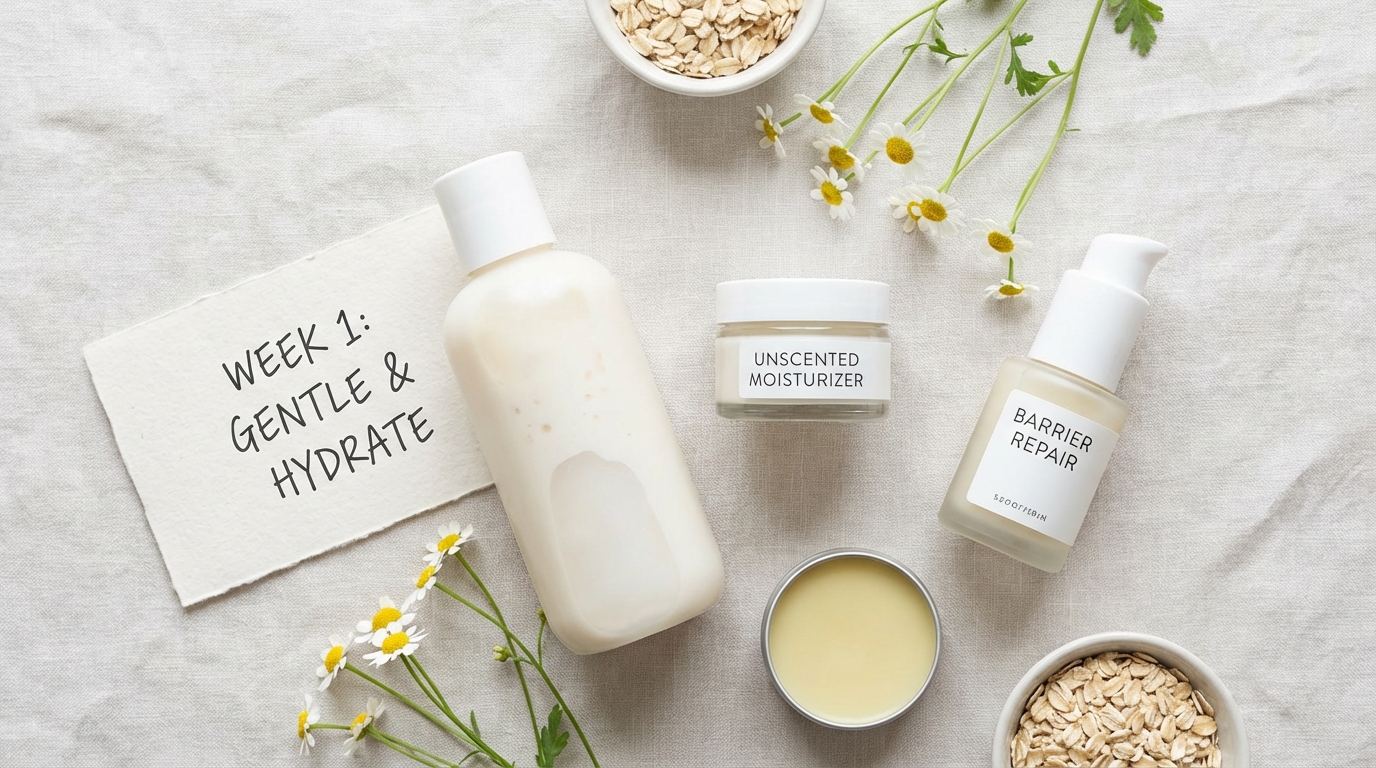
- A gentle, non-foaming cleanser (or just water in the morning)
- A simple moisturizer without fragrance or active ingredients
- Sunscreen during the day (more important than ever with a compromised barrier)
I know it feels counterintuitive to strip back your routine when you want your skin to heal. But this is where understanding the biology helps. Your skin has its own repair mechanisms, and they work best when they are not being constantly challenged by active ingredients.
The Barrier Repair Strategy
Now for the rebuilding phase. Your skin needs specific ingredients to repair that damaged barrier, and research gives us a clear roadmap.
Ceramides are non-negotiable. These are the lipids that make up about 50% of your skin barrier. A study published in British Journal of Dermatology demonstrated that topical ceramide application significantly improved barrier function in damaged skin. Look for products listing ceramides (especially ceramide NP, AP, or EOP) high in the ingredient list.
Niacinamide (vitamin B3) helps your skin produce its own ceramides while also reducing inflammation. It is gentle enough to use on compromised skin and has solid research backing its barrier-strengthening abilities. A concentration of 4-5% is typically effective without being irritating.
Fatty acids and cholesterol round out what dermatologists call the essential trio of barrier repair. Squalane, shea butter, and oils high in linoleic acid (like rosehip or sunflower oil) can help replenish what has been lost.
Centella asiatica (also called cica) has anti-inflammatory properties and helps with wound healing. There is a reason it shows up in so many barrier repair products from La Roche-Posay and similar brands.
Your Simplified Recovery Routine
Morning:
- Rinse with lukewarm water (or use a gentle cleanser if needed)
- Apply a hydrating toner or essence if your skin tolerates it
- Layer a ceramide-rich moisturizer
- Apply SPF 30+ sunscreen (mineral formulas are often gentler)
Evening:
- Gentle cleanse to remove sunscreen and the day’s buildup
- Apply a niacinamide serum (optional, skip if skin is very reactive)
- Seal everything with a rich barrier cream or occlusive like Vaseline
The occlusive step is important. Ingredients like petrolatum create a physical barrier that prevents water loss while your skin heals underneath. This technique, sometimes called slugging, has been validated by dermatologists and can speed up recovery significantly.
The Timeline: When Will You Actually Feel Better?
Here is the realistic breakdown. Mild overexfoliation (slight tightness, minor redness) usually resolves within 3-5 days of stripping back your routine. Moderate damage (persistent stinging, flakiness, noticeable redness) typically takes 1-2 weeks. Severe barrier damage can take 3-4 weeks or even longer to fully heal.
Your skin cells take about 28 days to complete their turnover cycle, so if you have really done a number on your barrier, patience is essential. You cannot rush biology.
Signs that healing is happening:
- Products no longer sting on application
- Redness is fading
- Skin feels supple rather than tight after cleansing
- Normal texture returning
When to Bring Actives Back
Once your skin feels truly normal (not just better than it was), you can slowly reintroduce actives. The key word is slowly. Start with the gentlest product in your arsenal, use it once or twice a week, and give your skin at least two weeks before adding anything else back.
Consider this a learning opportunity. Your previous routine was probably too aggressive for your skin’s needs. Maybe you do not need daily exfoliation. Maybe your skin does better with a milder retinol. For more insights on building a sustainable routine, check out our guide on creating personalized skincare routines.
The goal is not to never exfoliate again. It is to find the right frequency and strength for YOUR skin. Some people thrive with daily acids. Others do best with once-weekly exfoliation. Neither approach is wrong. It is about matching the routine to the skin you actually have.
Your barrier is resilient. With the right care (and a healthy dose of patience), it will rebuild itself. And next time, you will know exactly how to find that sweet spot between effective exfoliation and overdoing it.