
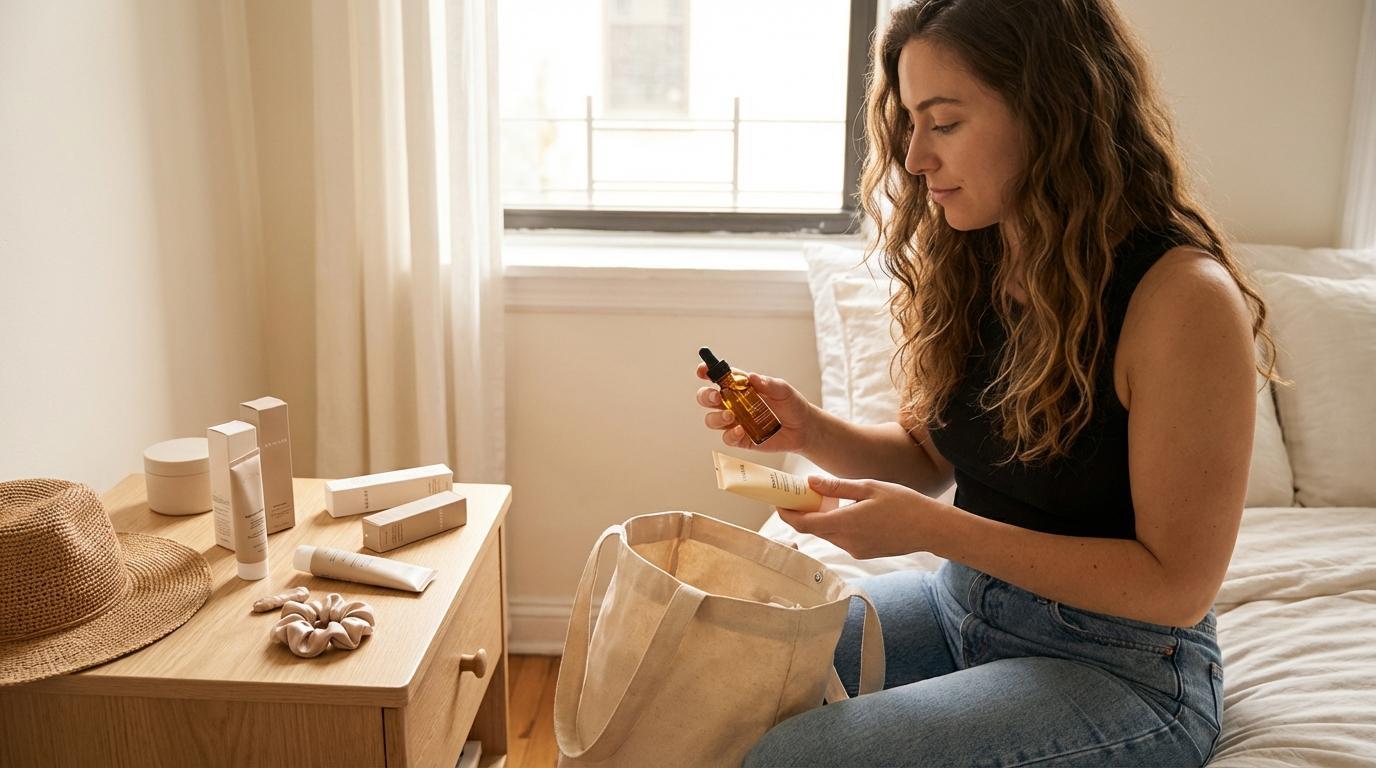
You have been counting down the days. The bags are packed, the out-of-office reply is set, and all that stands between you and rest is a flight (or road trip, or train ride). But here is the thing about vacation: your skin is coming with you, and it does not automatically know how to behave in new environments. The good news? Keeping your skin happy on vacation does not require packing your entire bathroom cabinet or sticking to some rigid ten-step routine. A simplified travel approach with just a few essential products is all you need.
Why Your Skin Acts Differently on Vacation
Before you zip up that carry-on, it helps to understand what travel actually does to your skin. According to the American Academy of Dermatology, changing climates, airplane cabin air, different foods, and disrupted sleep patterns can all throw your skin (and its microbiome) into confusion. Airplane cabins are notorious for extremely low humidity levels, which means your skin loses moisture rapidly during flights. This can lead to dryness, a dull complexion, chapped lips, and even flare-ups of conditions like eczema.
Then there is the destination itself. If you are heading somewhere tropical, the humidity and heat can cause your pores to open up and increase oil production. Traveling to a desert or mountain region? The low humidity can pull moisture right out of your skin. Your skin is essentially trying to recalibrate to an entirely new environment, and it needs your help to do so gracefully.
The Packing Philosophy: Less Really Is More
I know the temptation. You want to bring everything just in case. The retinol for nighttime, the exfoliating toner, the three different serums you have been rotating. But vacation skincare works best when you strip things back to essentials. This is not about deprivation; it is about giving your skin stability when everything else is changing.
The core four products you actually need are: a gentle cleanser, a hydrating moisturizer, a serum (vitamin C is excellent for travel because it helps protect against environmental stressors), and broad-spectrum sunscreen with at least SPF 30. That is it. Everything else is optional.
A few practical tips for packing: decant your products into travel-sized containers rather than buying new products your skin has never met. Your skin is already adapting to a new environment, so this is not the time to introduce unfamiliar formulas. As dermatologists at Dermstore recommend, using your own products, especially if you have sensitive skin, reduces the risk of reactions. Those hotel toiletries often contain fragrances that can irritate.
What to Leave Behind
Strong retinoids and aggressive exfoliants should stay home. These products increase sun sensitivity, and vacation usually means more sun exposure than your regular life. You do not want to deal with irritation, peeling, or extra photosensitivity when you should be relaxing. Those complex multi-step treatments can also wait until you return. Your skin will not fall apart from a week or two without your AHA toner, I promise.
Also leave behind the guilt about simplifying. Your skin genuinely benefits from occasional breaks in intense treatment routines. Sometimes the best thing you can do is maintain hydration and protection while letting everything else rest.
Adapting to Hot and Humid Destinations
Heading somewhere tropical or beachy? Your skin is about to get oilier. Heat and humidity cause pores to open, which increases oil production. This can create an environment where breakout-causing bacteria thrive. The adjustment is straightforward: switch to lighter textures.
Swap your rich cream moisturizer for a water-based or gel formula. Look for products labeled non-comedogenic so they will not clog your pores. Your cleanser can be a bit stronger here too, maybe a gentle foaming formula to cut through the extra sweat and oil accumulation. And sunscreen? Choose one with a matte or lightweight finish so you are not adding more shine to an already dewy situation.
One thing that stays the same: hydration from the inside. Even in humid climates, you need to drink plenty of water. Sweating more means you are losing fluids faster, and your skin still needs internal hydration to function well.
Adapting to Dry and Desert Climates
Dry climates present the opposite challenge. Low humidity pulls moisture out of your skin faster than it can replenish, which can leave you feeling tight, flaky, and uncomfortable. According to Reviva Labs, desert environments combine low humidity with intense sun exposure, making your skin extra susceptible to both dryness and UV damage.
Here, you want to lean into hydrating ingredients: hyaluronic acid, glycerin, and ceramides are your friends. Consider using a richer moisturizer than you would at home, or layer a hydrating serum underneath your regular one. Apply moisturizer while your skin is still damp from cleansing to help lock in that water. Your cleanser should be creamy and gentle rather than foaming, something that cleans without stripping the natural oils your skin desperately needs to retain.
If your accommodations have air conditioning (which dries the air further), a small portable humidifier can make a real difference for overnight skin recovery. And do not forget your lips. They have no oil glands and are particularly vulnerable in dry climates, so pack a lip balm with SPF.
The In-Flight Routine
Long flights are essentially extended sessions in a very dry environment. The Everygirl reports that airplane cabin humidity levels can drop as low as 10 to 20 percent, compared to the 40 to 70 percent humidity most skin is comfortable in. This is why many people step off planes looking and feeling parched.
Start hydrating a few days before your flight, both by drinking extra water and being consistent with your moisturizer. On the plane, skip the makeup if you can (or at least go minimal) and apply a good layer of moisturizer before boarding. A facial mist can feel refreshing mid-flight, though its hydration benefits are mostly temporary without a moisturizer to seal it in. Drink water throughout the flight, even if it means extra bathroom trips.
If you are on a red-eye, resist the urge to do your full nighttime routine in the airplane bathroom. The surfaces are not clean, the lighting is terrible, and you are likely to drop something. A simple application of moisturizer and lip balm is enough to get you to your destination.
Vacation Sunscreen: The Non-Negotiable
I am not going to lecture you about sunscreen because you already know it matters. But I will remind you that vacation sun exposure is usually more intense than daily life. You are outside more, in direct sunlight more, and possibly at higher altitudes or near water that reflects UV rays back at your face.
Pack a sunscreen you actually enjoy wearing, because the best sunscreen is one you will reapply. Reapplication every two hours is the real key, especially if you are swimming or sweating. Consider a separate SPF for your face and body if the formulas feel different on your skin. And do not forget the commonly missed spots: ears, back of neck, tops of feet, and the part in your hair.
Actually Enjoying Your Skin on Vacation
Here is something that often gets lost in all the skincare advice: vacation is supposed to be enjoyable, and that includes your relationship with your skin. If obsessing over your routine is causing stress, you are doing it wrong. The goal is a simple, protective, hydrating approach that requires minimal thought so you can focus on rest, adventure, or whatever else you came for.
Some of the best things for your skin on vacation have nothing to do with products. Getting enough sleep, reducing stress, eating fresh foods, and spending time doing things you love all show up on your face eventually. Your skin responds to your overall wellbeing, not just what you put on it.
So pack light, stay hydrated, protect yourself from the sun, and adjust your textures based on where you are going. The rest is just details. Your skin is resilient. It can handle a simplified routine while you handle the important work of actually relaxing.