
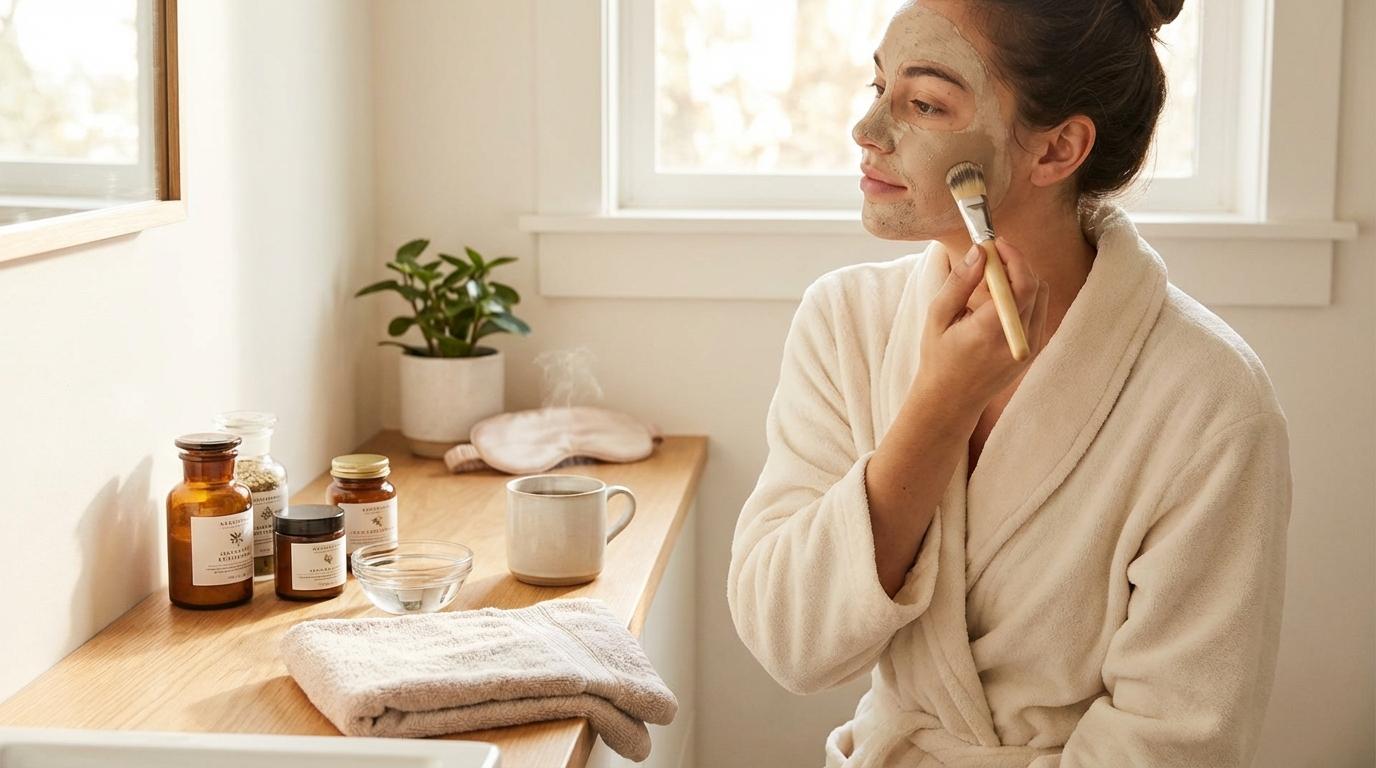
You know that thing where you want to look amazing for Monday, whether it is a presentation, a date, or just because? Saturday night is your window. Not Sunday. Saturday. Here is why that timing matters and exactly what to do.
Why Saturday Night Is Your Strategic Window
Your skin needs 36-48 hours to recover from any serious treatment. That means if you exfoliate on Sunday night, you might show up Monday with redness or flakiness instead of that healthy look you wanted.
Saturday night gives your skin time to do its thing: shed, repair, and calm down before anyone important sees you.
This is not about cramming in every product you own. It is about being strategic with your timing.
The Exfoliation Step (Do It Right or Skip It)
Pick ONE exfoliation method. Not both. Not layered.
- Chemical option: A gentle AHA (lactic acid or mandelic acid at 5-10%) works for most skin types. Apply to clean, dry skin for 10-15 minutes, then rinse.
- Physical option: A soft washcloth with your cleanser, using gentle circular motions. Nothing with harsh scrubby bits.
If your skin is sensitive or you have been using retinol that week, skip exfoliation entirely. Seriously. A calm face beats a freshly-scrubbed-but-irritated one.
According to dermatological research from the American Academy of Dermatology, over-exfoliation is one of the most common skincare mistakes people make before events.
The Hydrating Mask That Actually Works
After exfoliation, your skin is primed to absorb hydration better than usual. This is the time for a hydrating mask.
What to look for:
- Hyaluronic acid (draws water into skin)
- Glycerin (keeps moisture locked in)
- Aloe vera or centella (calms any irritation from exfoliation)
Leave it on for 15-20 minutes. Some people sleep in hydrating masks, and that is fine too if your skin tolerates it.
Sheet masks work, but they are not magic. A good cream mask does the same job without the waste. Your call.
Sleep: The Part Nobody Wants to Hear About
Here is the uncomfortable truth: no product can fix a bad night of sleep.
When you sleep, your skin blood flow increases, collagen rebuilds, and cellular repair kicks into high gear. Research published in Clinical and Experimental Dermatology found that poor sleep quality is directly associated with increased signs of skin aging and slower recovery from environmental stressors.
Saturday night sleep tips:
- Aim for 7-8 hours minimum
- Sleep on your back if you can (side sleeping creates pillow creases)
- Silk or satin pillowcases reduce friction on your skin
- Keep your room cool, around 65-68 degrees F (18-20 degrees C)
If you are going out Saturday night and getting home at 2am, this whole routine falls apart. Plan accordingly.
What to Avoid the Night Before an Event
This is where people mess up. They get excited and throw everything at their face.
Do not:
- Try a new product (allergic reactions love showing up at the worst time)
- Use retinol or strong acids (these can cause peeling 24-48 hours later)
- Do extractions or pop anything (inflammation takes days to calm down)
- Over-apply products thinking more is better (it clogs pores and causes breakouts)
- Drink alcohol heavily (dehydrates your skin from the inside out)
Also skip anything your skin has not met before. Saturday night is not experimentation time. It is execution time using products you know work for you.
Sunday: The Rest Day
Sunday is about maintaining, not adding.
Gentle cleanser. Moisturizer. SPF if you are going outside. That is it.
Your skin is recovering from Saturday treatment. Let it work. Resist the urge to do more because you are nervous about Monday.
If you wake up with any redness or irritation, a simple cold compress and a soothing moisturizer with ceramides will help calm things down.
The Bottom Line
Looking good on Monday starts Saturday night because your skin needs that buffer time. Exfoliate thoughtfully, hydrate deeply, sleep well, and then leave your face alone on Sunday.
The people who always look put-together are not using fancier products than you. They are just better at timing.
For more routine guidance, check out our other posts on skincare routines for different situations and skin types.