
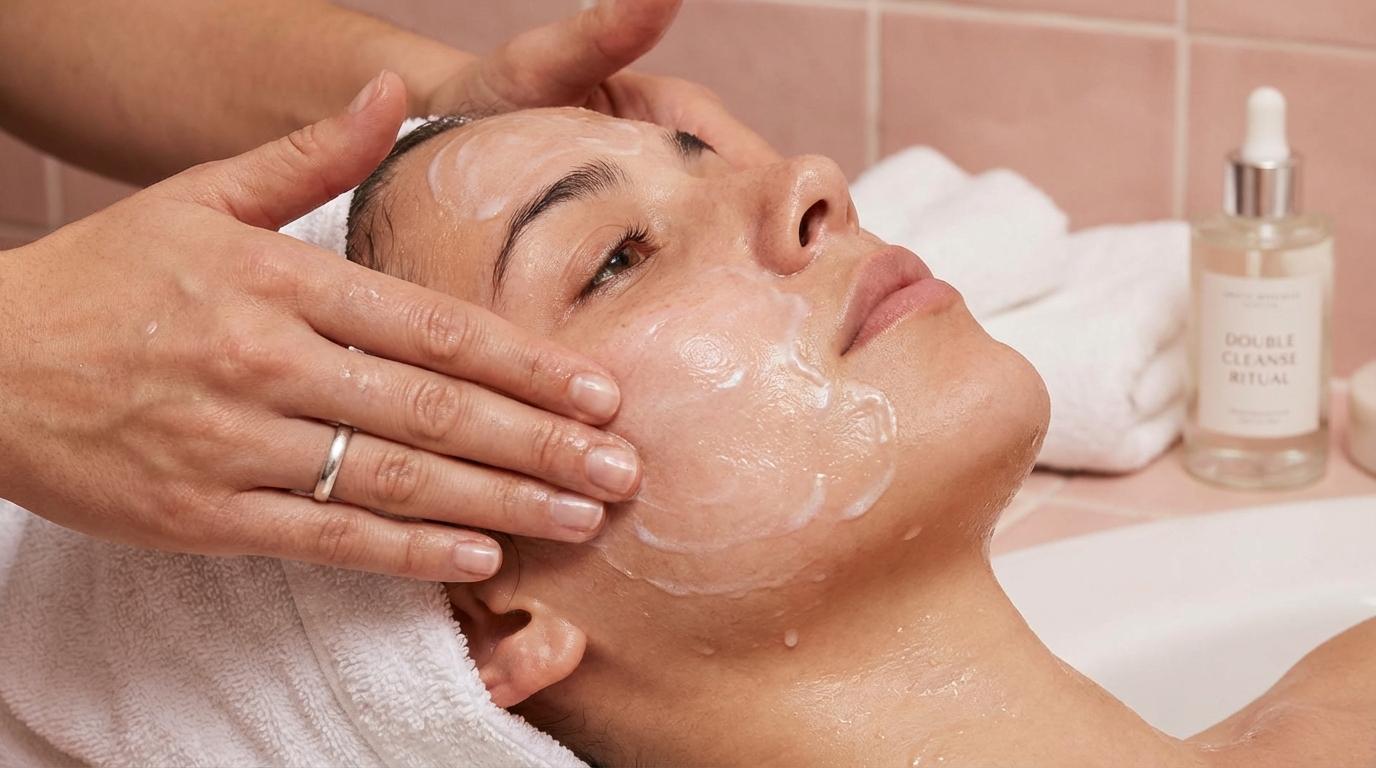
Mixing oil-based and water-based impurities on your face throughout the day leads to a situation where no single cleanser can effectively remove everything in one wash. This is the fundamental problem that double cleansing solves, and the chemistry behind it is surprisingly elegant once you understand what’s happening at a molecular level.
The “Like Dissolves Like” Principle
This is one of the first things you learn in chemistry, and it applies directly to your skincare. Polar substances dissolve other polar substances. Nonpolar substances dissolve other nonpolar substances. Oil is nonpolar. Water is polar. They don’t mix, which is why you can’t just splash water on your face and expect it to remove sunscreen or foundation.
Your skin produces sebum, which is an oily, waxy substance made up of triglycerides, wax esters, squalene, and fatty acids. Sunscreen ingredients, makeup pigments bound in silicones, and environmental pollutants that stick to your skin throughout the day are also largely oil-soluble. A water-based cleanser can struggle to fully break these down because it’s working against the chemistry.
An oil-based cleanser, on the other hand, speaks the same molecular language as these impurities. The nonpolar oils in the cleanser attract and bind with the nonpolar substances sitting on your skin. They essentially merge, making it much easier to lift everything off the surface.
What the First Cleanse Actually Does
The first cleanse is all about removing the stuff that accumulated on top of your skin throughout the day. This includes makeup, sunscreen, excess sebum, and any environmental grime that’s stuck to the oily film on your face.
Oil cleansers, cleansing balms, and micellar waters are all designed for this step. When you massage an oil cleanser onto dry skin, the oils penetrate and loosen everything that’s sitting on the surface. The key ingredient making this work is emulsifiers, compounds that allow oil and water to mix. When you add water and rinse, the emulsifiers activate, turning the oil into a milky solution that carries all the dissolved impurities away with it.
Without emulsifiers, you’d just be smearing oil around your face. With them, the cleanser rinses clean and takes the day’s buildup with it.
A 2019 study published in the Journal of Cosmetic Dermatology found that oil-based cleansers were significantly more effective at removing sunscreen residue compared to water-based cleansers alone. If you’re wearing SPF daily (which you should be), this matters a lot. Sunscreen that isn’t fully removed can contribute to clogged pores and dull-looking skin over time.
What the Second Cleanse Does
The second cleanse addresses your actual skin. Once the surface layer of makeup and sunscreen is gone, a water-based cleanser can now reach your pores and clean out sweat, remaining dirt, and any residue left from the first cleanser.
Water-based cleansers typically use surfactants, molecules with one end that’s attracted to oil and another that’s attracted to water. They lift water-soluble debris from the skin and allow it to be rinsed away. Common surfactants include sodium lauryl sulfate (SLS), cocamidopropyl betaine, and decyl glucoside, ranging from harsh to gentle.
This is also where your cleanser’s active ingredients can actually work. If your second cleanser contains salicylic acid, niacinamide, or glycolic acid, those ingredients have a much better chance of making contact with your skin when they’re not competing with a layer of sunscreen and makeup for access.
Who Actually Benefits From Double Cleansing
Not everyone needs to double cleanse every single day. The practice makes the most sense if:
You wear sunscreen daily. SPF formulas, especially water-resistant ones, are designed to stay put. That’s great for sun protection but means they need more effort to remove properly. If you’re committed to a routine that doesn’t strip your skin, double cleansing lets you be thorough without using a harsher single cleanser.
You wear makeup. Foundation, concealer, setting powder, and setting sprays create layers of product on your skin. An oil cleanser breaks down the cosmetic layer so your second cleanser can actually reach the skin underneath.
You live in a city or polluted area. Particulate matter and pollutants bind to the oil on your skin’s surface. Research from Seoul National University has shown that fine dust particles (PM2.5) adhere to sebum on the skin, and an oil-based first cleanse is one of the most effective ways to remove them.
You have oily or acne-prone skin. This might sound counterintuitive, but using an oil cleanser on oily skin can actually help regulate sebum. When you strip your skin with harsh cleansers, your sebaceous glands often respond by producing even more oil. A gentle oil cleanse removes excess sebum without triggering that overproduction response.
When You Can Skip It
If you didn’t wear sunscreen or makeup that day, a single gentle cleanser is usually enough. A simple two-product approach works perfectly fine on low-key days.
In the morning, double cleansing is almost always unnecessary. Your skin didn’t accumulate sunscreen, makeup, or pollution while you slept. A splash of water or a single gentle cleanse is plenty to refresh your skin before applying your morning products.
If you have very dry or sensitive skin, adding an extra cleansing step might cause more irritation than benefit. Pay attention to how your skin feels after double cleansing. If it’s tight, dry, or stinging, you may need a gentler second cleanser or you might be better off with a single micellar water and rinse.
Choosing Your Cleansers
First cleanser options:
Cleansing oils are lightweight and work well for most skin types. Look for ones with gentle emulsifiers like PEG-20 glyceryl triisostearate or polysorbate 20. Cleansing balms are solid at room temperature and melt into an oil on contact with skin. They’re often more moisturizing and feel luxurious. Micellar water uses micelles (tiny clusters of surfactant molecules) to trap oil and dirt, and while technically water-based, it functions similarly to an oil cleanse for light makeup days.
Second cleanser options:
Gel cleansers are great for oily and combination skin. Cream or milk cleansers suit dry and sensitive skin. Foam cleansers can work but check the surfactant list. Avoid sodium lauryl sulfate if your skin is easily irritated. Amino acid-based surfactants (like sodium cocoyl glutamate) are among the gentlest options available.
The Technique Matters
Apply your oil cleanser to dry skin and massage for about 60 seconds. This gives the oils time to bind with the impurities. Don’t rush this step.
Add a small amount of lukewarm water and continue massaging. You’ll see the product turn milky as the emulsifiers activate. Rinse thoroughly.
Follow immediately with your water-based cleanser on damp skin. Massage gently for 30 to 60 seconds, then rinse. Pat dry.
The whole process takes about two to three minutes. That’s it. If you’ve been spending 30 seconds total on cleansing and wondering why your skin still feels grimy or your post-shower skincare doesn’t seem to absorb well, this might be the missing piece.
Common Misconceptions
“Oil cleansers cause breakouts.” Properly formulated oil cleansers with good emulsifiers rinse clean and don’t leave a pore-clogging residue. The key word is “properly formulated.” Straight coconut oil with no emulsifier? That could cause problems. A dedicated cleansing oil designed to emulsify? That’s a different product entirely.
“Double cleansing is just a marketing gimmick.” The chemistry is real. The “like dissolves like” principle isn’t something skincare brands invented. It’s basic physical chemistry. Whether you need to double cleanse depends on what’s on your skin, but the science supporting the method is solid.
“You need expensive products.” You don’t. A basic cleansing oil from the drugstore and a gentle water-based cleanser will do the job just as well as luxury versions. The mechanism is the same regardless of price point.
Double cleansing isn’t complicated once you understand why each step exists. The first cleanse handles oil-soluble stuff. The second cleanse handles everything else. Two different types of chemistry working together to give your skin a genuinely clean slate for whatever you apply next.