
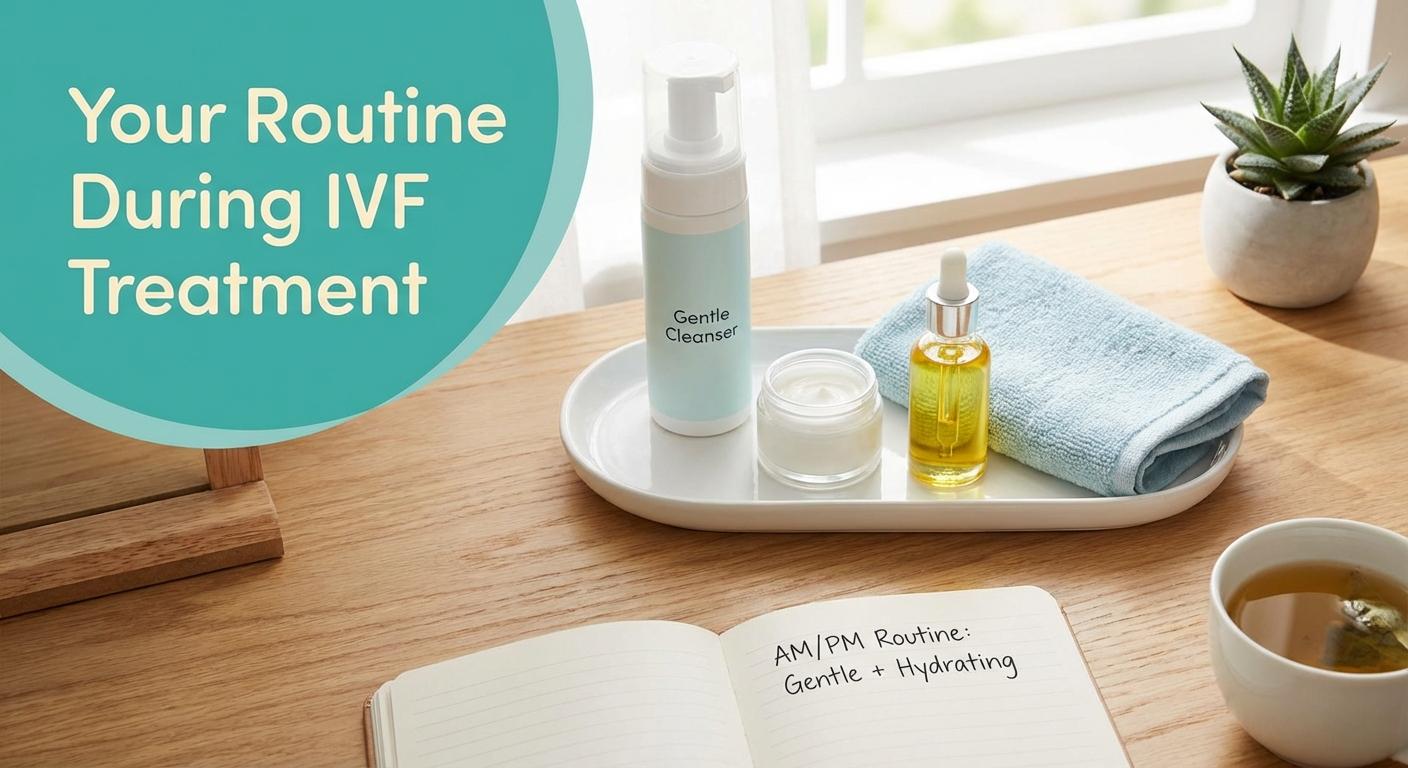
Going through IVF is already a lot. The appointments, the medications, the emotional rollercoaster that nobody fully prepares you for. So when your skin starts acting like it never has before, it can feel like one more thing you did not sign up for. But here is the thing: your skin is responding to massive hormonal shifts, and that is completely normal. What you need right now is not a complicated 12-step routine or a cabinet full of new products. You need simplicity, gentleness, and a little grace for yourself.
Why Your Skin Changes During IVF
The hormones used in IVF treatment, primarily estrogen and progesterone, have direct effects on your skin. Estrogen typically makes skin appear plumper and more hydrated, while progesterone can increase oil production and sometimes trigger breakouts. The specific hormone protocol your doctor prescribes will influence what you see in the mirror.
Some people experience the best skin of their lives during treatment. Others wake up to cystic acne they have not seen since high school. Many notice dryness, sensitivity, or a combination of symptoms that seem to change week to week. Whatever your experience, it is your body responding to the treatment, not a sign that you are doing anything wrong.
According to dermatologists at the American Academy of Dermatology, hormonal fluctuations affect sebum production, skin barrier function, and even how quickly your skin cells turn over. Understanding this helps explain why products that worked perfectly fine before suddenly seem to irritate your skin or do nothing at all.
The Case for Going Minimal
If there was ever a time to strip back your skincare routine, this is it. Your body is already processing a lot of new substances. Your skin barrier may be more reactive than usual. Adding new active ingredients or trying to fix every skin issue that pops up will likely create more problems than it solves.
A gentle, minimal routine does three things well: it cleanses without stripping, it hydrates without overwhelming, and it protects without irritating. That is really all you need right now. Everything else can wait until your body finds its new normal.
This is not about giving up on your skin or letting things slide. It is about being strategic. When your system is under stress, whether physical or emotional, less truly is more. Board-certified dermatologist Dr. Angelo Landriscina frequently emphasizes that simple routines often outperform complicated ones, especially during times of hormonal change.
Morning Routine: Keep It Simple
Your morning routine during IVF treatment can be beautifully uncomplicated. Start with a gentle rinse. If your skin feels oily, use a mild cleanser. If it feels normal or dry, plain water works fine. There is no rule that says you must use a cleanser twice a day.
Follow with a simple moisturizer. Look for something fragrance-free and designed for sensitive skin. Ingredients like ceramides, glycerin, and hyaluronic acid are generally well-tolerated and help maintain your skin barrier without causing issues. Brands like CeraVe, Vanicream, and La Roche-Posay Toleriane have solid options that will not break the bank.
Sunscreen is non-negotiable. Some fertility medications can make your skin more photosensitive, meaning you are more likely to burn or develop hyperpigmentation. A mineral sunscreen with zinc oxide tends to be gentler than chemical filters and sits well under makeup if you wear it. Apply it as your last skincare step before leaving the house.
Evening Routine: Cleanse and Restore
Evenings are for removing the day and letting your skin breathe. If you wear makeup or sunscreen (and you should be wearing sunscreen), double cleansing is helpful. Start with an oil-based cleanser or micellar water to dissolve makeup, then follow with your gentle cleanser to clear any residue.
After cleansing, apply your moisturizer while your skin is still slightly damp. This helps lock in hydration. If your skin feels particularly dry or tight, you can layer a few drops of a simple oil like squalane or jojoba underneath your moisturizer. These oils are generally non-comedogenic and work with most skin types.
That is really the core of it. Cleanse, moisturize, sleep. Your skin does most of its repair work overnight, and a heavy routine can actually interfere with that process.
What to Avoid Right Now
This is where having a gentle approach matters most. Certain ingredients and practices that are normally fine can become problematic during fertility treatment.
Retinoids are the big one. While topical retinoids have not been definitively linked to birth defects in humans, most reproductive endocrinologists recommend avoiding them during IVF and early pregnancy. The risk is not worth taking when safer options exist. This includes prescription tretinoin, adapalene, and over-the-counter retinol products.
High-strength chemical exfoliants should also take a back seat. While a gentle AHA toner might be fine for some people, this is not the time to experiment with strong peels or high-concentration serums. If you are experiencing breakouts, talk to your doctor before reaching for salicylic acid or benzoyl peroxide. Low concentrations of BHA are generally considered safe, but it is worth having the conversation.
Essential oils and heavily fragranced products can irritate sensitized skin. Even if lavender or tea tree has worked for you before, your skin may react differently now. Stick to fragrance-free formulas when possible.
Dealing With Breakouts During Treatment
Hormonal breakouts during IVF are frustrating because they do not respond to the usual tricks. You cannot just dry them out or exfoliate them away. They are coming from inside, driven by the medication protocols that are helping you build your family.
The best approach is gentle management rather than aggressive treatment. Keep the affected areas clean but do not over-wash. Use a light, non-comedogenic moisturizer even on oily or acne-prone skin, because dehydrated skin often produces more oil. If you need spot treatment, hydrocolloid patches can help flatten active pimples without introducing potentially problematic ingredients.
For persistent or severe acne, talk to both your dermatologist and your fertility doctor. There are pregnancy-safe options like azelaic acid that might be appropriate for your situation. Never assume a product is safe just because it is marketed as natural or available without prescription.
Managing Dry, Sensitive Skin
If your skin has gone in the opposite direction, becoming dry, flaky, or reactive, your focus should be on barrier repair. A compromised skin barrier lets moisture escape and irritants enter, creating a cycle of dryness and sensitivity.
Layer your hydration. Start with a hydrating serum or essence, then seal it with a richer cream. At night, you can add an occlusive like Aquaphor or CeraVe Healing Ointment to the driest areas. Slugging, as this technique is sometimes called, creates a protective layer that prevents overnight moisture loss.
Avoid hot water on your face. Lukewarm is ideal. Hot water strips natural oils and can worsen dryness. Also reconsider any physical exfoliation you have been doing. Scrubs and brushes can damage an already vulnerable barrier.
The Stress Connection
Stress directly affects your skin. IVF is stressful. Waiting is stressful. The two-week wait is its own special category of stressful. And stress triggers cortisol release, which can increase oil production, trigger breakouts, and slow wound healing.
Your skincare routine can become a small act of self-care during this time. Not because you need to fix your skin, but because those few minutes morning and night can be grounding. The gentle ritual of cleansing your face, applying moisturizer, taking a moment to breathe. That has value beyond what it does for your pores.
If skincare feels like another obligation right now, that is okay too. Pare it down to the absolute basics. Cleanse when you need to, moisturize if you remember, and wear sunscreen when you go outside. Your skin will survive a simplified routine. So will you.
Products Worth Considering
You do not need to buy anything new for IVF. Truly. But if you are looking for gentle, reliable products that work well during hormonal fluctuations, here are some categories to consider:
Cleansers: CeraVe Hydrating Cleanser, Vanicream Gentle Facial Cleanser, La Roche-Posay Toleriane Hydrating Gentle Cleanser. All fragrance-free, all gentle enough for daily use.
Moisturizers: Vanicream Daily Facial Moisturizer, CeraVe Moisturizing Cream, First Aid Beauty Ultra Repair Cream. These provide hydration without common irritants.
Sunscreens: EltaMD UV Clear, La Roche-Posay Anthelios Mineral, CeraVe Hydrating Mineral Sunscreen. Mineral filters tend to be gentler on sensitized skin.
Check the EWG Skin Deep database if you want to research specific ingredients in products you are considering. They rate products based on ingredient safety, which can be reassuring during a time when you are being careful about what goes on and in your body.
A Word About Pregnancy-Safe Skincare
Many people going through IVF start thinking about pregnancy-safe skincare early, and that makes sense. If treatment is successful, you want a routine that can carry you through the first trimester without needing major changes.
The routine outlined here is already pregnancy-compatible. By avoiding retinoids, limiting strong actives, and focusing on gentle basics, you are building habits that will serve you well regardless of outcome. This is not about being pessimistic or overly optimistic. It is about removing one more decision from your plate.
For more detailed information about skincare during pregnancy, Dr. Lindsey Zubritsky on Instagram has excellent breakdowns of what is safe and what to avoid.
Be Patient With Your Skin
Your skin is doing its best with a lot of change happening beneath the surface. Some days it will cooperate. Other days you will wonder whose face you are looking at. This is temporary, even when it does not feel that way.
Give new products at least two weeks before deciding they are not working. Give your skin permission to be imperfect while you are going through this. And give yourself credit for showing up, for taking care of your body, for handling something difficult with as much grace as you can muster.
The goal is not perfect skin during IVF. The goal is healthy, supported skin that does not add to your stress. A simple routine accomplishes that beautifully. And when treatment is over, whether you are moving into pregnancy or taking a different path, you will have established gentle habits that serve you well no matter what comes next.