
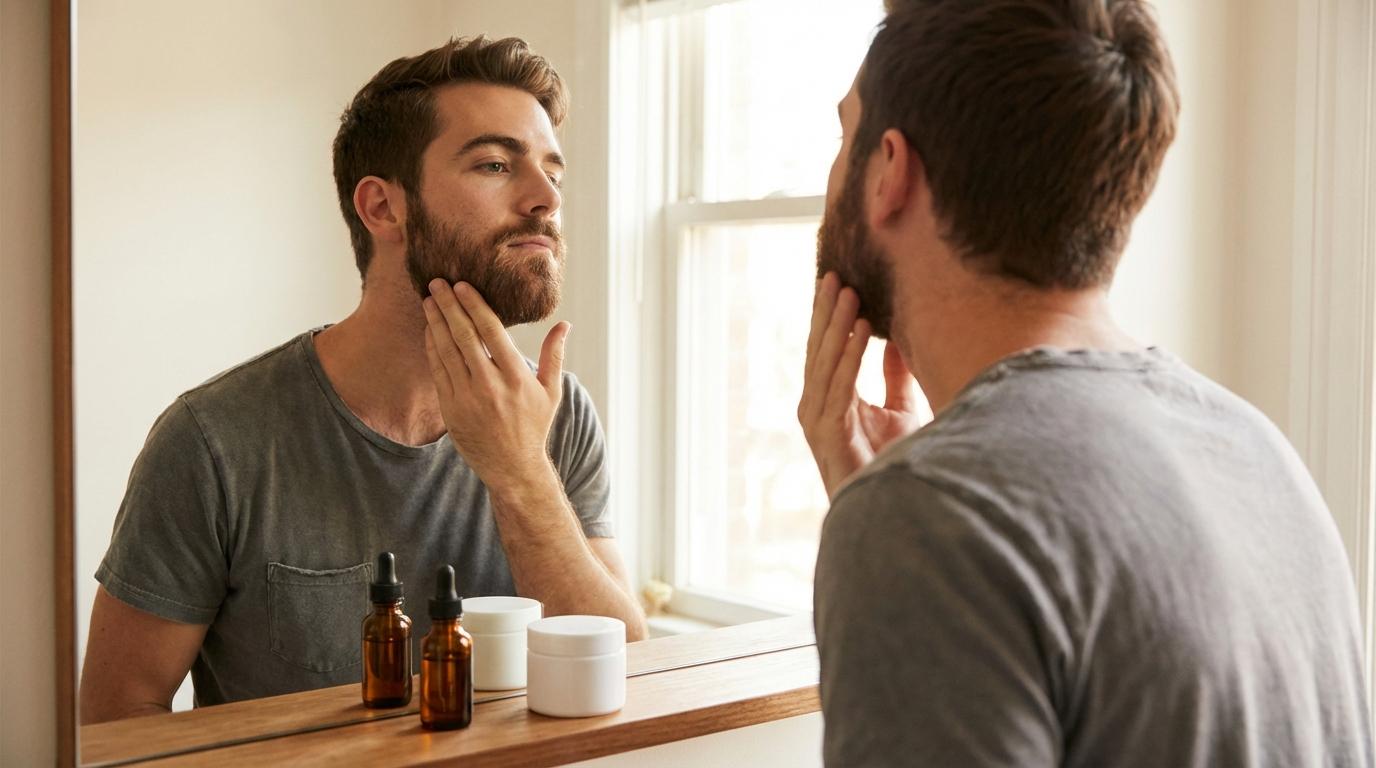
Here’s something that trips people up: having a beard doesn’t mean you get to skip skincare. If anything, it means you need to be more intentional about it. That facial hair is literally covering up skin that still needs cleansing, moisturizing, and protection. And because it’s hidden, problems can sneak up on you until they’re seriously annoying to fix.
I get it. When half your face is covered in hair, it feels like skincare becomes optional territory. But the reality is that beard hairs trap sebum, dead skin cells, and environmental grime right against your skin. Without proper care, you’re setting yourself up for itching, flaking, breakouts, and that dreaded “beardruff” that shows up on dark shirts at the worst possible moments.
Why the Skin Under Your Beard Needs Special Attention
Let’s talk about what’s actually happening under there. Your facial skin produces sebum (natural oil) whether there’s hair covering it or not. When you’re clean-shaven, that oil gets distributed across your skin surface and removed during regular cleansing. With a beard, though, those hairs act like little wicks that pull sebum away from your skin while also trapping it close to the surface.
This creates a paradox: the skin underneath can become dry and flaky while the hair itself gets oily. Add in the dead skin cells that naturally shed every day, and you’ve got a recipe for buildup. According to the American Academy of Dermatology, this is exactly why beard dandruff is so common. It’s not a hygiene failure. It’s just what happens when the skin’s normal shedding process gets interrupted.
Then there’s the issue of blocked follicles. Every hair on your face grows from a follicle, and each follicle can become clogged with oil, dead cells, and bacteria. When that happens, you might notice small bumps, redness, or full-on breakouts under your beard. And because you can’t see the skin clearly, these issues often progress before you even realize they’re there. Maintaining a healthy skin barrier becomes especially important when facial hair is involved.
The Daily Routine That Actually Works
Building a skincare routine when you have a beard isn’t complicated, but it does require some adjustments to how you apply products. The goal is to get your cleansers and treatments through the hair and onto the skin where they actually do something.
Morning: Start with a gentle facial cleanser. Work it through your beard with your fingertips, really massaging the product down to the skin beneath. This isn’t a quick splash and rinse situation. You need about 30 to 60 seconds of actual contact time to dissolve the overnight buildup of oil and bacteria. Rinse thoroughly because residue left in your beard will dry out the hair and irritate the skin.
After cleansing, apply a lightweight moisturizer to your bare skin areas (forehead, nose, cheeks above the beard line). For the bearded area, beard oil is your friend. A few drops worked through to the skin provides hydration without making your face feel greasy. Look for oils like argan or jojoba, which are non-comedogenic (they won’t clog pores).
Don’t skip sunscreen. Yes, even on the bearded parts. UV rays absolutely penetrate through beard hair, especially if yours isn’t particularly thick. A lightweight SPF 30 or higher applied to all exposed areas, with a bit worked through thinner beard sections, provides protection you’ll appreciate in the long run.
Evening: Cleanse again to remove the day’s accumulation. If you’re wearing sunscreen or have been sweating, consider a double cleanse: first with an oil-based cleanser to break down products and sebum, then with your regular water-based cleanser. Follow with your usual nighttime products on non-bearded areas and another application of beard oil if your skin feels dry.
Weekly Care for Preventing Problems
Daily cleansing handles surface-level maintenance, but you’ll want to incorporate exfoliation two to three times per week to prevent dead skin buildup. Chemical exfoliants like salicylic acid or glycolic acid work particularly well because they don’t require physical scrubbing through hair.
Apply a leave-on exfoliant (like a BHA toner) directly to the skin under your beard using your fingertips. Let it sit for a few minutes before applying your other products. This helps dissolve the “glue” that holds dead skin cells together, preventing the flaky buildup that leads to beardruff.
Physical exfoliation has its place too. A boar bristle brush run through your beard will help lift dead skin from the surface so it can be washed away. Do this before cleansing, when your beard is dry. The brushing action also helps distribute natural oils and keeps your beard looking groomed rather than scraggly.
Common Beard Skin Issues and How to Handle Them
Beardruff (beard dandruff): That annoying flaking is usually caused by seborrheic dermatitis, which is the same condition that causes scalp dandruff. According to WebMD, it’s often triggered by an overgrowth of yeast called Malassezia that naturally lives on your skin. The fix? Use a dandruff shampoo containing ketoconazole, selenium sulfide, or pyrithione zinc on your beard a few times per week. Apply to dry skin, let it sit for five minutes, then rinse in the shower. Follow with beard oil to counteract any drying.
Under-beard acne: Breakouts beneath facial hair happen when follicles get clogged with oil and dead cells. The treatment approach is similar to regular acne: cleanse with a salicylic acid face wash, avoid touching your beard throughout the day (your hands transfer bacteria), and consider a benzoyl peroxide spot treatment for active breakouts. Just be aware that benzoyl peroxide can bleach facial hair, so use it sparingly and only where needed.
Folliculitis: These small, red, sometimes pus-filled bumps occur when hair follicles get infected, usually by Staphylococcus bacteria. Mild cases often respond to improved hygiene and warm compresses. For persistent folliculitis, the Yale Medicine dermatology team recommends seeing a professional, as you might need a topical or oral antibiotic to clear the infection.
Razor bumps (pseudofolliculitis barbae): If you trim your beard or shave the edges, you might deal with ingrown hairs where cut ends curl back into the skin. This is especially common in people with curly or coily hair. Prevention involves always shaving with the grain (never against), using a single-blade razor or electric trimmer, and exfoliating regularly to prevent dead skin from trapping hairs beneath the surface.
Balancing Care for Bearded and Bare Skin
One of the trickier aspects of having a beard is that you’re essentially dealing with two different skin environments on the same face. Your forehead and nose might be oily, the cheeks under your beard might be dry, and your chin could be breaking out under all that hair.
The solution is to treat each zone according to its needs. Use a mattifying moisturizer on your T-zone if it tends toward oily. Apply richer hydration to any dry patches. Use beard oil specifically on the bearded areas rather than trying to extend your regular face moisturizer into hair-covered territory (most face moisturizers aren’t formulated to penetrate through hair).
Pay attention to the transition zones where your beard meets bare skin. These edges can get especially irritated, particularly if you’re regularly shaving or trimming to maintain a clean line. A thin layer of your regular moisturizer along these boundaries helps keep the skin calm and prevents the rough, patchy appearance that can develop there.
Product Selection Tips
When choosing products for bearded skin, ingredient awareness matters. Here’s what to look for and what to skip:
- Cleansers: Go gentle. Harsh sulfates will strip both your skin and beard hair, leaving everything dry and irritated. Look for terms like “sulfate-free” or “gentle” on the label.
- Beard oils: Pure oils like jojoba, argan, grapeseed, or squalane work well. Avoid heavily fragranced products if you have sensitive skin. A few drops is all you need.
- Moisturizers: For bare skin areas, use whatever suits your skin type. For under the beard, oil-based products penetrate better than water-based lotions.
- Exfoliants: Chemical over physical. A BHA (salicylic acid) toner or serum can work its way through hair. Physical scrubs just get stuck in your beard and make a mess.
- Sunscreen: Lightweight, non-greasy formulas are easier to work through facial hair. Gel or fluid textures spread better than thick creams.
What Your Diet Has to Do With It
This might seem unrelated, but the health of your facial skin and hair is connected to what you eat. Protein provides the building blocks for hair growth. B vitamins (especially B5, B3, and B9) support skin health and hair follicle function. Omega-3 fatty acids help maintain the skin’s natural oil barrier.
You don’t need supplements if you’re eating a reasonably balanced diet. Lean meats, eggs, nuts, leafy greens, and fatty fish cover most of what your beard and skin need to thrive. Staying hydrated matters too. Dehydration shows up in dry, flaky skin pretty quickly.
When to See a Dermatologist
Home care handles most beard-related skin issues, but some situations need professional attention. If you’re dealing with persistent flaking that doesn’t respond to dandruff shampoos, painful bumps or cysts under your beard, spreading redness or infection, or hair loss patches within your beard, it’s time to book an appointment. A dermatologist can properly diagnose conditions like severe seborrheic dermatitis, bacterial folliculitis, or fungal infections that need prescription treatment.
The skin under your beard isn’t out of sight, out of mind territory. It’s still your face, still subject to the same environmental stressors and biological processes as the rest of your skin. Taking a few extra minutes each day to properly cleanse, moisturize, and protect that hidden skin pays off in comfort, appearance, and avoiding the frustrating cycle of itch, flake, and breakout that makes beard life harder than it needs to be.