
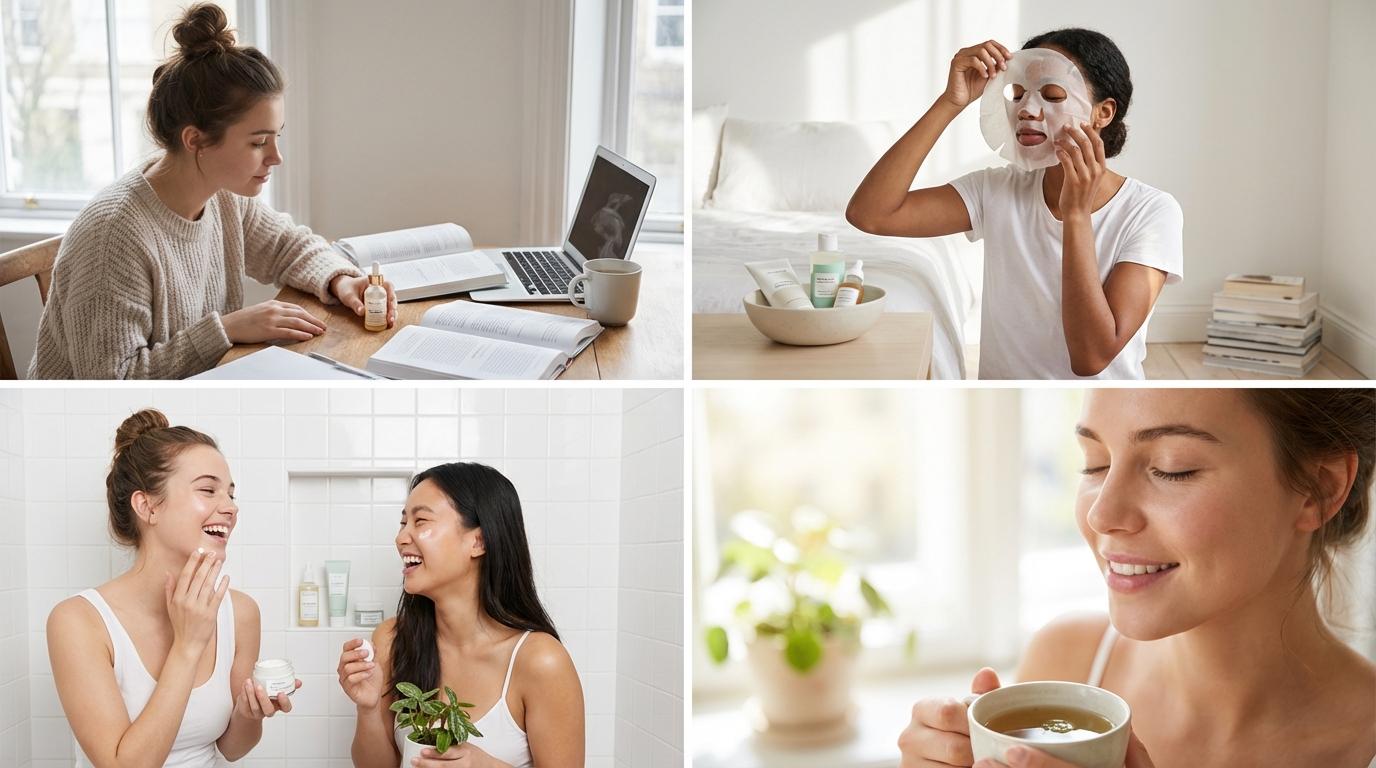
Between qualifying exams, teaching responsibilities, and a dissertation that haunts your dreams, skincare probably ranks somewhere between “reorganizing your bookshelf” and “learning to cook” on your priority list. I get it. I was there.
But here is the thing: your skin is staging a protest. The stress breakouts, the under-eye circles that concealer cannot touch, the general grayness that has settled over your face. Grad school is rough on skin, and ignoring it just makes everything feel worse.
The good news? An effective routine does not require time or money you do not have.
Why Grad School Wrecks Your Skin
Chronic stress does real things to your body. Cortisol, your stress hormone, increases oil production, triggers inflammation, and slows down your skin’s ability to heal and regenerate. Research in the Journal of Investigative Dermatology confirms that psychological stress impairs skin barrier function.
Add to that:
- Irregular sleep schedules (or no sleep)
- Coffee as a food group
- Sitting under fluorescent library lights for 12 hours
- Forgetting to drink water because you are hyperfocused
- Eating whatever is fast and cheap
Your skin is basically a stress barometer, and grad school keeps the needle pinned at maximum.
The Budget Reality
Graduate stipends are not known for their generosity. You cannot drop $80 on a serum, and you should not have to. Effective skincare does not require expensive products.
The American Academy of Dermatology confirms that basic, affordable products can be just as effective as luxury brands. What matters is consistency and choosing the right ingredients, not the price tag.
Drugstore brands like CeraVe, Cetaphil, Vanicream, and The Ordinary offer solid formulations at student-friendly prices. Generic store brands are often identical to name brands.
The Three-Product Minimum
When you are running on four hours of sleep and have a committee meeting in 20 minutes, you need a routine you will actually do. Here is the bare minimum that still works:
1. Gentle Cleanser
Something that removes sunscreen and daily grime without stripping your skin. CeraVe Hydrating Cleanser or Vanicream Gentle Facial Cleanser both cost under $15 and last for months.
2. Moisturizer
Your stressed skin needs hydration. Look for ceramides, hyaluronic acid, or glycerin in the formula. CeraVe PM or Cetaphil Daily Hydrating Lotion work well. Apply to damp skin for better absorption.
3. Sunscreen
Yes, even if you only see daylight walking between buildings. UV damage accumulates, and you do not want to finish your PhD looking ten years older than you are. Any SPF 30 or higher works.
That is it. Three products, under two minutes, less than $30 total. You can build from here when you have bandwidth, but this foundation protects your skin through the worst of it.
When You Have Five Extra Minutes
Some days are better than others. On days when you are not drowning, consider adding:
A treatment product: The Ordinary has affordable options. Their niacinamide serum (around $6) helps with stress breakouts. Their hyaluronic acid serum adds hydration. Pick one based on your biggest concern.
Eye cream: Optional, but if your dark circles are becoming a personality trait, a simple eye cream with caffeine can help. The Ordinary Caffeine Solution is under $10.
Stress Breakout Emergency Protocol
Qualifying exams next week? Major deadline? Expect your skin to react. Here is what to do:
- Do not pick. I know. But picking turns a three-day pimple into a two-week wound.
- Spot treat with benzoyl peroxide (2.5% is just as effective as higher percentages with less irritation)
- Hydrocolloid patches overnight can flatten active breakouts
- Keep your routine simple; now is not the time to try new products
If you are prone to stress acne, keeping a benzoyl peroxide product on hand is worth it. Neutrogena On-the-Spot is cheap and effective.
Sleep Deprivation Damage Control
When you have slept four hours for the third night in a row, your skin shows it. You cannot fake sleep, but you can minimize the evidence:
- Cold water on your face in the morning constricts blood vessels and reduces puffiness
- Caffeine-based eye products help temporarily with dark circles
- Extra moisturizer helps with the dehydrated look
- Drinking water (set a reminder if you have to)
The Sleep Foundation research shows that even one night of poor sleep affects skin appearance. Multiple nights compound the effect. Do what you can to protect sleep, even during crunch times.
The Library Survival Kit
Keep a small bag in your backpack with:
- A small moisturizer or facial mist (dry library air is brutal)
- Lip balm with SPF
- Hand cream (all that typing and page-turning)
- A couple of hydrocolloid patches for emergencies
- A refillable water bottle (hydration from the inside)
Reapplying moisturizer mid-day over your sunscreen is fine. Your skin under those fluorescent lights is probably crying for it.
What to Skip
You do not need:
- A ten-step routine (you will abandon it)
- Expensive products (formulation matters more than brand)
- Complicated actives like strong retinols (stressed skin is sensitive skin)
- Face masks (nice but not essential)
- Guilt about imperfect skincare (you are getting a graduate degree)
After You Defend
Someday you will finish. Your stress levels will drop. Your skin will calm down. You might even have disposable income for the first time in years.
When that day comes, you can think about adding more to your routine. Retinoids, vitamin C, all the treatments you have been too exhausted to maintain. Your skin will be in better shape because you kept up the basics.
For now, cleanser, moisturizer, sunscreen. Under two minutes. Under $30. You can do this. And when you walk across that stage, your skin will have made it through grad school too.