
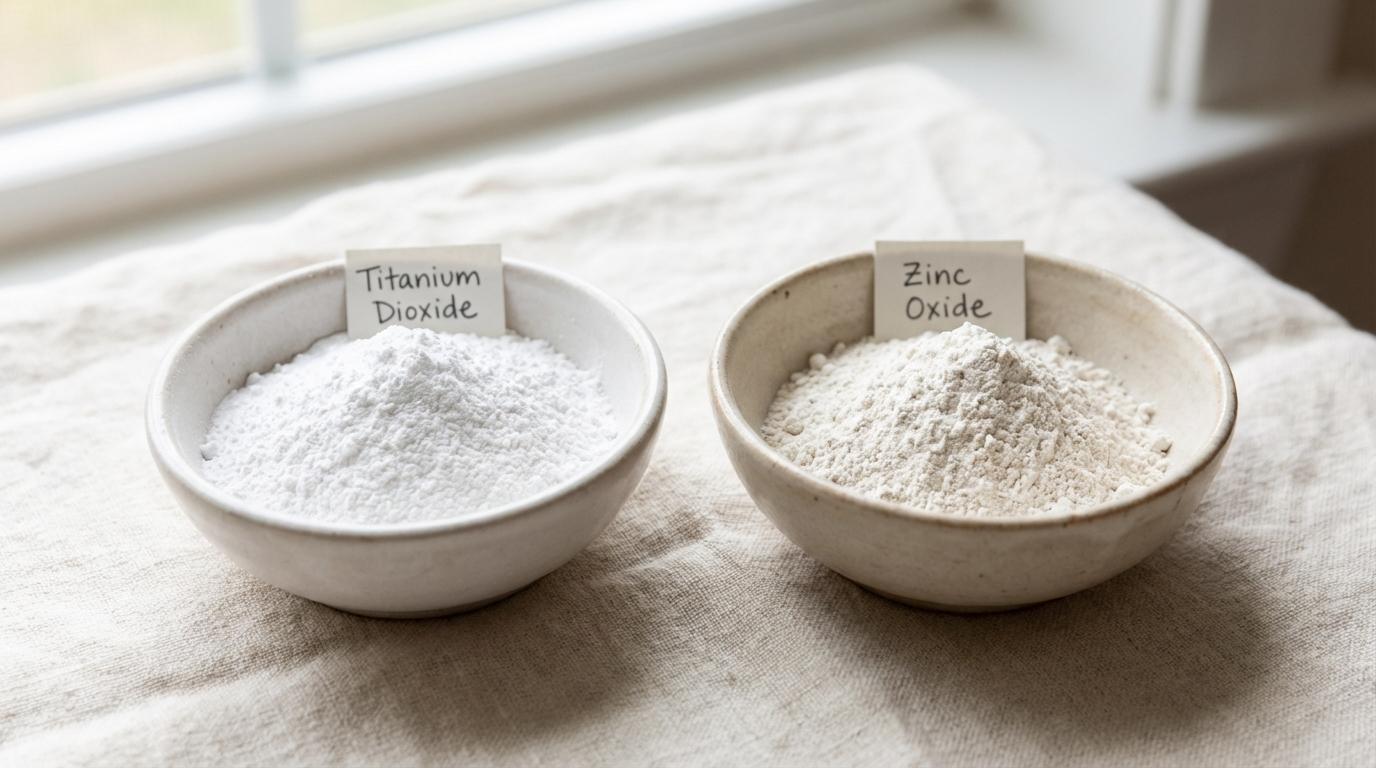
Picking a mineral sunscreen isn’t as simple as grabbing whatever’s on sale. Titanium dioxide and zinc oxide are both mineral filters, but they protect your skin in completely different ways. Understanding this difference is the key to getting actual protection instead of just hoping your SPF works.
The UV Protection Breakdown
UV rays come in two flavors that matter for your skin: UVA and UVB. UVB causes sunburn. UVA penetrates deeper and causes aging, hyperpigmentation, and long-term damage. You need protection from both.
Zinc oxide covers the entire UV spectrum. It blocks UVA1, UVA2, and UVB rays. This is why dermatologists consider it the gold standard for broad-spectrum protection. One ingredient, complete coverage.
Titanium dioxide is a different story. It excels at blocking UVB rays and short-wave UVA rays. But it falls short on UVA1, those longer wavelengths that penetrate deep into your dermis. Research published in the Journal of the American Academy of Dermatology found that sunscreens with zinc oxide provided significantly higher UVA protection compared to those containing only titanium dioxide.
Translation: titanium dioxide alone won’t fully protect you from aging and skin damage. Zinc oxide will.
SPF Efficiency Numbers
Titanium dioxide is technically more efficient at producing SPF per percentage used. You get about 2.6 SPF points for every 1% of titanium dioxide in a formula. Zinc oxide delivers roughly 1.4 SPF points per 1%.
But SPF only measures UVB protection. A sunscreen can have SPF 50 and still let UVA rays through if the formula isn’t balanced correctly. This is why understanding the difference between physical and chemical sunscreens matters when you’re shopping.
The White Cast Reality
Both minerals leave a white cast. Anyone who tells you otherwise is selling you something.
That said, titanium dioxide typically leaves less of a visible film than zinc oxide. It’s lighter on the skin and blends more easily. This is why many cosmetically elegant mineral sunscreens rely heavily on titanium dioxide.
Zinc oxide, especially at effective concentrations (15-25%), can be chalky and obvious on medium to dark skin tones. Some brands address this with tinted formulas or micronized particles. The tradeoff: better protection, worse aesthetics.
Micronized and nano-sized particles reduce white cast for both ingredients. The FDA considers these safe for topical use. Studies confirm that nanoparticles don’t penetrate healthy skin beyond the outermost layers.
Skin Type Considerations
Zinc oxide has anti-inflammatory properties. It’s the only sunscreen active approved for babies under six months. If your skin is sensitive, reactive, or prone to redness, zinc oxide is the better choice.
It’s also non-comedogenic. Despite being thicker on the skin, it won’t clog pores. Acne-prone skin often does better with zinc-based formulas than chemical sunscreens containing potential irritants.
Titanium dioxide works well if your main concerns are a lightweight feel and quick absorption. It’s less soothing than zinc but still gentler than most chemical filters.
What Most Sunscreens Actually Use
Smart formulators combine both. Titanium dioxide handles UVB efficiently while zinc oxide fills in the UVA gaps. This combination gives you broad-spectrum protection without needing massive concentrations of either ingredient.
Check your sunscreen’s active ingredients panel. A formula with both titanium dioxide AND zinc oxide is usually better than one with just titanium dioxide. Pure zinc oxide formulas (around 20-25%) also provide excellent coverage.
Titanium dioxide as the only active? That’s a red flag for UVA protection. You might avoid sunburn but still accumulate sun damage.
Price Doesn’t Always Equal Quality
Some budget sunscreens use well-balanced mineral combinations. Some expensive ones rely too heavily on titanium dioxide for cosmetic elegance. You can find effective mineral sunscreens at drugstore prices if you know what to look for on the label.
The numbers to watch: look for zinc oxide at 10% or higher, ideally 15-20% for primary protection. Titanium dioxide at 5-15% works as a solid supporting player.
Which One Should You Choose
If you only have to pick one, choose zinc oxide. Period. It provides complete UV coverage and works for sensitive skin.
Choose titanium dioxide dominant formulas only if:
- You have very light skin and minimal sun exposure
- Cosmetic elegance is your top priority over maximum protection
- You’re layering under makeup and need something lightweight
Choose zinc oxide dominant formulas if:
- You want maximum UVA protection
- Your skin is sensitive, reactive, or acne-prone
- You spend significant time outdoors
- You’re concerned about aging and hyperpigmentation
Choose a combination formula if you want balanced protection with better wearability.
Reading Labels Like a Pro
Flip the sunscreen over. Look at Active Ingredients. This tells you exactly what’s protecting your skin.
Zinc Oxide 15%, Titanium Dioxide 7% = solid combination, good protection.
Titanium Dioxide 10% alone = UVB protection only, skip it.
Zinc Oxide 22% = excellent broad-spectrum coverage, might be thick.
The percentages matter. A sunscreen listing zinc oxide at 2% isn’t providing meaningful protection. That’s a marketing ingredient, not a functional one.
Making Your Final Decision
Mineral sunscreens work by sitting on your skin and reflecting UV rays. Both titanium dioxide and zinc oxide do this job, just not equally well across all wavelengths.
For daily wear with limited sun exposure, a combination formula gives you protection without the thick, white-cast drawbacks of high-concentration zinc. For beach days, outdoor activities, or if you’re serious about preventing sun damage and aging, zinc oxide should be your primary filter.
Don’t overthink it. Read the active ingredients, check the percentages, and pick based on your actual needs. Your skin will thank you for skipping the guesswork and choosing informed protection.