
Every winter, people who rarely deal with breakouts suddenly find themselves with unexpected acne. It seems counterintuitive. Isn’t oily skin and humidity supposed to cause breakouts? Cold weather brings its own challenges, and understanding why can help you care for your skin with more gentleness during these months.
Indoor Heating Creates Desert Conditions
When you turn on your heater, you’re essentially removing moisture from the air inside your home. Humidity levels can drop to 10-20% indoors during winter, which is lower than most deserts. Your skin feels this immediately, even if you don’t consciously notice it at first.
Low humidity pulls water from your skin faster than it can replenish. This transepidermal water loss leaves your barrier stressed and vulnerable. When your skin barrier weakens, it can’t regulate sebum production properly, and it becomes more susceptible to bacterial imbalance. Both contribute to breakouts.
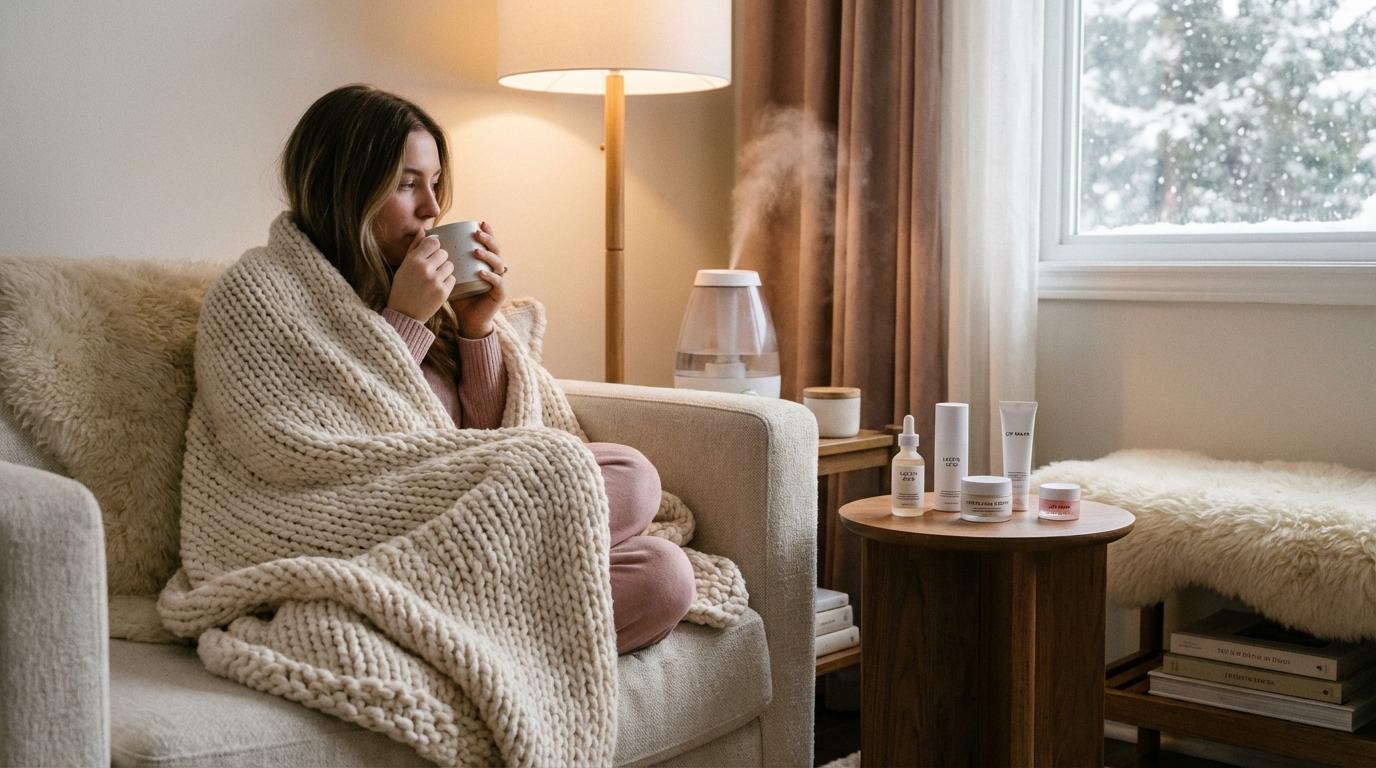
The solution isn’t necessarily humidifying your entire home, though that helps. A small humidifier in your bedroom where you spend hours sleeping can make a meaningful difference. Aim for 40-50% humidity. Your skin, hair, and respiratory system will all benefit.
Barrier Damage Is the Real Culprit
Your skin barrier is a protective layer made of lipids and dead skin cells that keeps moisture in and irritants out. Winter conditions assault this barrier constantly. Cold wind outdoors, dry heat indoors, and the constant transition between the two create stress your skin wasn’t designed to handle continuously.
A compromised barrier allows bacteria to penetrate more easily and triggers inflammation that manifests as acne. You might notice that winter breakouts look different from summer ones. They’re often more inflamed, redder, and slower to heal. That’s barrier damage at work.
Supporting your barrier means simplifying your routine, not adding more products. Gentle cleansing becomes essential. Harsh cleansers strip away the lipids your barrier desperately needs to stay intact. A creamy, fragrance-free cleanser removes dirt without removing protection.
I find that the products which felt fine in warmer months suddenly feel irritating in winter. If your skin stings when you apply something that never bothered you before, that’s a sign your barrier needs support, not more active ingredients.
The Heavy Moisturizer Trap
When skin feels dry, the natural response is reaching for something thick and rich. But this well-meaning instinct can backfire for acne-prone skin. Heavy creams often contain occlusive ingredients that sit on top of skin, trapping sebum and bacteria underneath.
The answer isn’t avoiding moisture. It’s being thoughtful about what kind of moisture you’re adding. Layering lightweight hydrating products often works better than one heavy cream. A hyaluronic acid serum under a moderate moisturizer delivers hydration without suffocation.
Pay attention to ingredients lists. Products marketed for dry winter skin sometimes contain comedogenic oils or waxes that feel luxurious but clog pores. Dimethicone-heavy formulas might give smooth texture but prevent your skin from breathing naturally.
Your skin knows what it needs. If a product makes your face feel coated or suffocated, trust that instinct even if the product promises winter relief. Comfort shouldn’t come at the cost of clarity.
Gentle Approaches That Help
Consider switching to a hydrating cleanser rather than a foaming one. Cream cleansers or micellar water remove impurities without stripping. You can always double cleanse at night if you need more removal power, using something oil-based first.
Niacinamide is a calming ingredient that supports barrier function while regulating oil. Unlike harsher acne-fighting ingredients, it works with your skin instead of against it. A simple niacinamide serum can help with both winter dryness and breakout prevention.
If you use retinoids, you might need to reduce frequency during winter months. Every other night or even twice weekly can maintain benefits while allowing your barrier to recover between applications. There’s no prize for pushing through irritation.
What to Pause in Winter
Strong exfoliating acids can wait until conditions improve. If your barrier is already struggling, adding chemical exfoliation is like sanding raw wood. It creates more damage than benefit. A healthy lipid barrier handles exfoliation well. A compromised one does not.
Physical scrubs are even more problematic in winter. Microabrasions on already-stressed skin invite bacteria and inflammation. If you miss exfoliation, a very gentle enzyme mask once weekly provides some cellular turnover without the aggression.
Alcohol-based toners and astringents have no place in a winter routine for acne-prone skin. They create the illusion of clean skin while actually worsening the conditions that lead to breakouts.
Protecting Skin Outdoors
Cold wind is hard on skin. A barrier-protecting cream on exposed areas before going outside provides a physical shield. Sunscreen remains necessary even in winter. Snow reflects UV rays, and sun damage weakens your barrier further.
Covering your face with a scarf feels protective, but fabric rubbing against skin can cause friction breakouts. If you need face coverage in extreme cold, choose soft, breathable fabrics and wash them frequently. The warmth and moisture trapped between your skin and a scarf creates ideal conditions for bacterial growth.
Simplicity Heals
Winter skincare works best when you do less, not more. Your skin is already dealing with environmental stress. Adding a complex routine of multiple actives creates additional burden.
A gentle cleanser, a hydrating serum, a supportive moisturizer, and sunscreen. That’s often enough for winter. If breakouts appear despite simplification, address them with spot treatments rather than changing your whole approach.
Trust that your skin wants to find balance. Sometimes the kindest thing we can do is step back and let it heal with minimal interference. Winter asks us to slow down in many ways. Perhaps our skin routines should follow that same rhythm.