
Airplane cabins typically maintain humidity levels between 10 and 20 percent. For context, the Sahara Desert averages around 25 percent. Your skin notices this difference within hours of takeoff, and understanding why helps you pack smarter.
I used to overpack skincare for trips, cramming my entire routine into tiny containers. After studying what actually happens to skin during travel, I learned that less truly is more. But which products matter? Let me break down the science.
Why Airplane Skin Behaves Differently
Low humidity causes transepidermal water loss (TEWL), which is the technical term for moisture escaping through your skin barrier. Research published in the British Journal of Dermatology shows that TEWL increases significantly in low-humidity environments. Your skin compensates by either producing excess oil or becoming flaky and tight.
Cabin pressure also affects circulation. Blood flow to your extremities decreases slightly at cruising altitude. This means less oxygen and nutrients reaching your skin cells during the flight. The result? That puffy, dull look many people notice after landing.
Knowing this, your travel skincare should focus on two goals: maintaining hydration and supporting barrier function. Everything else becomes secondary.
TSA-Friendly Essentials: The Must-Pack List
The 3.4-ounce (100ml) liquid limit forces decisions. Here is what deserves the space:
- Gentle cleanser: A micellar water does double duty as makeup remover and cleanser without needing water access. Look for versions with glycerin, which adds moisture while cleaning.
- Hydrating serum: Hyaluronic acid pulls moisture from the environment into your skin. In dry airplane air, pair it with an occlusive layer or it may actually draw water out of deeper skin layers. Studies on hyaluronic acid confirm its effectiveness when used correctly.
- Rich moisturizer: Skip your light daily lotion. Bring something with ceramides, fatty acids, or squalane. These lipids reinforce your skin barrier and reduce TEWL.
- Sunscreen: UV radiation increases at altitude. Window seats expose you to significant UVA rays, which penetrate glass. A mineral sunscreen with zinc oxide works during flight and at your destination.
What to skip? Toners (use micellar water instead), separate eye cream (your moisturizer works fine), and any treatment products like retinol or acids. A few days without actives will not set back your progress, and stressed travel skin handles them poorly anyway.
Multi-Use Product Strategies
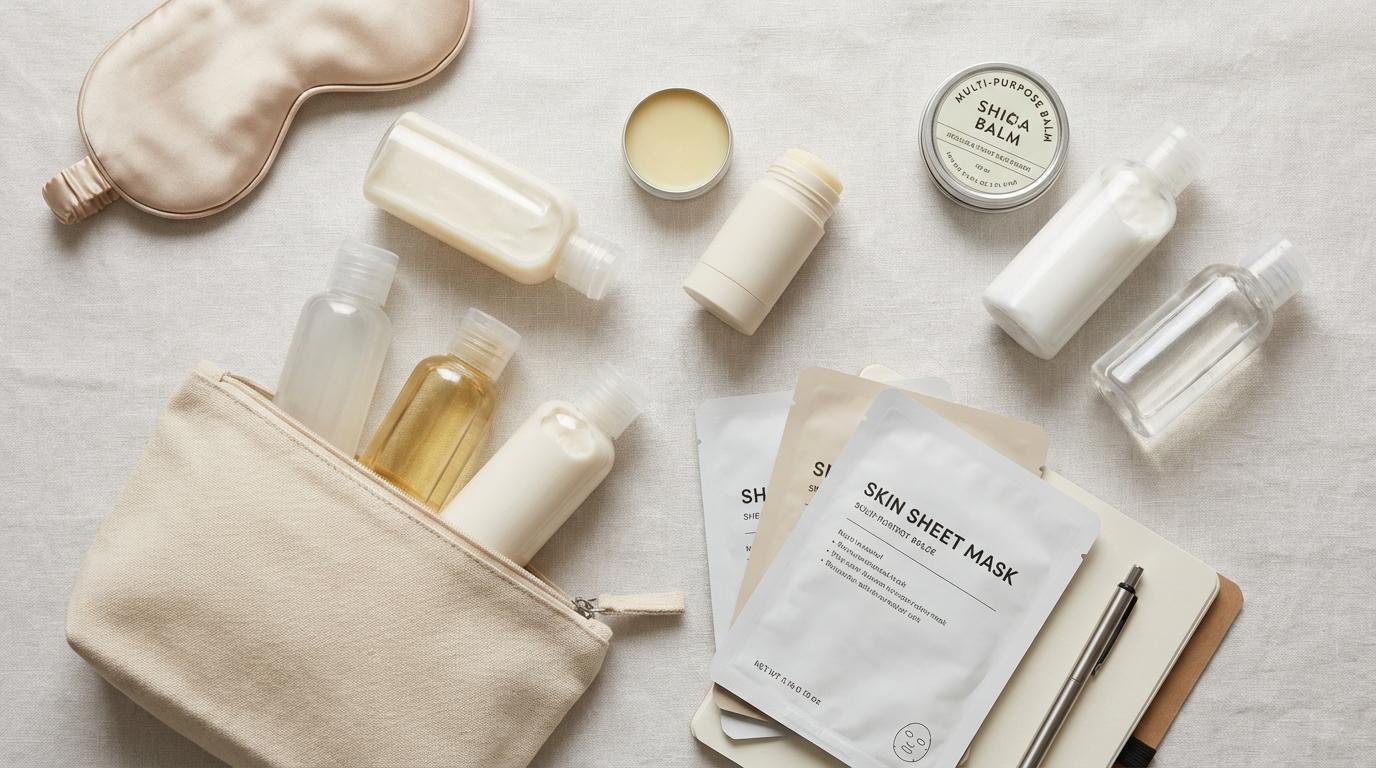
The smartest packers think in terms of function, not product category. One product serving multiple purposes saves space and weight.
Balms and oils: A good facial oil or balm can moisturize skin, tame flyaways, condition dry cuticles, and soothe chapped lips. Squalane oil is particularly versatile because it is lightweight and skin-identical, meaning your body recognizes it as similar to its own sebum.
Tinted moisturizers with SPF: This single product replaces primer, foundation, and sunscreen. During travel, simplified application means you will actually use it consistently.
Cleansing balms: These remove makeup, sunscreen, and daily grime in one step. The oil-based formula will not dry out already stressed skin.
I also recommend solid skincare bars when possible. Cleansing bars and solid moisturizers do not count toward your liquid limit. Several brands now make concentrated, effective solid formulas that perform as well as their liquid counterparts.
Your In-Flight Routine
Skip the elaborate sheet mask situation you have seen on social media. Those masks can harbor bacteria after hours of wear, and the humectants they contain may backfire in dry cabin air.
A practical in-flight approach:
- Apply a heavy layer of moisturizer before boarding
- Drink water throughout the flight (aim for 8 ounces per hour)
- Avoid alcohol and excessive caffeine, both of which increase dehydration
- If the flight exceeds 6 hours, blot excess oil and reapply moisturizer
- Skip makeup entirely or go minimal to let your skin breathe
The Skin Cancer Foundation recommends applying sunscreen before flights, especially for window seat passengers on longer routes.
Hotel Room Adjustments
Hotel environments present different challenges. Air conditioning and heating systems create artificially dry air. Water hardness varies by location, affecting how products rinse and how skin responds.
A few adaptations help:
Run a hot shower before bed: The steam adds humidity to the room. If the hotel has a humidifier option, use it.
Adjust for water differences: Hard water leaves mineral residue that can irritate skin. If you notice issues, do a final rinse with bottled or filtered water on your face. It sounds excessive, but travelers with sensitive skin often find it makes a noticeable difference.
Simplify even further: Your skin is adjusting to new water, new climate, potentially new time zones affecting your circadian rhythm. This is not the time to introduce new products. Stick with what your skin already knows.
If you are looking for specific product recommendations that pack well, check our routine guides for options at different price points.
The Bottom Line
Travel skincare is not about maintaining your full routine away from home. It is about protecting your skin barrier during environmental stress and not making things worse with overcomplicated steps or products you do not need.
Pack a cleanser, a hydrating serum, a rich moisturizer, and sunscreen. Add one versatile balm or oil. Leave the acids, retinol, and experimental products at home. Your skin will adjust better without them, and you will have more room in your bag for things you actually need.
The science supports simplicity. Your skin barrier function recovers faster when you stop challenging it with multiple active ingredients during already stressful conditions. Trust the basics and let your skin do what it does naturally.