
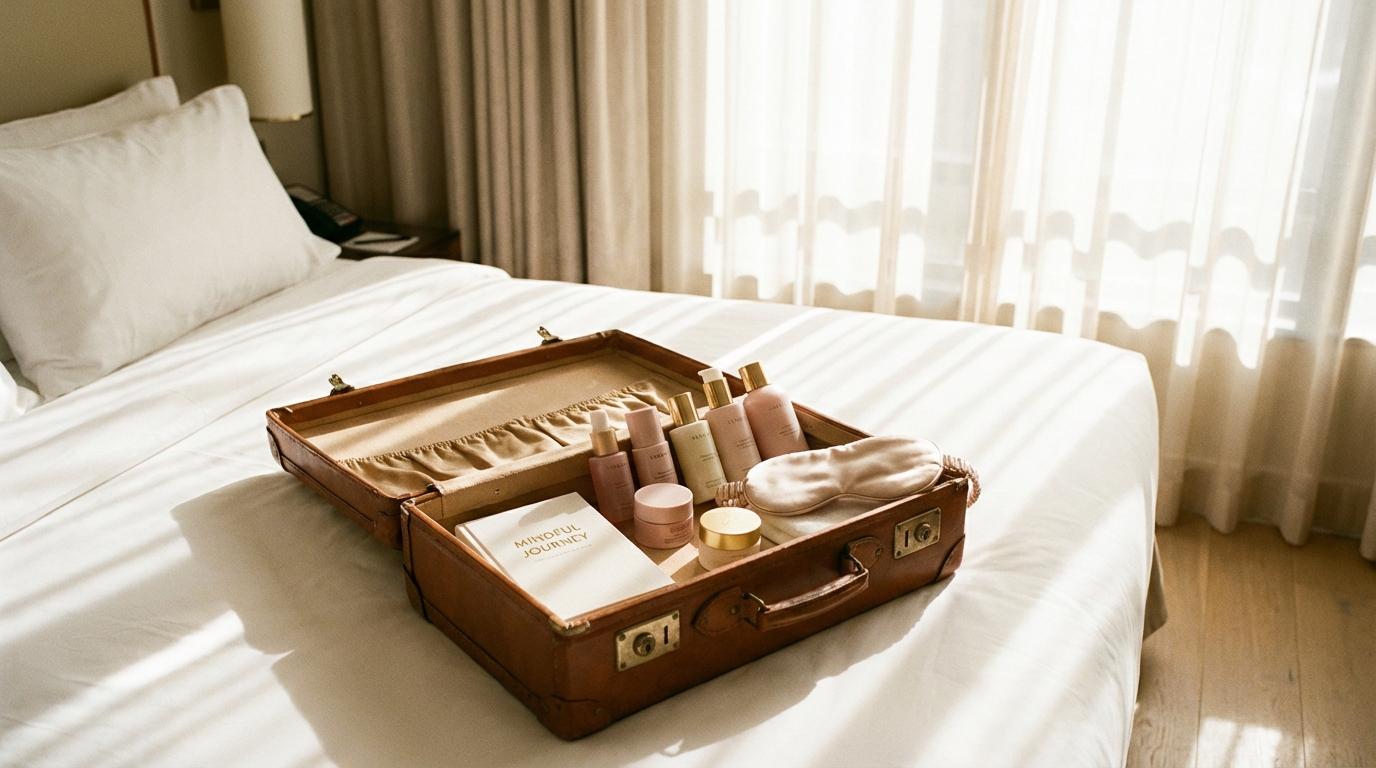
Every time I zip up my suitcase, I find myself staring at my bathroom counter wondering how I’m supposed to fit a ten-product routine into a quart-sized bag. The good news? You don’t have to. Traveling is actually the perfect opportunity to strip your skincare down to what genuinely matters, and your skin might even thank you for the breather.
The TSA Reality Check
Before we get into product picks, let’s talk logistics. The 3.4-ounce (100ml) liquid rule applies to anything that’s liquid, gel, cream, paste, or aerosol. That includes your beloved cleanser, moisturizer, sunscreen, and yes, that fancy serum. Everything needs to fit in a single quart-sized clear plastic bag.
This limitation is actually liberating once you embrace it. Instead of packing your entire shelfie, you’re forced to identify the products that genuinely earn their place on your face. For most trips under two weeks, you need exactly four products: cleanser, moisturizer, SPF, and one treatment product if you’re dealing with a specific concern.
A few packing strategies that make life easier: decant your products into travel-sized containers rather than buying travel minis of everything (you’ll save money and get to use formulas you actually trust). Solid products like cleansing balms, bar soaps, and stick sunscreens don’t count toward your liquid allowance, so they’re worth considering. And if you’re checking a bag, you can pack full-sized products in there, but always wrap them in a plastic bag in case of leaks.
Multi-Use Products Are Your Best Friends
The smartest travel skincare isn’t about finding the smallest bottles. It’s about finding products that pull double or triple duty. When one product can do the work of three, your bag gets lighter and your routine gets faster.
A good cleansing balm or oil can remove sunscreen, makeup, and daily grime all in one step. Look for something that emulsifies with water so you don’t need a separate second cleanser. Many solid cleansing balms come in small tins that slip easily into your bag without worrying about spills or the liquid restriction.
For moisturizer, consider something rich enough that it can work overtime. A good facial oil or heavier cream can double as a body moisturizer for dry patches on elbows and hands, a lip treatment, and even a cuticle oil in a pinch. Products with ceramides or squalane tend to be versatile enough for this multi-tasking approach.
If you use retinol, consider switching to a product that combines it with your moisturizer for the trip. Several brands, including CeraVe’s retinol offerings, blend treatment and hydration into one step. You lose a bit of customization, but you gain precious bag space.
Fighting Plane Skin
Airplane cabins typically hover around 10-20% humidity, compared to the 30-50% your skin is used to at home. That extreme dryness can leave your face feeling tight, flaky, and generally unhappy by the time you land. Planning ahead makes a significant difference.
The day before you fly, focus on hydration. Layer a hyaluronic acid serum under your moisturizer and consider sleeping with a richer cream than usual. This gives your skin barrier a head start before it faces the desert-like cabin air. If you have naturally combination skin that gets dry patches, pay extra attention to those areas.
During the flight, skip the makeup entirely if you can. Your skin needs to breathe and absorb moisture, and foundation just creates a barrier. Apply a generous layer of moisturizer before boarding, and reapply mid-flight if it’s a long haul. A hydrating facial mist can feel refreshing, but don’t rely on it as your sole hydration source. Mists evaporate quickly and can actually leave skin drier if not followed by an occlusive product.
Drinking water helps, but probably not as much as you’ve been told. According to dermatologists cited by Healthline, internal hydration takes time to reach your skin, so chugging water on the plane won’t instantly fix dryness. Focus on topical hydration instead, while still drinking enough to avoid feeling parched.
One product worth considering for flights is a sleeping mask or overnight treatment. Something like a thick layer of Aquaphor or a dedicated sleeping mask creates a protective seal that prevents moisture loss. It might look a bit shiny, but your skin will feel dramatically better when you land.
Adjusting for Your Destination
Where you’re going matters as much as how you get there. Your skin responds to environmental changes, and what works at home might need tweaking in a different climate.
Heading somewhere humid? You can often scale back on heavy moisturizers. The ambient moisture in the air does some of the hydrating work for you. Stick with a lighter lotion or gel moisturizer and focus on SPF, which you’ll need more of if you’re spending time outdoors. Consider a mattifying sunscreen if your skin tends toward oily in humidity.
Dry climates, whether that’s a desert destination or winter mountain air, call for ramping up hydration. Layer products from thinnest to thickest, and don’t skip your nighttime moisturizer even if you normally would. High altitude destinations present extra challenges since UV exposure increases with elevation. Reapply your sunscreen more frequently and consider bringing a richer moisturizer than you’d normally use.
Tropical beach trips mean sweat, sand, and serious sun exposure. Water-resistant sunscreen is non-negotiable, and you’ll want to reapply every two hours or after swimming. A micellar water can help remove sunscreen at the end of the day without needing to bring a full second cleanser. And if you’re prone to breakouts, the combination of sweat, SPF, and humidity can trigger them, so keep your routine simple and avoid introducing new products that might react with all that sweating.
Hotel Room Survival Guide
Hotel bathrooms come with their own challenges. The lighting is often unflattering (and terrible for any detailed skincare application), the water might be different from what you’re used to, and those little complimentary products are rarely worth using on your face.
Hard water is common in many destinations and can leave skin feeling filmy or extra dry. If you notice your cleanser doesn’t lather properly or your skin feels different after washing, that’s probably the culprit. You can mitigate this by using micellar water on a cotton pad as your primary cleanser, skipping the hotel water on your face entirely. Or, accept that your skin might feel slightly different for the duration of the trip and focus on moisturizing well.
The tiny hotel lotions and cleansers are formulated to be broadly acceptable, which usually means they’re heavily fragranced and not great for sensitive or reactive skin. Use them for your hands or body if needed, but stick to your own face products. If you forgot to pack something essential, a local drugstore will serve you better than those miniature bottles.
One hack worth knowing: the bathroom counter is often the worst place to store your products. Hot showers create steam and temperature fluctuations that can degrade formulas, especially anything with active ingredients like vitamin C or retinol. Keep your skincare bag in the bedroom area if possible, bringing products into the bathroom only when you need them.
The Emergency Skin Situation Kit
Sometimes things go wrong despite your best planning. A product you’ve used for years suddenly causes irritation (stress and travel can make skin more reactive). You break out worse than you have in months. You get sunburned even though you thought you were being careful.
For unexpected breakouts, a small tube of benzoyl peroxide (2.5% is effective without being overly drying) or salicylic acid spot treatment takes up minimal space and can make a real difference. The Paula’s Choice BHA comes in a travel-friendly size if you want something gentle but effective.
For irritation or rashes, a basic hydrocortisone cream from any pharmacy can calm things down quickly. It’s not a long-term solution, but it can rescue a red, angry patch when you need to look human for that vacation dinner. If your skin feels compromised, simplify even further. Sometimes the best response to irritation is just cleanser and moisturizer, nothing else, until things settle.
For sunburn, aloe vera gel provides some relief, but pure aloe can actually dry skin out more. Look for an after-sun lotion with aloe plus hydrating ingredients, or use your regular moisturizer liberally. Cool compresses help, and ibuprofen can reduce inflammation from the inside. Serious sunburns warrant seeing a doctor, especially if you’re blistering or feeling unwell.
What You Can Actually Skip
Traveling is a good time to evaluate what’s truly essential versus what you use out of habit. Some products genuinely don’t need to come with you.
Toners, unless you’re using one that delivers active ingredients, can usually stay home. Their main benefit is often removing cleanser residue, which a thorough rinse accomplishes too. Eye creams are another frequent skip candidate. Your regular moisturizer, applied gently around the eye area, works fine for most people. Dermatologists often say that dedicated eye creams are more marketing than necessity anyway.
Exfoliating products, whether physical scrubs or chemical exfoliants, can take a break during travel. Your skin is already dealing with stress, environmental changes, and potentially harsher water. Adding aggressive exfoliation to the mix often creates more problems than it solves. If your trip is longer than a week, a gentle chemical exfoliant once or twice can prevent buildup, but daily exfoliation should wait until you’re home.
Multiple serums can consolidate into one or none. If you normally use vitamin C in the morning and retinol at night with hyaluronic acid and niacinamide layered in between, pick your priority. For most trips, hydration wins. A simple rest day approach to your routine can actually benefit your skin by reducing the chance of irritation from product interactions in new conditions.
Coming Home
Your return is almost as important as your departure. Skin often looks its worst a few days after travel, not during the trip itself. The stress of getting home, combined with jet lag and returning to your normal environment, can trigger breakouts or dullness.
Ease back into your full routine rather than immediately hitting your face with every active ingredient you own. Start with basics for a day or two, then reintroduce treatments one at a time. If you picked up any irritation during your trip, give it time to fully heal before adding retinol or acids back into rotation.
Wash everything that touched your face while traveling. Pillowcases, makeup brushes you used on the road, and even the travel containers themselves benefit from cleaning before they go into storage. Bacteria and product residue can build up, and you don’t want to start your next trip with contaminated supplies.
Travel teaches you a lot about what your skin actually needs. Pay attention to how it responds to a simplified routine. If your skin looked fine with four products instead of ten, maybe that’s information worth keeping. The goal isn’t to suffer through trips with inadequate skincare. It’s to find the balance point where your skin stays happy without requiring a second suitcase just for your bathroom cabinet.