
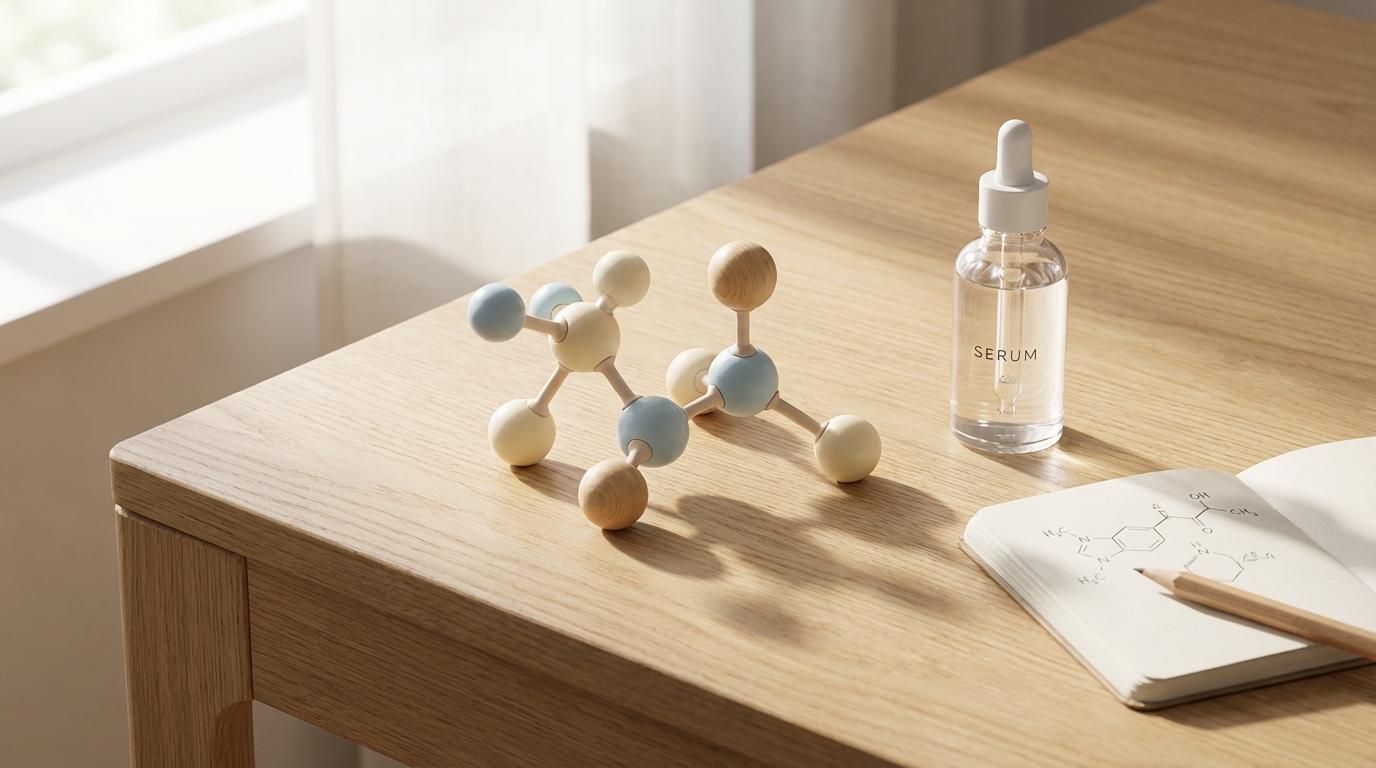
Have you ever stared at a skincare label that mentions “low molecular weight hyaluronic acid” and wondered if you accidentally wandered into a chemistry class? Trust me, I’ve been there, standing in the drugstore aisle trying to decode ingredient lists like they’re some kind of ancient script. But here’s the thing: understanding molecular weight isn’t just fancy science talk. It actually determines whether that hyaluronic acid serum is going to work for your skin or just sit on top doing nothing.
As someone who’s spent way too many hours researching skincare on a college budget, I’ve learned that the difference between high and low molecular weight hyaluronic acid can be the difference between plump, hydrated skin and wondering why your “miracle” serum isn’t delivering. Let’s break this down in a way that actually makes sense.
What Exactly Is Molecular Weight?
Okay, quick science refresher without putting you to sleep. Molecular weight basically refers to the size of the hyaluronic acid molecules. Think of it like pasta: you’ve got your tiny orzo and your big lasagna noodles. Both are pasta, but they behave very differently in a dish. Same concept applies here.
Hyaluronic acid molecules are measured in Daltons (Da), which is a unit scientists use to measure molecular mass. When we talk about hyaluronic acid in skincare, we’re looking at a range from about 3,000 Daltons all the way up to 3 million Daltons. That’s a massive difference, and it matters more than you might think.
High Molecular Weight Hyaluronic Acid: The Surface Hydrator
High molecular weight hyaluronic acid (typically over 1 million Daltons) has larger molecules that can’t penetrate your skin barrier. Before you write it off as useless, though, there’s a reason it exists in so many products.
These big molecules sit on your skin’s surface and create a moisture-locking film. According to research from the National Library of Medicine, high molecular weight HA provides excellent surface hydration and helps reduce transepidermal water loss. That’s the fancy way of saying it stops your skin from losing the moisture it already has.
Benefits of high molecular weight HA include:
- Instant plumping effect (great for photos, not gonna lie)
- Creates a protective barrier against environmental stressors
- Reduces the appearance of fine lines temporarily
- Generally gentler on sensitive skin
The downside? These effects are mostly temporary and surface-level. You’ll look hydrated, but the moisture isn’t getting deep into your skin layers where aging and dehydration actually happen.
Low Molecular Weight Hyaluronic Acid: The Deep Penetrator
Now we’re getting to the good stuff. Low molecular weight hyaluronic acid (typically under 50,000 Daltons, with ultra-low going down to 3,000-5,000 Da) has small enough molecules to actually penetrate your epidermis and reach deeper skin layers.
This is where real hydration happens. When HA gets into those deeper layers, it can help with:
- Long-lasting hydration that doesn’t evaporate by lunchtime
- Improved skin elasticity from the inside out
- Reduced appearance of deeper wrinkles over time
- Supporting your skin’s natural barrier function
A study published in the International Journal of Cosmetic Science found that low molecular weight HA showed significantly better skin penetration and longer-lasting hydration compared to its larger counterpart.
But here’s the catch: low molecular weight HA can sometimes cause irritation in sensitive skin types. Because it penetrates deeper, it’s more likely to trigger reactions in people with compromised skin barriers. If your skin is currently freaking out from overexfoliation or just runs sensitive, you might want to ease into it.
The Sweet Spot: Multi-Weight Formulas
Here’s where modern skincare gets smart. Instead of choosing between surface hydration and deep penetration, multi-weight formulas give you both. These products combine different molecular weights of hyaluronic acid to work on multiple levels of your skin simultaneously.
Think of it like a hydration team where everyone has a different job:
- High molecular weight molecules handle surface hydration and barrier protection
- Medium molecular weight (around 50,000-1 million Da) targets the outer epidermis
- Low molecular weight molecules penetrate deeper for lasting hydration
This layered approach is why you’ll often see products marketing themselves as “multi-molecular” or listing several types of hyaluronic acid on their ingredient lists. It’s not just a gimmick. According to clinical research, this combination approach shows better overall results than single-weight formulas.
How to Read Labels Like a Pro
Now for the practical part. When you’re shopping (especially on a budget), here’s how to decode what you’re actually getting:
Look for specific terminology:
- “Low molecular weight” or “LMW” hyaluronic acid means smaller, penetrating molecules
- “High molecular weight” or “HMW” indicates surface-level hydration
- “Hydrolyzed hyaluronic acid” is typically broken down into smaller fragments
- “Sodium hyaluronate” is the salt form of HA, which is more stable and penetrates better than pure hyaluronic acid
Some brands are transparent about their Dalton measurements, which makes things easier. If a product specifies “50kDa hyaluronic acid” or similar, you know exactly what you’re getting.
Budget-Friendly Multi-Weight Options
You don’t need to spend $80 on a serum to get multi-weight hyaluronic acid. Plenty of affordable options deliver multiple molecular weights without destroying your bank account. If you’re looking for wallet-friendly skincare that performs, check out my roundup of budget skincare that actually delivers for some solid options.
When shopping on a budget, prioritize products that:
- List multiple forms of hyaluronic acid in the ingredients
- Include sodium hyaluronate (often more affordable than pure HA)
- Come in larger sizes for better cost per use
- Have minimal filler ingredients that dilute the active ingredients
How to Apply Hyaluronic Acid for Maximum Results
No matter which molecular weight you choose, application technique matters. HA is a humectant, which means it pulls moisture from its surroundings. If you live in a dry climate or apply it to dry skin in a dry room, it might actually pull moisture OUT of your skin. Not ideal.
Here’s my routine for getting the most out of any HA product:
- Apply to slightly damp skin right after cleansing
- If your environment is dry, mist your face with water or a hydrating toner first
- Always follow with a moisturizer or occlusive to seal everything in
- Give each layer a few seconds to absorb before adding the next
This applies whether you’re using a $10 drugstore serum or a fancy multi-weight formula. The moisture has to come from somewhere, so give it a source.
When to Use Different Molecular Weights
Your skin’s needs change based on seasons, stress, and what else is in your routine. Here’s a quick guide:
Choose high molecular weight when:
- Your skin barrier is compromised
- You’re experiencing sensitivity or irritation
- You want a quick plumping effect before an event
- You’re layering with stronger actives and need gentle hydration
Choose low molecular weight when:
- You’re targeting deeper wrinkles or dehydration
- Your skin is healthy and can handle deeper penetration
- You want longer-lasting results
- You’re focusing on anti-aging benefits
Choose multi-weight formulas when:
- You want comprehensive hydration on all levels
- You’re simplifying your routine but want max results
- You’re not sure what your skin needs (covers all bases)
And remember, sometimes your skin just needs a break from actives altogether. If you’re experiencing burnout from too many products, consider giving your routine some rest days for your skin to reset.
The Bottom Line
Molecular weight isn’t just marketing jargon. It genuinely affects how hyaluronic acid works with your skin. High molecular weight hydrates the surface, low molecular weight penetrates deeper, and multi-weight formulas try to give you the best of both worlds.
For most people, especially if you’re building a routine on a budget, a well-formulated multi-weight serum is your best bet. You get comprehensive hydration without needing multiple products, and your wallet stays happy.
Don’t get too caught up in the exact Dalton measurements. Focus on finding a product with multiple forms of HA, apply it to damp skin, seal it in with moisturizer, and let your skin drink it up. The science supports this approach, but honestly? The real test is how your skin looks and feels after consistent use.
Hydration doesn’t have to be complicated or expensive. It just has to work for your skin.