
I spent my freshman year believing I needed a $60 cleanser to have clear skin. My bank account disagreed, so I started experimenting with drugstore products. Two years later, my skin has never looked better, and my monthly skincare budget stays under $20. Not $20 per product. $20 total.
The skincare industry wants you to believe that price equals results. But dermatologists have been saying for years that many affordable products contain the same active ingredients as luxury brands. The difference? Marketing budgets and fancy packaging.
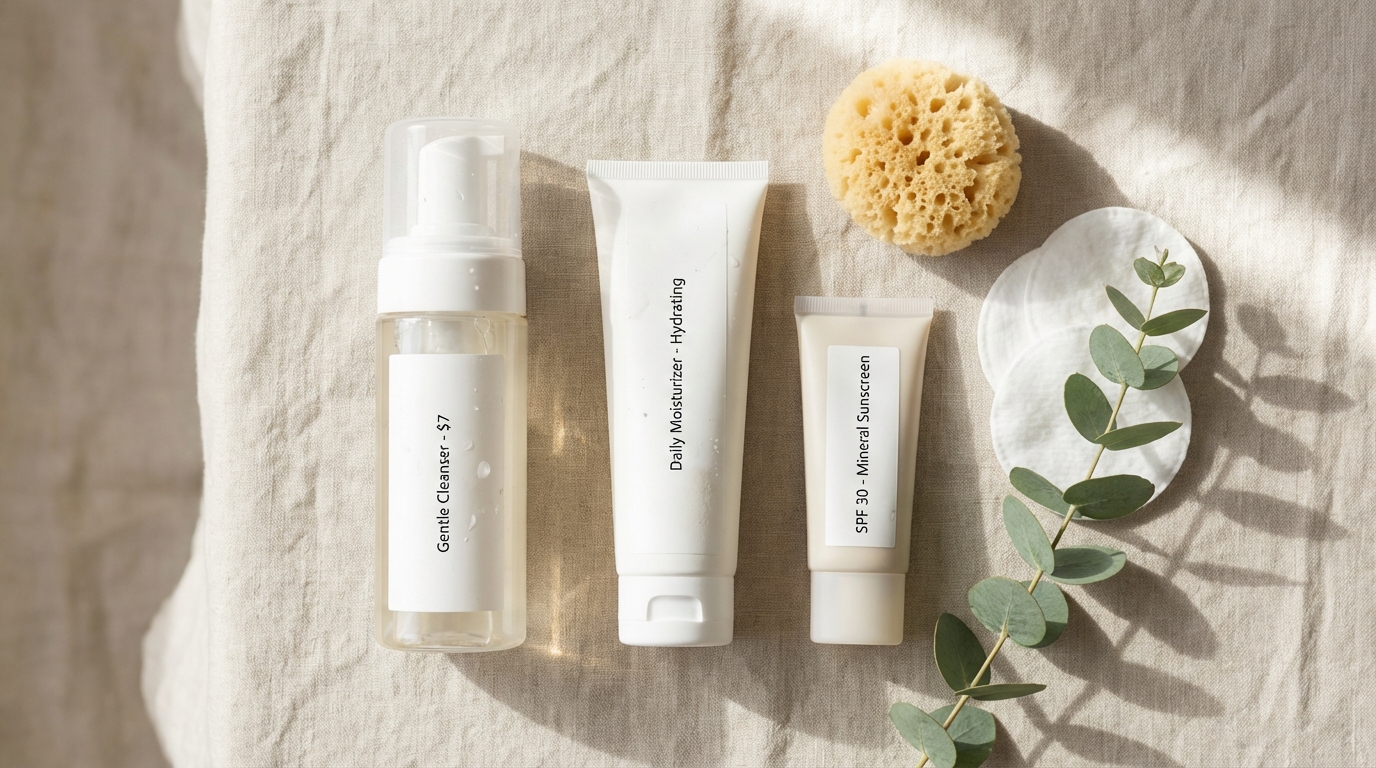
The Cleanser That Started My Budget Journey
Let me be real with you: cleansers wash off your face. They do not sit on your skin long enough to justify spending $40. The whole point is to remove dirt, makeup, and sunscreen without stripping your skin.
My favorite options under $8:
- CeraVe Hydrating Cleanser (around $6 for 8 oz at most drugstores). Contains ceramides and hyaluronic acid (both help your skin barrier). Gentle enough for dry skin, effective enough for everyone else.
- Vanicream Gentle Facial Cleanser (around $7). If your skin throws a fit at everything, this one has basically no fragrance or irritants. Dermatologists recommend it constantly.
- La Roche-Posay Toleriane Hydrating Gentle Cleanser (around $8 on sale). Slightly fancier feeling, but still budget friendly when you catch it at Target or CVS with coupons.
According to the American Academy of Dermatology, a basic cleanser should be gentle and non-comedogenic. Price is not mentioned as a factor in effectiveness.
Moisturizers That Actually Work Hard
Here is where I get passionate. I have tried moisturizers ranging from $5 to $75, and the most expensive ones did not make my skin look any different. In fact, some of the pricier options broke me out because they were loaded with fragrance and fancy botanicals my skin did not need.
My go-to picks:
- CeraVe Moisturizing Cream (around $5-7 for a mini jar, $15 for the big tub). This one contains ceramides, hyaluronic acid, and niacinamide. A study published in the Journal of Drugs in Dermatology found that ceramide-containing moisturizers significantly improved skin barrier function.
- Neutrogena Hydro Boost Gel Cream (around $8-10 on sale). If you have oily skin and hate heavy creams, this water-based option absorbs fast and keeps skin hydrated without feeling greasy.
- Vanicream Moisturizing Cream (around $6). Another hypoallergenic winner. No frills, just moisture.
The key ingredients that actually hydrate skin are hyaluronic acid, glycerin, and ceramides. All of these show up in drugstore products at the same concentrations as luxury brands. Research from the International Journal of Cosmetic Science confirms that ingredient concentration matters more than brand name.
SPF: The Non-Negotiable Step
I used to skip sunscreen because the ones I could afford felt disgusting on my skin. Greasy, white cast that made me look ghostly, and that weird chemical smell. But skipping SPF is not an option if you care about preventing sun damage, dark spots, and premature aging.
The good news: affordable sunscreens have gotten significantly better in the past few years. Whether you prefer chemical or mineral formulas, there are budget options that work.
Budget SPF options that do not feel terrible:
- Neutrogena Ultra Sheer Dry-Touch SPF 55 (around $7-9). Lightweight, minimal white cast, and actually dries down. Not perfect under makeup, but solid for everyday use.
- CeraVe AM Facial Moisturizing Lotion SPF 30 (around $10-12). This combines moisturizer and sunscreen, so you can cut a step. Contains niacinamide and ceramides too.
- Equate or store brand SPF 50 lotions (around $4-6). Walmart, Target, and CVS all have their own sunscreen lines that are tested to the same FDA standards as name brands.
Dr. Michelle Henry, a board-certified dermatologist, has stated publicly that the best sunscreen is one you will actually use. An expensive SPF sitting in your bathroom cabinet does nothing. A $6 sunscreen you apply daily does everything.
Why Expensive Does Not Mean Better
Here is what the beauty industry does not want you to know: many luxury products are made in the same factories as drugstore ones. Sometimes they even share formulations. The price difference comes down to marketing, packaging, and the brand name on the label.
Think about it this way. A $150 moisturizer has to pay for:
- Celebrity endorsements
- Magazine ads and influencer partnerships
- Fancy packaging with heavy glass jars
- Department store placement fees
- Shareholder profits
A $12 moisturizer at the drugstore? It just has to cover the ingredients and basic packaging. The extra $138 you would spend on the luxury version is not buying you better skin. It is buying you a feeling.
I am not saying expensive products are scams. Some people enjoy the experience of using luxury skincare, and that is valid. But if you are on a budget, please do not feel like you are giving your skin less by shopping the drugstore aisle. Consumer Reports has tested countless skincare products and frequently ranks drugstore options above luxury ones in actual performance.
The Complete $20 Routine
Here is my current routine, with approximate prices:
Morning:
- Splash face with water (free)
- CeraVe AM Moisturizing Lotion SPF 30 ($11)
Evening:
- CeraVe Hydrating Cleanser ($6)
- CeraVe Moisturizing Cream ($5 for mini)
Total: $22 (and those products last 2-3 months each)
When I average it out monthly, I am spending around $8-10 on skincare. Meanwhile, some of my friends drop $200 monthly on elaborate routines with questionable results. More steps and higher prices do not automatically mean better skin.
Your skin needs three things: to be clean, hydrated, and protected from the sun. Everything else is bonus. Start with the basics, see how your skin responds, and only add products if you have specific concerns that need addressing.
Trust me, I have been where you are, staring at the skincare aisle feeling overwhelmed and broke. But clear, healthy skin should not require a trust fund. It just requires knowing which products actually work, regardless of their price tag.