
About 40% of people who struggle with persistent breakouts notice something strange: their acne shows up predominantly on one side of their face. If you’ve ever looked in the mirror and wondered why your left cheek is a battlefield while your right cheek remains relatively calm, you’re not alone, and there’s actually a fascinating explanation behind this asymmetry.
Unilateral acne (that’s the clinical term for one-sided breakouts) rarely happens by chance. Your skin doesn’t play favorites without reason. Understanding what’s causing this pattern is the first step toward addressing it effectively, because treating random-looking acne and treating pattern-based acne require different approaches.
The Phone Contact Pattern
Let’s start with one of the most common culprits: your phone. Think about which hand you naturally use to hold your phone during calls. Most people have a dominant side, and that side of your face gets pressed against a surface that’s been collecting bacteria, oils, and environmental debris all day.
Your phone screen can harbor more bacteria per square inch than a toilet seat. That’s not meant to alarm you, just to illustrate why pressing it against your cheek for 20-minute calls might be causing problems. The combination of bacterial transfer, friction, and the warmth generated between your skin and the phone creates an environment where acne-causing bacteria thrive.
The mechanism here involves something called acne mechanica, which is essentially breakouts triggered by friction, pressure, or heat against the skin. Your phone delivers all three. The pressure occludes your pores, the friction irritates follicular walls, and the warmth increases sebum production locally.
Related: acne and anxiety.
If this sounds like your situation, consider these adjustments:
- Switch to speakerphone or earbuds when possible
- Wipe down your phone screen daily with an alcohol-based cleaner
- Try alternating which side you hold your phone on (harder than it sounds, but worth trying)
- Notice if your breakouts decrease during periods when you make fewer phone calls
Sleep Position Factor
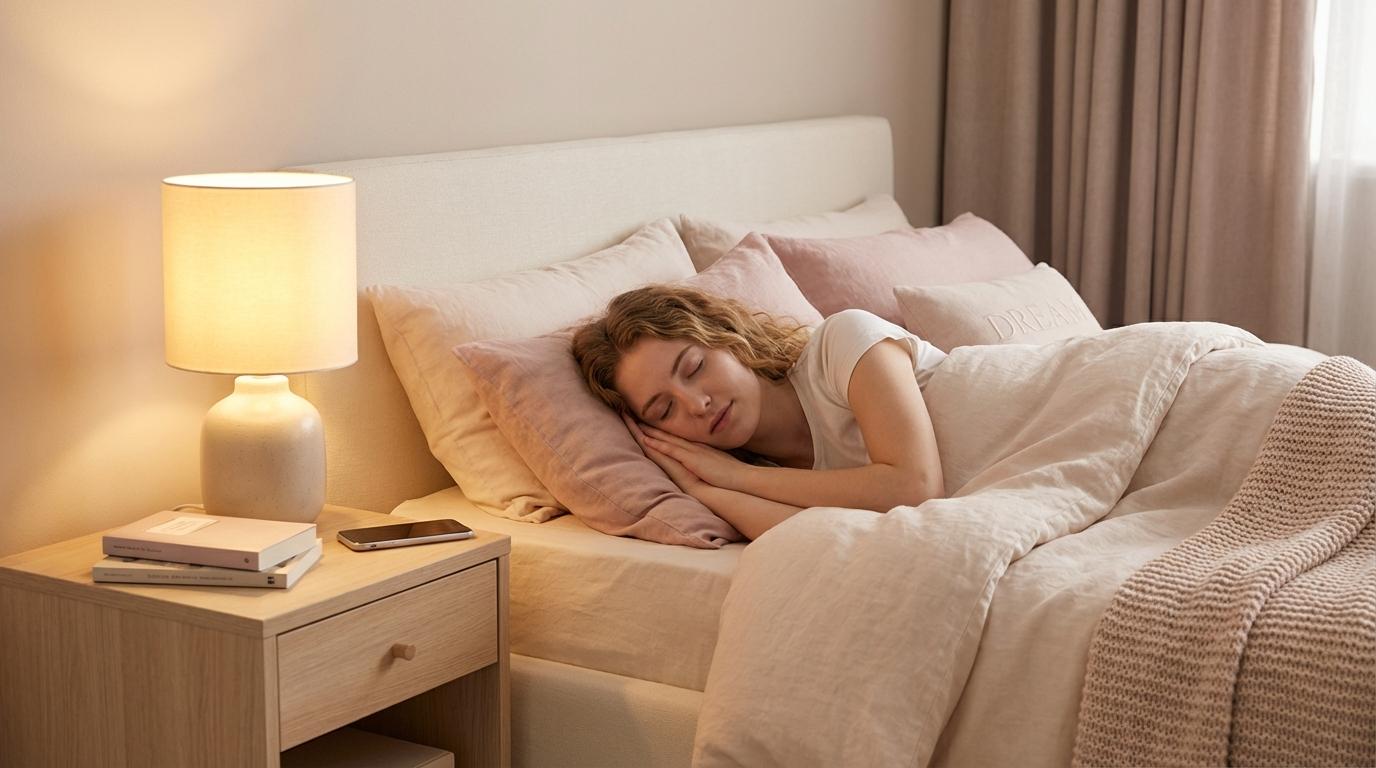
Here’s another pattern worth investigating: which side do you sleep on? If you’re a side sleeper (and most people are), the cheek that spends 6-8 hours pressed against your pillowcase is being exposed to accumulated oils, dead skin cells, and product residue night after night.
Your pillowcase absorbs everything: the oils from your hair, residue from any products you didn’t fully rinse out, sweat, and the sebum your skin naturally produces overnight. If you’re not changing your pillowcase frequently enough, you’re essentially giving one side of your face prolonged contact with a breeding ground for bacteria.
Beyond bacteria, there’s the mechanical aspect again. The compression and friction from sleeping on one side can irritate existing micro-comedones (those tiny, invisible precursors to pimples that we all have) and trigger them to become inflamed.
What you can do:
- Change your pillowcase every 2-3 days, or flip it to a fresh side
- Consider silk or satin pillowcases, which create less friction and absorb less oil than cotton
- If you use hair products, tie your hair back or use a bonnet to keep product residue off your pillow
- Try training yourself to sleep on your back (this takes time but can help)
Hand Touching Habits
We touch our faces far more than we realize. Studies suggest the average person touches their face 16-23 times per hour. But here’s what’s interesting: we don’t touch both sides equally. Most people have unconscious habits that favor one side.
Maybe you rest your chin on your left hand while reading. Perhaps you lean your right cheek against your palm during long meetings. You might scratch one particular spot when you’re thinking. These repetitive behaviors transfer oils, bacteria, and dirt from your hands to a specific area of your face.
When To See A Derm covers this too.
The inflammatory response happens because you’re introducing foreign bacteria into an area that has its own microbiome. Your skin’s immune system recognizes these intruders and mounts a defense, which manifests as redness, swelling, and yes, acne.
Tracking your hand-to-face habits requires mindfulness:
- Ask a friend or family member to point out when they notice you touching your face
- Pay attention during your typical activities (working at a computer, watching TV, sitting in class)
- Once you identify the pattern, you can work on breaking it
- Keep your hands busy with a stress ball or fidget tool if you’re a chronic face-toucher
Identifying Your Trigger
Sometimes it’s not just one factor but a combination. Your dominant sleeping side might also be the side you hold your phone on, doubling the exposure. This is why figuring out your specific trigger matters more than applying generic acne advice.
I recommend keeping a brief acne log for 2-3 weeks. Note which side is breaking out, what activities you did that day that involved face contact, and which side you slept on. Patterns usually emerge pretty quickly once you start paying attention.
Some less obvious triggers to consider:
- Glasses or sunglasses that sit more heavily on one side
- A driving habit of resting one hand on your face while stopped at lights
- Sports equipment like helmets that might fit asymmetrically
- Musical instruments (violinists, for example, often break out on one side of their jaw)
Why Treatment Needs to Be Targeted
Once you’ve identified the mechanical or contact-based cause of your one-sided acne, you can address it at the source rather than just treating symptoms. This is where understanding the “why” becomes practical.
If your acne is primarily caused by phone contact, all the salicylic acid and benzoyl peroxide in the world won’t fully solve it unless you also change the behavior. The products will help manage existing breakouts, but new ones will keep appearing if the trigger remains.
Similarly, if sleep position is your main issue, you might find that switching pillowcases more frequently does more for your skin than adding another active to your routine. Sometimes the solution is behavioral, not chemical.
That said, if you’re dealing with active inflammation, a targeted approach using ingredients like niacinamide for calming or azelaic acid for redness can help the affected side catch up to the clearer side while you work on eliminating the root cause.
When to Consider Other Causes
While mechanical factors explain most cases of unilateral acne, there are situations where the asymmetry might indicate something else. Hormonal acne, for instance, typically shows up on both sides of the lower face and jawline. If your one-sided breakouts are accompanied by other symptoms or don’t respond to behavioral changes, it’s worth consulting a dermatologist.
Conditions that can mimic acne but aren’t, like perioral dermatitis or rosacea, sometimes appear asymmetrically and require different treatment approaches. A professional can help distinguish between these and standard acne.
The good news is that for most people, unilateral acne is solvable once you identify the pattern. Your skin isn’t betraying you without reason. There’s logic behind the location, and once you understand it, you can take targeted action that actually addresses the cause rather than just managing symptoms indefinitely.
Start by observing your habits for a week. Most people discover their trigger within days once they start paying attention. And once you know what’s causing it, clearing one-sided breakouts often becomes much simpler than dealing with the random, inexplicable acne that seems to have no rhyme or reason.