
Expensive retinol must be better because you’re paying for superior ingredients. Except you’re not. You’re paying for packaging, branding, and a fancy name on the label. The retinol molecule inside a $12 tube from the drugstore is chemically identical to the one in a $90 department store serum. Full stop.
I spent three years as a beauty editor watching brands charge obscene markups for the exact same active ingredient. And honestly, the more I learned about how retinol actually works, the angrier I got on behalf of everyone overpaying. So let’s talk about why your wallet doesn’t need to suffer for good skin.
Retinol Is Retinol Is Retinol
Retinol is a specific form of vitamin A. It has one molecular structure. Whether it’s synthesized for a luxury brand or a drugstore brand, the molecule is the same. Your skin cells don’t care about the font on the bottle.
When retinol hits your skin, enzymes convert it into retinoic acid, the active form that actually speeds up cell turnover and boosts collagen production. This conversion process is identical regardless of where you bought the product. A retinol molecule from CeraVe goes through the same enzymatic pathway as one from La Prairie.
The one thing that does vary between products is concentration. And that matters. But here’s the thing: concentration is clearly listed on many products, and a higher price tag doesn’t guarantee a higher percentage.
Concentration Matters More Than the Price Tag
Most over-the-counter retinol products range from 0.01% to 1% retinol. That’s a huge range, and it affects results far more than brand prestige ever will.
If you’re a beginner, starting with 0.25% to 0.5% is standard advice from dermatologists. That range is available in products costing anywhere from $8 to $80. The clinical outcomes at the same concentration? Virtually indistinguishable in studies.
Some luxury brands don’t even disclose their retinol percentage. They hide behind phrases like “proprietary blend” or “advanced retinol complex.” That should make you suspicious, not impressed. If a $70 serum won’t tell you how much retinol it contains, and a $15 one clearly states 0.5%, which one is actually being transparent with you?
Research shows that retinol products at various concentrations, even below 0.2%, can show meaningful improvements in skin texture and fine lines after about six months of consistent use. The key word there is “consistent.” No amount of money fixes the problem of not using the product regularly.
What You’re Actually Paying For With Luxury Retinol
When you buy a $90 retinol serum, you’re funding a few things that have nothing to do with the retinol itself.
Marketing budgets. Celebrity endorsements. That heavy glass bottle with the magnetic cap. The tissue paper in the box. The retail markup at Sephora or Nordstrom. And yes, sometimes better supporting ingredients like peptides, ceramides, or more elegant textures.
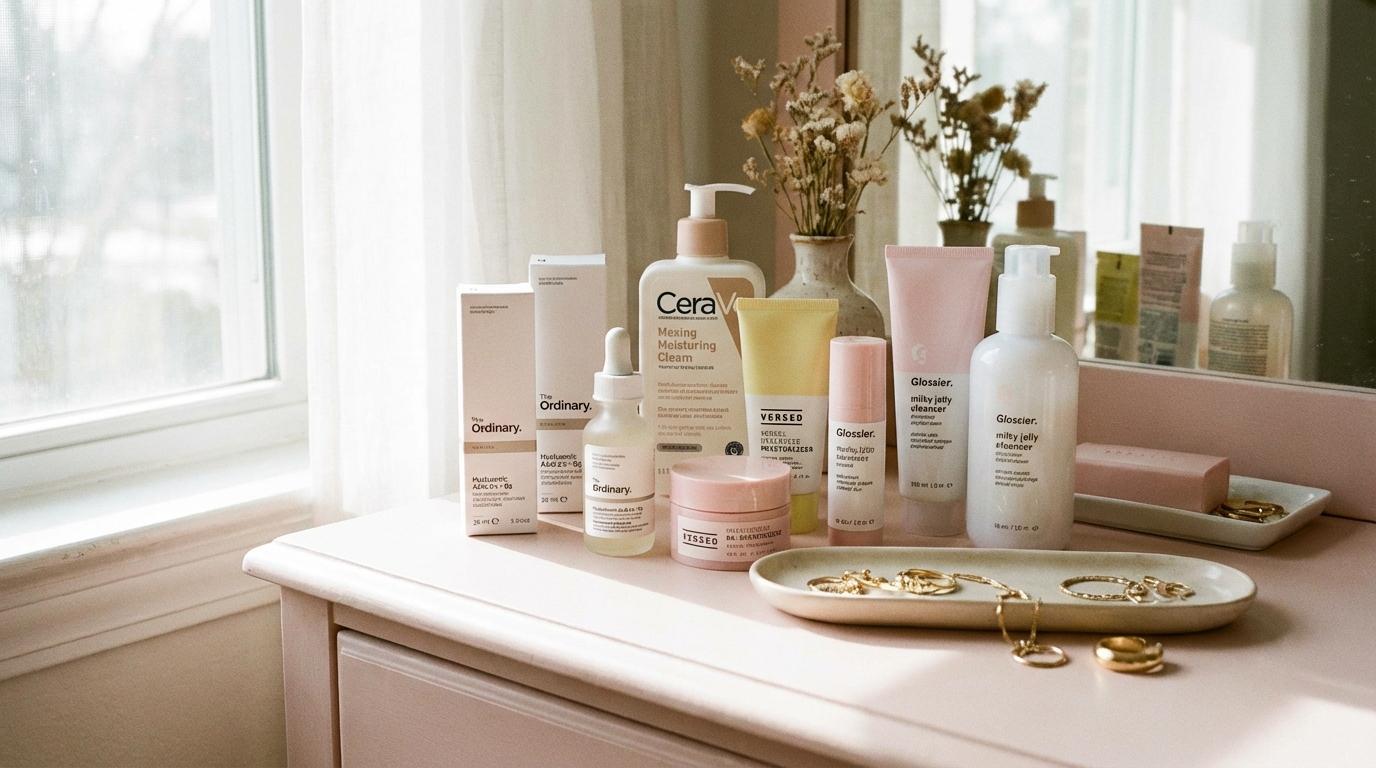
Those supporting ingredients can be nice. A well-formulated product with hydrating ingredients like hyaluronic acid or squalane alongside retinol can reduce irritation and make the experience more pleasant. But plenty of drugstore brands include these too. CeraVe pairs retinol with ceramides and niacinamide. The Ordinary delivers retinol in a squalane base. Neutrogena adds hyaluronic acid. These formulations are sophisticated, and they cost under $20.
The one area where some premium products genuinely perform better is stability. Retinol degrades when exposed to light and air. Better packaging, like airless pumps and opaque containers, protects the ingredient. But again, many drugstore brands have caught up here. RoC has been doing retinol stability well for decades at drugstore prices.
The Best Affordable Retinol Options Right Now
I’m going to be direct about what works at the drugstore, because that’s what you came here for.
CeraVe Resurfacing Retinol Serum (around $18): Contains encapsulated retinol, which releases slowly and causes less irritation. Also has niacinamide and ceramides. Great for beginners or anyone with sensitive, redness-prone skin.
The Ordinary Retinol 0.5% in Squalane (around $6): No nonsense. You know exactly what concentration you’re getting, and the squalane base keeps skin hydrated. Ridiculously affordable.
RoC Retinol Correxion Line Smoothing Serum (around $25): RoC has been in the retinol game longer than most luxury brands. Their formulations are clinically tested and backed by decades of research.
Neutrogena Rapid Wrinkle Repair (around $22): Pairs retinol with hyaluronic acid. Widely available, consistently effective, and your local CVS definitely has it in stock.
Differin Gel (around $13): Technically adapalene, not retinol, but it’s a retinoid that used to be prescription-only. Now it’s over the counter and dermatologists still recommend it constantly. One of the best values in skincare, period.
Common Concerns About Going Cheap on Retinol
“But won’t cheap retinol irritate my skin more?” No. Irritation comes from concentration and your skin’s tolerance, not from price. A 1% retinol from a drugstore will irritate you exactly as much as a 1% retinol from a luxury brand. Possibly less, if the drugstore version has better buffering ingredients.
“Aren’t expensive formulas more ‘pure’?” Retinol purity is regulated. Both drugstore and luxury products must meet the same safety and quality standards for cosmetic ingredients. There’s no special “premium grade” retinol that only expensive brands can access.
“What about prescription retinoids?” That’s a different conversation entirely. Prescription tretinoin is stronger than any over-the-counter retinol and costs surprisingly little with insurance or through services like GoodRx. If you want the strongest results, talk to a dermatologist about prescription retinoids instead of just buying a more expensive OTC version.
How to Pick the Right Drugstore Retinol for You
Start low. If you’ve never used retinol, grab something at 0.25% or 0.3% and use it two to three nights a week. Your skin needs time to adjust, and starting strong just leads to peeling and frustration.
Check the packaging. Look for opaque tubes or airless pumps. Clear jars are bad for retinol stability, regardless of price.
Look at what else is in the formula. Ingredients like ceramides, niacinamide, hyaluronic acid, or squalane alongside retinol make the product more tolerable and effective. Many drugstore options include these.
Use sunscreen the next morning. Retinol makes your skin more sensitive to UV. This isn’t optional, it’s non-negotiable. A $9 sunscreen from the drugstore works perfectly fine here too.
Give it time. Retinol results take 8 to 12 weeks minimum. Don’t switch products after two weeks because you haven’t seen a transformation. Building a consistent active rotation schedule matters more than the specific brand you choose.
Stop Paying the Brand Tax
The beauty industry profits from making you feel like affordable products are somehow inferior. They’re not. Not when it comes to retinol, and honestly, not when it comes to most well-researched active ingredients.
The science is clear. Retinol works at every price point. Concentration and consistency matter infinitely more than what you paid. Save your money, pick a well-formulated drugstore option, use it regularly, and watch your skin improve. That’s it. No luxury serum required.