
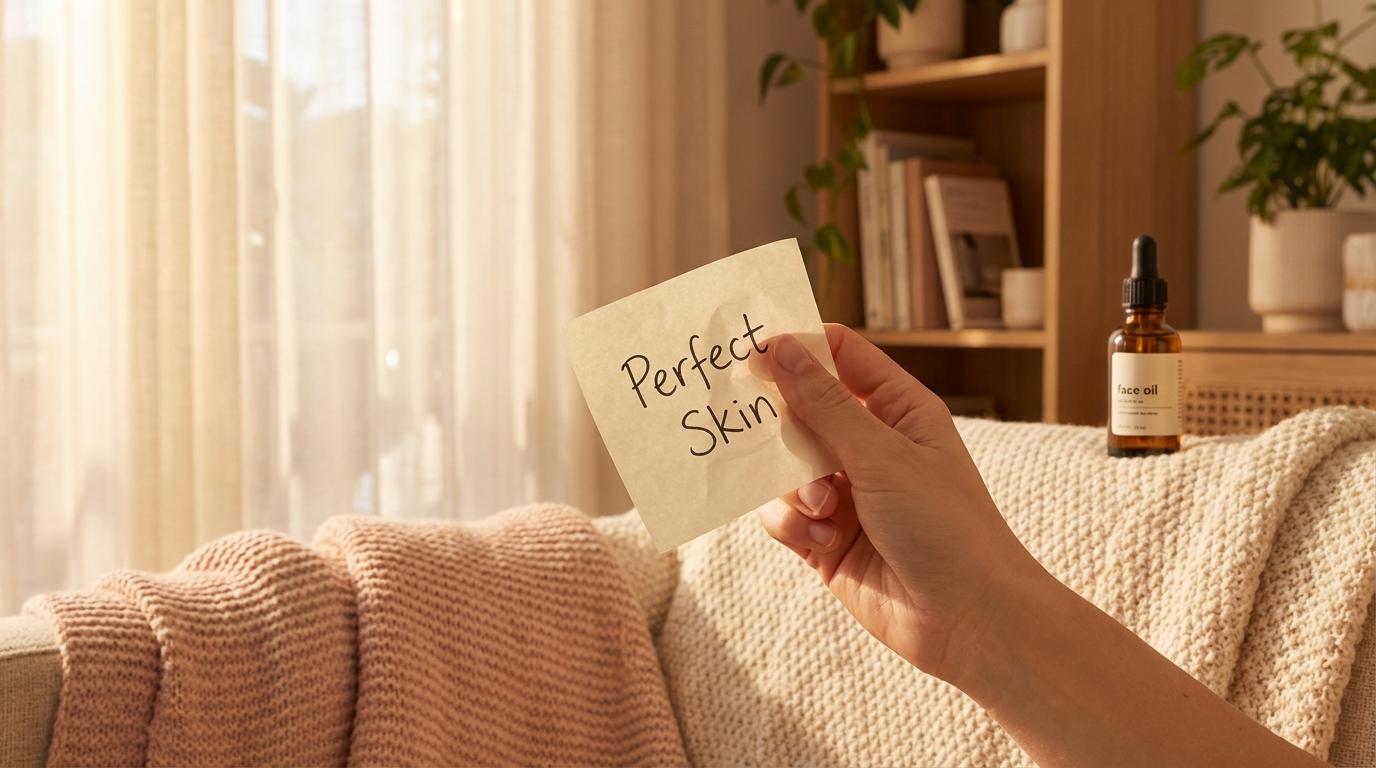
I wasted three years chasing flawless skin that never existed. Every pore I zoomed in on, every tiny texture that showed up in harsh bathroom lighting, every slight unevenness in my complexion became proof that I was failing. Then one random Tuesday, exhausted from analyzing my face for the hundredth time that week, I just stopped.
Not stopped caring about my skin entirely. Stopped caring about perfection. And that shift changed everything about how I approach skincare now.
The Perfectionism Trap Is Real
Perfectionism sounds productive. It sounds like having high standards. But when it comes to skin, perfectionism is actually a stress response that makes everything worse.
Stress directly impacts your skin. Cortisol, your primary stress hormone, increases oil production, breaks down collagen, and weakens your skin barrier. According to the American Academy of Dermatology, stress can trigger or worsen conditions like acne, eczema, and rosacea. So that anxious face-checking habit? It might actually be causing the problems you’re trying to fix.
I used to stand in front of my mirror for 20 minutes at a time, pulling at my skin, examining every single imperfection under different lights. My cortisol levels must have been through the roof. No wonder my skin looked angry all the time.
What “Good Enough” Actually Looks Like
Good enough skin is healthy skin. That’s it. Not poreless. Not airbrushed. Not glowing like you have a ring light surgically implanted in your face.
Good enough means:
- Your skin barrier is intact
- You’re not constantly irritated or inflamed
- Your basic needs are met (cleansing, moisturizing, sun protection)
- You can touch your face without wincing
I started asking myself a different question. Instead of “how do I make my skin perfect?”, I switched to “is my skin healthy?”. That reframe took all the emotional weight out of my routine. If you’re working on keeping your barrier strong, our guide to skin barrier basics breaks it down without overcomplicating things.
Healthy skin has texture. Healthy skin has visible pores. Healthy skin sometimes has a breakout during your period or when you’re stressed about a deadline. None of that means failure.
The Social Media Comparison Trap
Let’s talk about why we think perfect skin is even achievable in the first place. It’s not because we’ve seen it in real life. It’s because we’ve seen it on screens.
Every “no filter” photo has been lit from three angles. Every skincare influencer is filming with a ring light that erases texture. Every close-up shot has been edited, even if just through the built-in smoothing that most front-facing cameras apply automatically. Research from the National Institutes of Health shows that social media use is directly linked to increased body dissatisfaction and anxiety, particularly among young women.
I unfollowed accounts that made me feel bad about my skin. Not dramatically, not with any announcement. Just quietly muted the comparison content and followed people who showed their skin texture, their occasional breakouts, their actual faces. My mental state around skincare improved within weeks.
What Happens When You Stop Striving
When I dropped the perfectionism, something unexpected happened. My skin actually got better.
Not perfect. Better. Here’s why:
I stopped over-exfoliating in a desperate attempt to achieve smoothness. I stopped switching products every two weeks because nothing was giving me “glass skin” fast enough. I stopped touching my face constantly to check for problems. I stopped stressing about every single variation in my complexion.
My skin barrier healed. My inflammation calmed down. My stress levels dropped. If you’ve been overcomplicating things, our piece on taking rest days from your routine explains why backing off sometimes produces better results.
The relationship between stress and skin is well-documented. A study published in the Journal of the American Academy of Dermatology found that psychological stress significantly impacts skin health through multiple pathways, including immune function and barrier integrity.
Building a “Good Enough” Routine
My current routine is boring by influencer standards. Cleanser. Moisturizer. Sunscreen in the morning. Sometimes a treatment product if I’m dealing with something specific. That’s it.
I don’t layer seven serums. I don’t use my vitamin C, niacinamide, retinol, and three types of acid all in the same week. I don’t have a 45-minute evening ritual that requires focus and dedication.
I have a routine that takes under five minutes and keeps my skin healthy. That’s all I need.
The goal isn’t to do the most. The goal is to do enough. And “enough” is way less than Instagram will ever tell you.
Practical Steps If You’re Stuck in the Perfection Loop
Breaking this pattern takes intention. Here’s what actually helped me:
Limit mirror time. Set a rule: skincare routine only, no zooming in, no extended analyzing sessions. Do your routine and walk away.
Clean up your feed. Unfollow or mute accounts that make you feel bad. You don’t owe anyone your attention, especially not people profiting from your insecurity.
Question the source. When you see “perfect” skin online, ask yourself what lighting, filters, and editing might be involved. Train your brain to be skeptical.
Define your own “good enough.” Write it down if you need to. What does healthy skin actually look like for you, not for someone with a different skin type, age, and genetics?
Track the right things. Instead of tracking how close you are to perfection, track how your skin feels. Is it comfortable? Hydrated? Not painful? Those are wins.
The Freedom on the Other Side
I never thought I’d say this, but not caring about perfect skin freed up so much mental space. Time I used to spend analyzing my pores now goes to literally anything else. The emotional energy I wasted on comparison and disappointment is just gone.
My relationship with skincare is actually enjoyable now. I like taking care of my skin because it feels good, not because I’m desperately trying to fix myself. There’s no fixing required. There never was.
Your skin is already doing an incredible job. It’s protecting your entire body from the outside world, regulating temperature, synthesizing vitamin D, and healing itself constantly. Maybe we could all spend a little less time criticizing it for having visible pores.
Perfect skin doesn’t exist outside of editing software. But healthy, comfortable, good-enough skin? That’s real. And it’s way more achievable than anything the algorithm is selling you.