
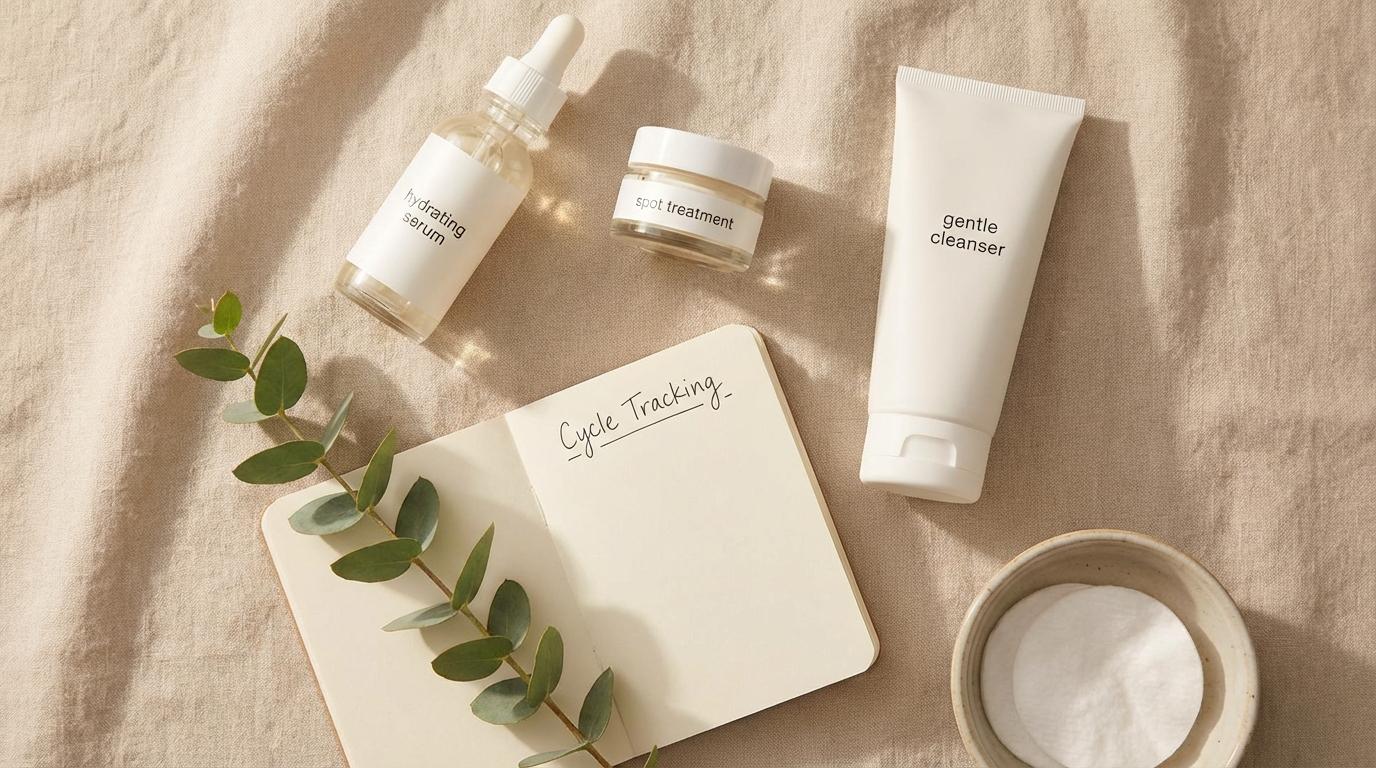
If you have ever noticed your skin acting up right before your period, you are not imagining things. Your skin genuinely changes throughout your menstrual cycle, and understanding why can help you work with your body rather than against it.
Let me break down what is actually happening hormonally and how you can adjust your routine to keep your skin happier throughout the month.
The Four Phases and What They Mean for Your Skin
Your menstrual cycle typically runs about 28 days (though anywhere from 21 to 35 days is normal). Each phase brings different hormonal shifts that directly affect your skin behavior.
Menstrual Phase (Days 1-5): This is when your period actually happens. Estrogen and progesterone are at their lowest points. Your skin tends to look dull and feel more sensitive during this time. The good news? Any hormonal acne that popped up before your period usually starts calming down now. Focus on gentle hydration and soothing ingredients.
Follicular Phase (Days 6-14): Estrogen starts rising steadily. This is often when your skin looks its best. Higher estrogen levels boost collagen production and increase skin thickness. Many people notice their skin appears plumper and more hydrated during this window. If you are going to try a new active or do a stronger treatment, this is your best timing.
Ovulatory Phase (Days 14-17): Estrogen peaks right around ovulation. You might notice your skin looks particularly glowy. Some research published in the National Library of Medicine suggests skin barrier function is actually strongest during this phase. Enjoy it while it lasts.
Luteal Phase (Days 18-28): Here is where things get tricky. Progesterone rises after ovulation and triggers increased sebum production. Meanwhile, estrogen drops. This combination creates the perfect storm for breakouts, especially in the week leading up to your period. Your skin may also retain more water, causing puffiness.
Why Breakouts Hit When They Do
That predictable chin and jawline acne before your period? It has a biological explanation.
During the luteal phase, progesterone causes your sebaceous glands to produce more oil. At the same time, the ratio of estrogen to testosterone shifts. While testosterone levels stay relatively stable throughout your cycle, when estrogen drops, testosterone effects become more pronounced.
According to dermatological research from the American Academy of Dermatology, this hormonal environment triggers several skin changes: increased sebum production, slight swelling of the pore lining (which can trap oil and bacteria), and sometimes increased inflammation response.
The timing matters too. Acne takes about 1-2 weeks to fully form from the initial clogged pore to a visible blemish. So the breakouts you see right before your period actually started developing during the middle of your luteal phase.
This is why reactive spot treatment often feels like playing whack-a-mole. By the time you see the pimple, the process started days ago.
Adjusting Your Actives Around Your Cycle
Here is where understanding your cycle becomes actually useful for your skincare routine.
During the follicular phase and ovulation, your skin is more resilient. This is the time to:
- Try new products you have been curious about
- Use stronger concentrations of active ingredients
- Schedule any professional treatments like peels or extractions
- Push your retinoid use if you are building tolerance
During the late luteal phase (the week before your period), consider pulling back:
- Your skin is more reactive and sensitive
- Reduce frequency of strong actives if they normally irritate you
- Skip harsh physical exfoliants
- Focus on gentle, supportive care rather than aggressive treatment
Some people find that increasing salicylic acid use during the luteal phase helps prevent breakouts by keeping pores clear while oil production ramps up. Research on salicylic acid confirms its oil-soluble nature makes it effective at penetrating sebum-filled pores.
The key is paying attention to how your specific skin responds. Track your cycle alongside your skin changes for 2-3 months and you will start noticing your personal patterns.
Hydration Needs Throughout the Month
Your skin hydration requirements genuinely fluctuate with your hormones.
During menstruation, estrogen and progesterone are both low. Your skin barrier may function less efficiently, leading to increased transepidermal water loss. This is when you might notice your skin feeling tight or looking flaky even if you have not changed anything in your routine.
Layer on hydration during this phase. Hyaluronic acid serums, hydrating toners, and richer moisturizers can help compensate for what your skin is not producing naturally. The basics of humectants and occlusives become especially relevant here.
As estrogen rises during the follicular phase, your natural moisture levels improve. You might find you can use lighter products or skip that extra hydrating step you needed the week before.
During the luteal phase, your skin produces more oil but that does not necessarily mean it is well-hydrated. Oil and hydration are not the same thing. Your skin can be simultaneously oily and dehydrated. Do not skip moisturizer just because you are breaking out. Instead, switch to a lighter, oil-free formula that provides hydration without adding to the sebum situation.
Some people find that niacinamide works well during the luteal phase. It helps regulate sebum production while maintaining hydration. Research from the International Journal of Cosmetic Science supports its efficacy for both concerns.
Practical Tips for Cycle-Synced Skincare
You do not need to completely overhaul your routine four times a month. Small adjustments work better than dramatic changes.
Track your cycle. Use an app or a simple calendar. Note when breakouts appear and when your skin looks best. After a few months, you will see your patterns clearly.
Prepare, do not react. Start using your acne-fighting ingredients a few days before you typically break out, not after the pimples appear. Prevention beats treatment.
Listen to sensitivity. If a product that normally works fine suddenly stings or causes redness, check where you are in your cycle. Your skin tolerance genuinely changes.
Keep your basics consistent. Your cleanser, moisturizer, and sunscreen can stay the same. It is your treatment products and actives that might need adjusting.
Do not overcorrect. Seeing more oil does not mean you should strip your skin with harsh cleansers. That typically backfires by damaging your barrier and causing more breakouts.
Your skin is a dynamic organ that responds to your internal environment. Working with your cycle instead of being surprised by it every month puts you in control. Pay attention, adjust thoughtfully, and give yourself grace when hormones make things difficult. That is not failure. That is biology.