
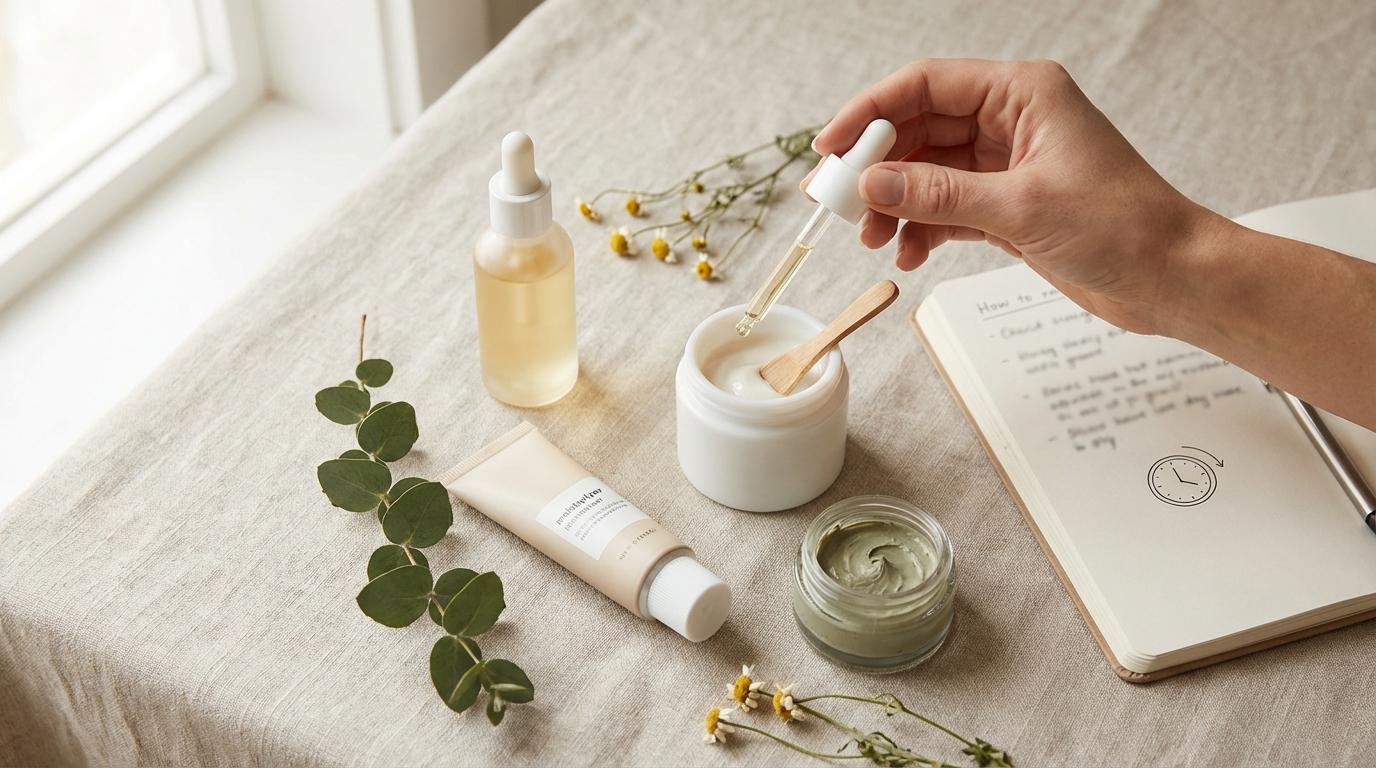
You bought the serum everyone raved about. You splurged on that moisturizer with the fancy ingredients. You are using products that cost more than your grocery budget. And your skin still looks… the same.
It is not in your head. Many people dump significant money into skincare without seeing the results they expect. The frustrating truth is that expensive products are not automatically better, and even good products can fail completely if you are using them wrong.
Before you blame your skin or throw more money at the problem, let us look at what might actually be going wrong.
Your Application Technique Is Undermining Everything
How you apply a product matters as much as what is in the bottle. This is not something skincare brands advertise because it does not sell more products, but it is absolutely true.
Rubbing products in vigorously seems like you are helping them absorb. You are not. Aggressive rubbing can cause irritation, create friction that breaks down delicate ingredients, and actually reduce how much product penetrates your skin. The American Academy of Dermatology recommends gentle application for a reason.
Patting and pressing works better. Take your serum or treatment, dot it across your face, then use your fingertips to gently press it into your skin. This helps absorption without the damage from rubbing.
Using too much product is another common mistake. More is not better. Your skin can only absorb so much at once. The excess just sits on top, gets wiped off on your pillowcase, or creates a film that prevents subsequent products from penetrating. Most serums need 2-3 drops for your entire face. Most moisturizers need about a pea-sized amount. If you are using significantly more, you are wasting product and possibly causing problems.
Also check your hands. Are they actually clean before you apply skincare? Dirty hands transfer bacteria and oils that can clog pores and cause breakouts. It sounds basic, but plenty of people wash their face thoroughly and then apply products with unwashed hands.
The Order and Timing Problems Nobody Talks About
Layering products in the wrong order essentially deactivates some of them. Thick products create a barrier that prevents thinner products from reaching your skin. This is basic physics, not opinion.
The rule is thin to thick, always. Toners and essences first, then serums, then treatments, then moisturizer. If you put your moisturizer on before your serum, that serum is mostly just sitting on top of a barrier instead of absorbing.
Timing between products matters too. Slapping on five products in 30 seconds means they mix together on your skin instead of absorbing properly. Some products need time to work at the right pH level before you layer something else on top. Research published in the Journal of Clinical and Aesthetic Dermatology shows that active ingredients perform best when given adequate absorption time.
Wait about 30 seconds to a minute between each product. For actives like retinol or vitamin C, some dermatologists recommend waiting until your skin is fully dry before applying, which can take a few minutes. Yes, this makes your routine longer. But it makes your products actually work.
Applying to wet skin changes absorption rates. Some products work better on damp skin (hyaluronic acid, for example, needs water to bind to). Others work better on dry skin (retinol can cause more irritation when applied to wet skin). Check what your specific products recommend.
Your Products Are Fighting Each Other
Some ingredients do not play well together. Combining them can cancel out benefits, increase irritation, or create new problems. If you are using multiple active ingredients without understanding how they interact, you might be sabotaging yourself.
Vitamin C and retinol are a classic example. Both are powerful on their own, but using them at the same time can cause significant irritation and reduce the effectiveness of both. The solution is simple: use vitamin C in the morning and retinol at night. Or alternate days.
Benzoyl peroxide deactivates retinol. If you are using an acne treatment with benzoyl peroxide and a retinoid together, the retinoid is basically doing nothing. Separate them by using one in the morning and one at night.
AHAs and BHAs together can be too much. Both are exfoliants, and doubling up on exfoliation leads to a damaged skin barrier, sensitivity, and often more breakouts. Pick one or alternate them.
Niacinamide and vitamin C used to be considered a bad combination, though recent research suggests niacinamide is more stable than previously thought. Still, if you are experiencing flushing when combining them, use them at different times.
The fix is not necessarily fewer products. It is being strategic about when you use what. Map out your morning and evening routines so conflicting ingredients are separated.
Consistency Beats Everything, Including Price
Here is an uncomfortable truth the skincare industry does not want you to hear: a cheap product you use every day will almost always outperform an expensive product you use inconsistently.
Skincare is cumulative. Results come from repeated, consistent use over weeks and months. That $150 serum sitting half-empty on your bathroom counter because you “save it for special occasions” is doing nothing for your skin. The $15 drugstore moisturizer you use religiously every night is doing far more.
If your expensive products are making you ration them, you are not getting the full benefit. Better to find products in a price range that lets you use them properly. Studies on retinoid effectiveness show that consistent application matters more than concentration for most users.
The same goes for complicated routines. If your 10-step routine means you skip skincare entirely on tired nights, a 3-step routine you actually complete is more effective. Regularity matters more than complexity.
And give products time to work. Expecting overnight transformation from anything besides a reaction is unrealistic. Most products need 4-8 weeks of consistent use before you can fairly judge results. Twelve weeks is better for anti-aging products. If you are switching products every two weeks because you do not see instant change, you are never giving anything a real chance.
The Real Questions to Ask
Before blaming your products, run through this checklist:
Are you applying products gently and using the right amount? Too much or too aggressive causes problems.
Are you layering in the correct order? Thin to thick, every time.
Are you giving products time to absorb between steps? At least 30 seconds, longer for actives.
Are any of your ingredients canceling each other out? Map out potential conflicts.
Are you using products consistently? Daily or as directed, not occasionally.
Have you given the products enough time to show results? 6-8 weeks minimum.
Is your basic skin barrier healthy? If your skin is compromised, actives will not work and may make things worse.
What to Do Now
If your current products are not working, do not immediately rush out and buy new ones. First, fix how you are using what you have.
Simplify your routine temporarily. Strip back to cleanser, one treatment product, and moisturizer. Use them correctly and consistently for six weeks. See what happens.
Check your product interactions. Move conflicting ingredients to different times of day.
Work on your technique. Gentle application, proper amounts, wait times between steps.
If after six weeks of correct, consistent use you are still not seeing results, then consider whether the products are right for your skin. Maybe they are. Maybe they are not. But at least you will know the products themselves are the problem, not how you are using them.
Expensive products can work. But they only work if you use them right. And cheap products used correctly will beat expensive products used wrong every single time.