
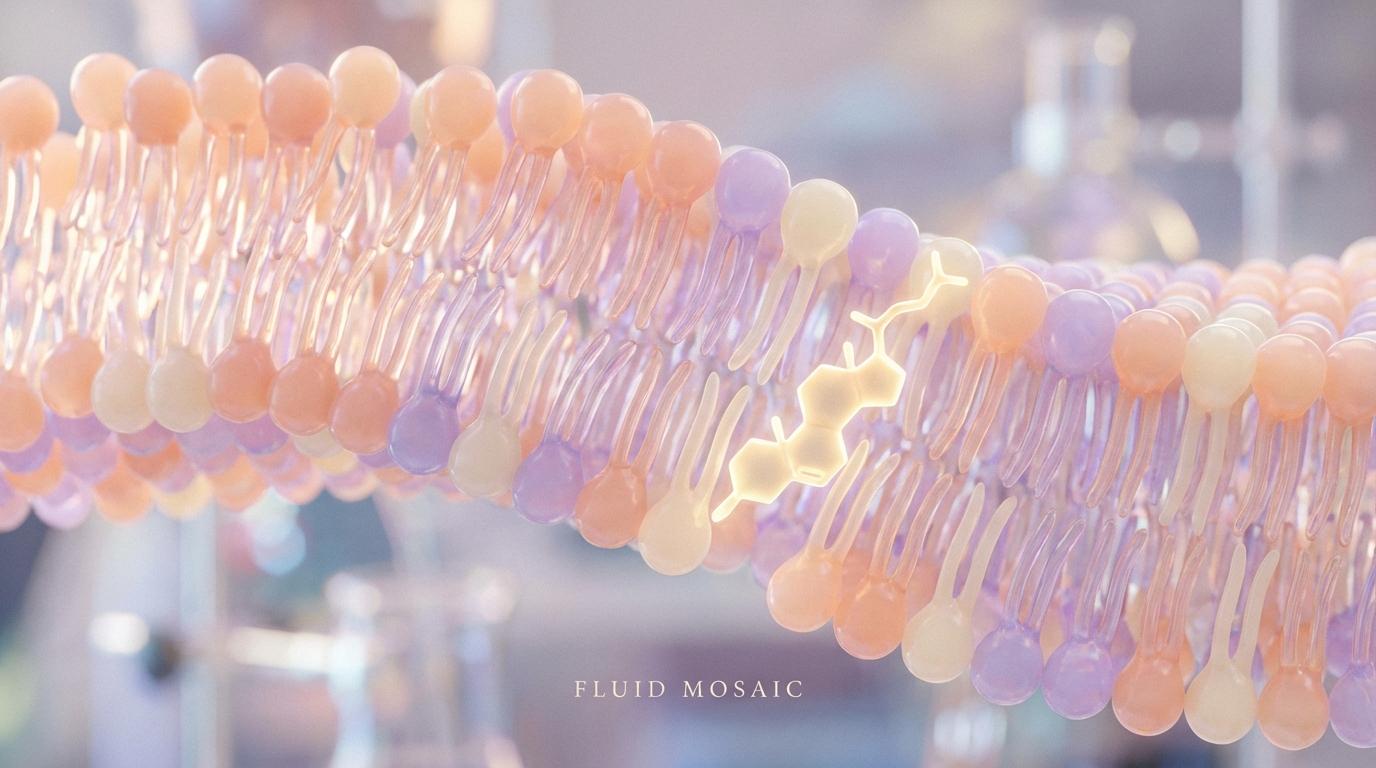
Cholesterol molecules are constantly moving between the layers of your skin, reinforcing cell membranes and patching gaps in your protective barrier. If that sounds surprising, you’re not alone. Most of us only hear about cholesterol in the context of heart health, blood tests, and foods to avoid. But the cholesterol in your skin is a completely different story, and understanding it can change how you think about barrier repair products.
Your Skin Barrier Is Built on Lipids
The outermost layer of your skin, called the stratum corneum, functions like a brick wall. The “bricks” are dead skin cells called corneocytes, and the “mortar” holding everything together is a mixture of lipids. This lipid mortar isn’t just one substance. It’s actually a precise blend of three components: ceramides, free fatty acids, and cholesterol.
Each of these lipids plays a specific role. Ceramides make up about 50% of the lipid content and create the basic structure. Free fatty acids contribute around 15% and help maintain an acidic pH that keeps harmful bacteria at bay. Cholesterol, making up roughly 25% of the mix, acts as a fluidity regulator. It keeps the lipid layers from becoming too rigid or too fluid, which sounds technical but matters enormously for how your skin functions day to day.
What Cholesterol Actually Does in Your Skin
Think of cholesterol as the temperature control for your skin’s lipid layers. When it’s cold outside, skin lipids tend to stiffen up and crack. Cholesterol molecules wedge themselves between other lipids, preventing them from packing too tightly. When temperatures rise, cholesterol does the opposite, keeping lipids from becoming too loose and letting moisture escape.
This regulation happens continuously, which is why cholesterol-deficient skin often struggles with both dryness and irritation. Research published in the Journal of Lipid Research has shown that skin with depleted cholesterol levels has increased transepidermal water loss, meaning moisture evaporates faster than it should. The result? That tight, uncomfortable feeling that no amount of humectant seems to fix.
Cholesterol also participates in forming lamellar bodies, the little packages inside skin cells that deliver fresh lipids to the stratum corneum. Without adequate cholesterol, this delivery system becomes less efficient, and barrier repair slows down. If you’ve ever wondered why some damage seems to take forever to heal, this could be a factor.
Topical Cholesterol: Does It Actually Work?
Here’s where things get practical. Adding cholesterol to skincare products isn’t new, but it took a while for formulators to figure out how to make it effective. Cholesterol is waxy and doesn’t dissolve in water, so it needs to be incorporated into specific types of formulas to actually penetrate your skin.
The most effective approach involves combining cholesterol with ceramides and fatty acids in a ratio that mimics your skin’s natural lipid composition. Dr. Peter Elias, a dermatologist who has spent decades studying barrier function at UCSF, has researched extensively how these three-lipid formulas outperform products containing just one or two of the components. The key finding? Your skin recognizes and incorporates the trio more readily than individual lipids delivered alone.
Products marketed for “barrier repair” increasingly include this lipid trio, though not all formulas are created equal. Look for cholesterol listed in the ingredients (sometimes as “cholesteryl” compounds), ideally alongside ceramides and fatty acids. The concentration matters too. Formulas developed based on research typically contain a 3:1:1 ratio of ceramides to cholesterol to fatty acids, though few brands disclose exact percentages.
Why Dietary Cholesterol Has Nothing to Do With This
Before anyone panics about egg yolks, let’s clear something up. The cholesterol in your skin is produced locally by skin cells. It’s synthesized right there in the epidermis and doesn’t come from the cholesterol circulating in your bloodstream. Eating more cholesterol won’t give you plumper, better-hydrated skin, and reducing dietary cholesterol won’t harm your barrier.
This local production is actually one reason why some conditions cause barrier problems. Certain medications, particularly statins (which lower cholesterol synthesis throughout the body), can sometimes affect skin cholesterol levels enough to cause dryness or irritation. If you’ve started a statin and noticed your skin becoming more sensitive or dry, this connection might be worth discussing with your doctor.
Age also affects cholesterol production. Studies have documented decreasing cholesterol synthesis in aging skin, which partially explains why barrier function tends to decline over time. The skin of older adults often shows lower total lipid content, and cholesterol depletion specifically has been linked to the increased dryness and fragility common in mature skin.
Signs Your Barrier Might Need Lipid Support
Not everyone needs to rush out and buy cholesterol-containing products. If your skin generally behaves well, retains moisture, and doesn’t react dramatically to environmental changes, your lipid synthesis is probably functioning fine. But certain patterns suggest your barrier could use some reinforcement.
Persistent tightness even after moisturizing often indicates a lipid deficiency rather than just dehydration. Products that previously worked well suddenly causing stinging or redness can signal barrier compromise. Skin that becomes dramatically worse in winter or after air travel (both low-humidity situations) may not have enough lipid protection to handle moisture stress.
Frequent use of strong actives like retinoids or high-concentration acids can temporarily deplete barrier lipids, including cholesterol. This doesn’t mean you need to stop using these products, but it does mean your supporting products should help rebuild what’s being disrupted. A well-formulated barrier repair cream used at night can offset much of this stress.
Choosing Products With Cholesterol
Several drugstore and mid-range brands now offer formulas with the full lipid trio. CeraVe’s original moisturizer contains cholesterol alongside ceramides, as do many products in the Zeroid line. Higher-end options from brands like SkinCeuticals and EltaMD also include cholesterol in their barrier-focused formulas.
You don’t necessarily need a dedicated “barrier repair” product. Some cleansers, serums, and even sunscreens now incorporate barrier lipids. The advantage of using multiple products with these ingredients is cumulative support throughout your routine rather than relying on one heavy cream at night.
One thing to watch: don’t confuse “lipid-rich” marketing with actual barrier lipid content. Plenty of products are full of oils and butters that feel moisturizing but don’t contain the specific lipids your stratum corneum uses. Plant oils are lovely, but they’re not a substitute for the ceramide-cholesterol-fatty acid combination that actually integrates into your barrier structure.
The Takeaway for Your Routine
Cholesterol in skincare isn’t trendy or glamorous, but it’s genuinely useful for anyone dealing with barrier issues. The science here is solid and has been building for over three decades. If your skin chronically feels compromised, dry despite hydrating products, or reactive to things it used to tolerate, exploring lipid-based barrier repair products is a logical next step.
You don’t need to overhaul everything. Start by looking at your current products’ ingredient lists. If nothing contains cholesterol, ceramides, and fatty acids together, consider swapping in one product that does. Give it a few weeks, because barrier repair isn’t instant, and see if that persistent tightness or sensitivity starts to improve. Sometimes the least exciting ingredients are the ones that make the biggest practical difference.