
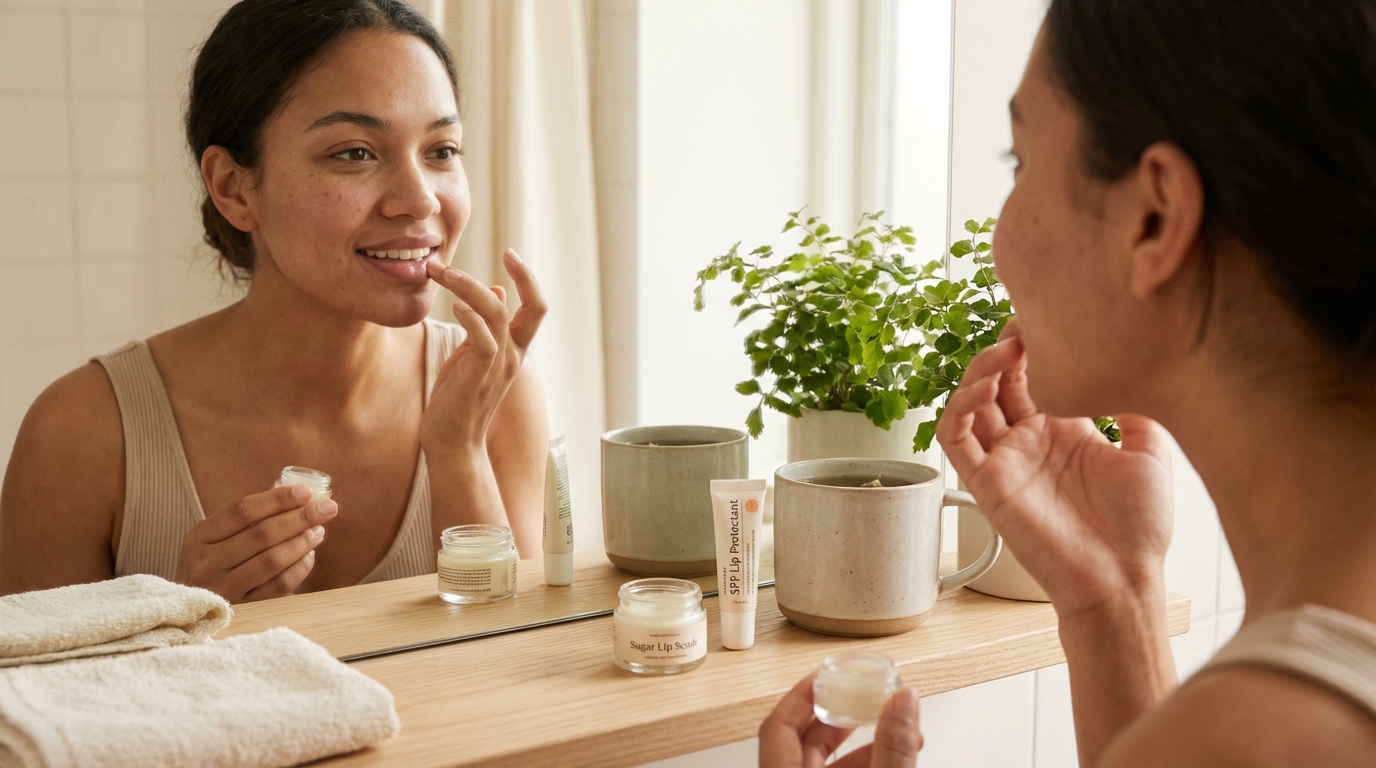
We spend so much time thinking about our face, our body, even our hands. But when was the last time you actually considered what your lips need? If you are constantly reapplying lip balm and still dealing with dryness, it is time to understand why lip skin behaves differently and how to actually take care of it.
Why Lip Skin Is Structurally Different
Here is something fascinating: the skin on your lips is fundamentally different from the skin on the rest of your face. Your lips have only three to five cellular layers, while facial skin has up to 16 layers. That is a significant difference in terms of protection and moisture retention.
Lip skin also lacks sebaceous glands. These are the oil-producing glands that help keep the rest of your skin naturally moisturized. Without them, your lips cannot produce their own oils to maintain hydration. They are entirely dependent on external moisture and whatever you put on them.
Additionally, lip skin has no melanin. That is why your lips appear pink or red; you are seeing the blood vessels underneath. This lack of melanin means your lips have zero natural sun protection. They are vulnerable to UV damage, aging, and drying out from sun exposure in ways that facial skin can handle better.
Understanding this helps explain why your lips need different care than your face. They are essentially more delicate, more exposed, and less equipped to take care of themselves.
The Role of Gentle Exfoliation
Because lip skin turns over quickly and does not shed as efficiently without oil glands helping the process, dead skin cells can accumulate. This is what creates that dry, flaky look that no amount of lip balm seems to fix.
Exfoliating your lips once or twice a week removes this buildup and allows your hydrating products to actually penetrate. But here is the key: gentle is the operative word. Lip skin is thin and delicate. You do not need anything aggressive.
A simple sugar scrub works well. You can make one at home with a bit of sugar mixed with honey or coconut oil. Apply it to dry lips, massage gently in circular motions for about 30 seconds, then rinse off. That is enough to remove dead skin without causing irritation.
Alternatively, a soft toothbrush can work. Just make sure it is a clean, dedicated brush with soft bristles. Use it on damp lips with gentle pressure. If you are seeing redness or irritation, you are being too aggressive.
Avoid harsh scrubs designed for body skin. The granules are often too large and too abrasive for lip tissue. And never exfoliate lips that are cracked or bleeding; you will just make things worse.
Hydration: What Actually Works
The hydration piece is where most people go wrong. They reach for a lip balm, feel temporarily better, and then wonder why they need to reapply constantly. The answer often lies in the ingredients.
Look for humectants like hyaluronic acid, glycerin, or honey. These ingredients pull moisture from the environment and from deeper skin layers to hydrate the surface. They are doing active work to increase moisture content.
Then you need occlusives to lock that moisture in. Think petroleum jelly, beeswax, shea butter, or lanolin. These create a physical barrier that prevents water loss. Without an occlusive layer, whatever hydration you apply will evaporate.
The ideal lip product combines both: humectants to attract moisture and occlusives to seal it in. Many lip balms only contain occlusives, which is why they feel good temporarily but do not solve the underlying dryness. You are sealing in whatever moisture happens to be there, but you are not adding more.
Apply your lip hydration after cleansing your face in the morning and before bed. If you are exfoliating, always follow immediately with a hydrating product while the skin is still slightly damp.
Sun Protection for Lips
Remember that lack of melanin? It means your lips need sun protection, but most people completely ignore this. The lower lip especially is positioned at an angle that catches direct sunlight.
Chronic sun exposure on lips contributes to dryness, premature aging, and in serious cases, can increase risk of certain skin conditions. A lip balm with SPF 30 or higher is worth incorporating into your daily routine.
Apply it in the morning as part of your skincare, and reapply throughout the day, especially after eating or drinking. Yes, this is an extra step. But your lips will be noticeably healthier over time, and you are preventing cumulative damage.
The Lip Product Dependency Trap
Let us talk about something that does not get discussed enough: some lip products actually make dryness worse. This creates a cycle where you keep buying and applying more product, thinking your lips are just naturally dry, when the product itself is part of the problem.
Certain ingredients are known irritants or drying agents. Menthol, camphor, and phenol create a cooling or tingling sensation that feels satisfying, but they can irritate lip skin and increase dryness. Fragrances and flavors can also cause irritation in sensitive individuals.
Salicylic acid, while great for acne-prone facial skin, can be overly drying on lips. Some matte lip products contain alcohol that evaporates and takes moisture with it.
If you notice that your lips feel worse shortly after your lip balm wears off, or if you are applying product 10+ times per day, look at your ingredient list. Try switching to a simple, fragrance-free formula with basic moisturizing ingredients for two weeks and see if the cycle breaks.
Your lips should not need constant reapplication if they are properly hydrated. A few times a day is normal. Every 20 minutes is a sign something is off.
Building Your Lip Routine
Putting this all together, here is what a simple lip routine looks like:
Morning: Apply a hydrating lip balm with SPF after your facial moisturizer. Let it absorb before applying any lip color.
Throughout the day: Reapply SPF lip balm as needed, especially after eating.
Evening: After cleansing your face, apply a heavier lip treatment. This can be a thicker balm, a lip mask, or even plain petroleum jelly. Nighttime is when your skin does most of its repair work, so give it good ingredients to work with.
Weekly: Gentle exfoliation once or twice, followed immediately by hydrating product.
That is the complete routine. It takes maybe an extra 30 seconds in your morning and evening, and the difference in lip health is noticeable within a couple of weeks.
The Takeaway
Your lips deserve the same thoughtful care as the rest of your skin. They are structurally different, more vulnerable, and often neglected in skincare routines. Understanding the science behind why lip skin behaves the way it does helps you choose products and habits that actually work.
Gentle exfoliation, proper hydration with the right ingredients, sun protection, and avoiding irritating products. That is the formula for healthy lips that do not require constant attention. Simple, science-backed, effective.