
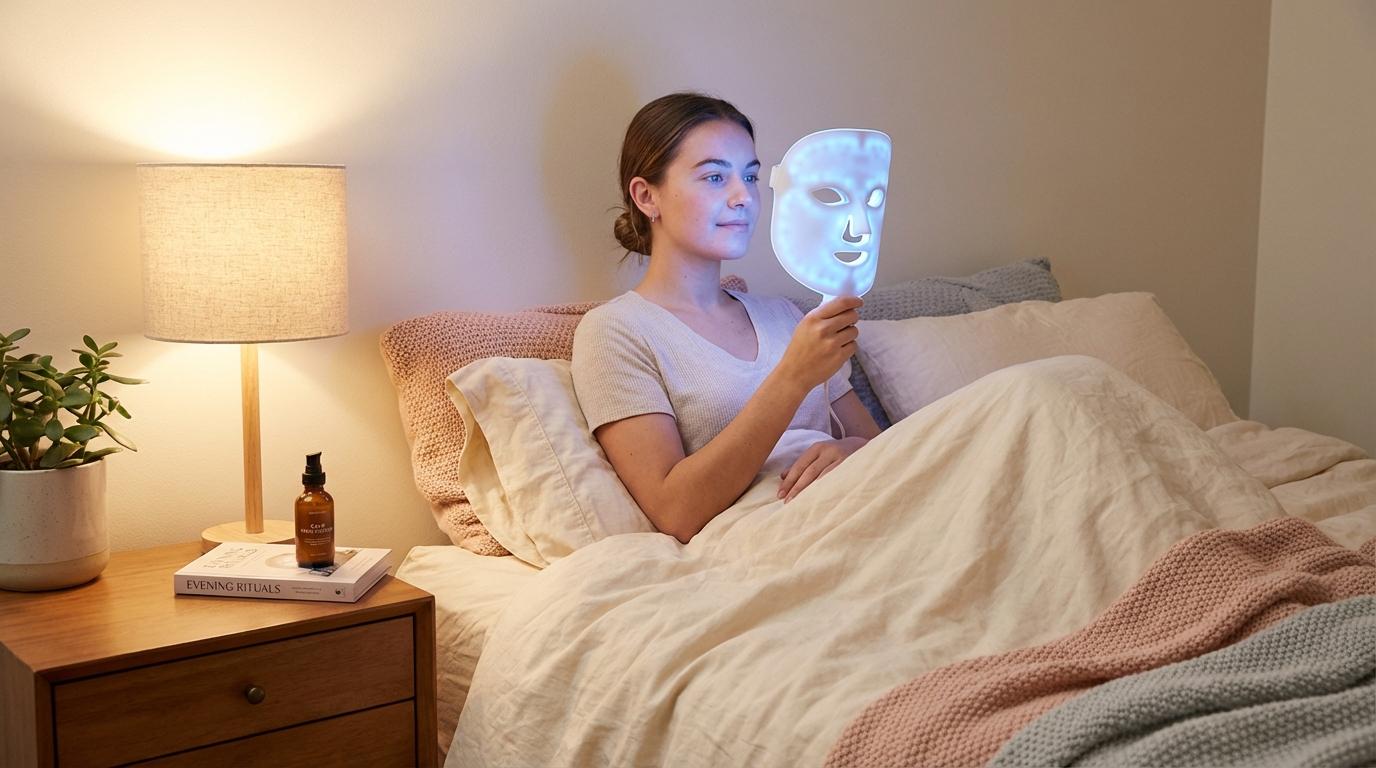
LED light therapy devices are just glorified desk lamps with colored bulbs. Actually, a 2025 systematic review published in JAMA Dermatology found they genuinely reduce acne lesions with minimal side effects. The science is real, even if the marketing sometimes gets ridiculous.
I spent years dismissing these devices as overpriced nonsense. Then I looked at the actual research. Turns out, specific wavelengths of light can kill acne bacteria and calm inflammation. Not through magic, but through chemistry.
How Blue Light Kills Acne Bacteria
The acne bacteria on your face (Cutibacterium acnes, formerly P. acnes) produce a compound called coproporphyrin III. When you shine blue light at 415-465nm wavelengths on it, that compound absorbs the light and generates free radicals.
Those free radicals destroy the bacteria from the inside out.
This isn’t speculation. A study published in the Journal of Clinical and Aesthetic Dermatology confirmed that self-applied blue light therapy significantly reduces inflammatory acne lesions.
Blue light penetrates about 1mm into your skin, which is exactly where your sebaceous glands live. That’s where the bacteria hang out, feasting on your sebum and causing inflammation.
Red Light: The Inflammation Fighter
Red light (around 630-660nm) works differently. It penetrates deeper into the skin and helps calm inflammation. It also promotes wound healing, which matters when you’re dealing with angry, inflamed breakouts.
The combination of blue and red light produces better results than either alone. Research from the British Journal of Dermatology showed that combining 415nm blue light with 660nm red light led to greater improvement in acne clearance.
Blue kills bacteria. Red calms the aftermath. Together, they address acne from two angles.
Device Quality Actually Matters
Not all LED devices are created equal. Some cheap options barely emit enough light to matter. Others use wavelengths that haven’t been studied for acne treatment.
What to look for:
- FDA clearance or CE marking specifically for acne treatment
- Blue light in the 415-465nm range
- Red light around 630-660nm if the device offers combination therapy
- Irradiance levels that match clinical studies (usually measured in mW/cm2)
According to Mass General Brigham researchers, unregulated or uncertified devices may not provide reliable results and could pose risks to your skin. Don’t buy the $20 Amazon special with no certifications.
Quality devices from established brands typically run between $100-400 for at-home use. It’s an investment, but cheaper than years of topical treatments or dermatologist visits.
The Consistency Factor
One session won’t clear your skin. LED therapy works through cumulative exposure over weeks.
The typical recommendation is four sessions per week for at least six weeks. Each session usually runs 3-10 minutes depending on the device strength.
After the initial treatment period, you can switch to maintenance mode: using the device at the first sign of a breakout or a couple times weekly to prevent new ones.
This is where most people fail. They use their device religiously for a week, see minimal results, and give up. The bacteria don’t die overnight. Neither does inflammation. Give it the full six weeks before judging.
Who Gets the Best Results
LED therapy works best for mild to moderate inflammatory acne. If you have occasional breakouts or persistent but not severe acne, you’re the ideal candidate.
It’s less effective for:
- Severe cystic acne (see a dermatologist instead)
- Non-inflammatory acne like blackheads and whiteheads (bacteria isn’t the main issue)
- Hormonal acne driven by internal factors
If you’re dealing with stress-related breakouts, LED therapy can help manage the bacterial component while you address the underlying stress.
Fitting It Into Your Routine
Use LED therapy on clean, dry skin. No serums, no moisturizer, nothing that could block the light from reaching your skin.
Most people use their devices in the evening after cleansing but before applying treatments. Some use it in the morning. The timing matters less than the consistency.
You can apply your regular skincare products after the treatment session. LED light won’t interact negatively with your retinol or niacinamide. If you’re using niacinamide for acne, the combination can work well since niacinamide also helps regulate sebum production.
One note: if you use photosensitizing medications or have a condition that makes you sensitive to light, check with your doctor first.
Preventing Future Breakouts
LED therapy isn’t just about clearing current acne. Regular use can help prevent new breakouts by keeping bacterial populations in check.
Think of it like brushing your teeth. You don’t stop just because you don’t have cavities. Consistent maintenance prevents future problems.
Some people use their devices two to three times weekly as prevention after the initial clearing phase. Others pull it out at the first sign of a new blemish forming.
The bacteria will always return (they’re part of your skin microbiome), so this isn’t a one-and-done treatment. It’s a tool to keep using.
Side Effects: What to Expect
The JAMA Dermatology meta-analysis found that side effects from at-home LED devices were minimal. Occasionally, users reported mild dryness or temporary irritation.
One concern: blue light at 415nm wavelength has been linked to potential hyperpigmentation in darker skin tones. Devices using wavelengths closer to 465nm may be safer for those concerned about this. If you have a history of hyperpigmentation issues, look for devices that specifically address this or consult a dermatologist.
Don’t look directly at the lights. Protect your eyes during treatment, especially with blue light devices.
The Realistic Expectation
LED therapy won’t replace prescription treatments for severe acne. It won’t work if you use it once a month when you remember. And cheap devices with no certifications probably won’t do anything.
But for mild to moderate acne, used consistently with a quality device, the research supports it as a legitimate treatment option. Dr. John Barbieri, who led the Mass General Brigham research, noted that “these devices may serve as a complementary or alternative tool for individuals who experience side effects or insufficient improvement from traditional acne medications.”
If you’re already dealing with sunscreen breaking you out or irritation from topical acne treatments, LED therapy offers a gentler approach that might work better for your skin.
It’s not magic. It’s just light at the right wavelengths, applied consistently, targeting bacteria that can’t hide from it. Sometimes the simplest mechanisms work best.